Crashing out over watermarks
U.S. tech firms have recently begun embedding digital watermarks in AI-generated content in order to comply with EU regulations. Not everyone is happy about that.
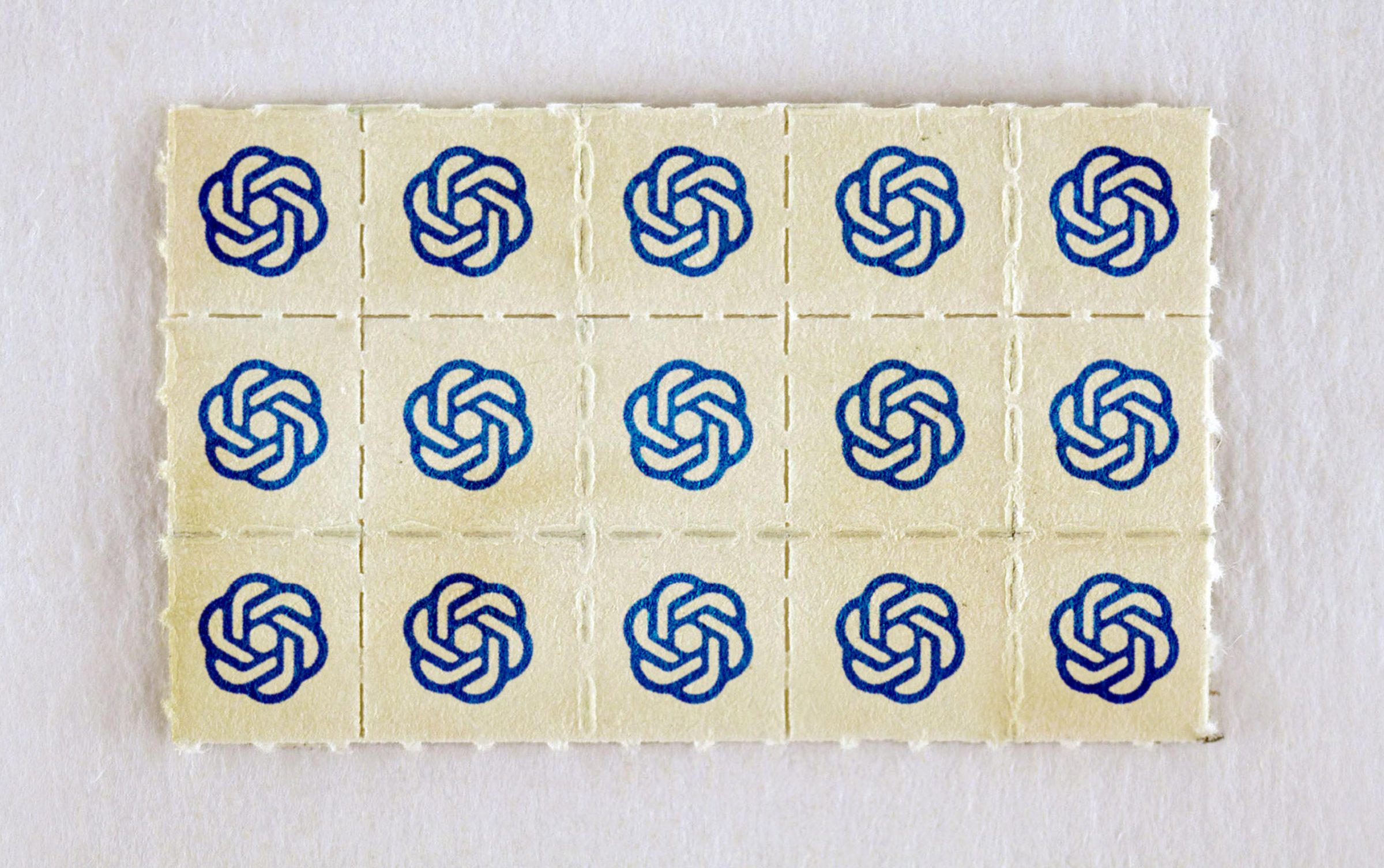
Over the last couple of months most of the big U.S. AI firms have reached some sort of agreement with regulators over the European Union’s new AI transparency rules.
In order to comply with the EU’s new watermarking provisions AI-generated images and videos will need to include a visible AI icon and AI-generated text will need to include some sort of machine-readable pattern that can be readily detected by other applications. What this means is that many websites will begin displaying a ‘created with the use of AI’ label to any detectably-sloppy writing. The efficacy of these measures, and the time it has taken to implement them, are certainly open to criticism. It’s hard to feel much satisfaction about the EU forcing Silicon Valley to close the gate when the horse bolted several years ago.
On the other hand it is very satisfying to watch the most insufferable people on twitter have little conniptions over the prospect of having to add warning labels to their slop. You could make the argument that most generative text is already fairly detectable just by the tone of voice and the idioms favoured by large language models. But these tells are not obvious to everyone and because this technology is still poorly understood a large number of people have managed to amass a great deal of unearned credibility by generating lengthy Substack posts and overwrought updates on LinkedIn. Even when these people made no effort to hide their use of chatbots (by, say replacing all the em-dashes with hyphens) they still benefited from a sort of plausible deniability. Who’s to say their barely literate CEO didn’t just discover a love for long-form blogging and punchy prose?
Anyway, let’s meet a few of the people currently crashing out on Twitter:

First up we have Richard B. (@Rich_Belt) who, according to his twitter profile, is the founder of ‘Markebility’ an AI-powered marketing platform for home-services contractors. He writes:
If LLMs are going to embed watermarks in generated text and release tools to detect AI text, then LLMs risk becoming more of a novelty rather than something we can use for actual work.
Am I going to be policed every time i ask Claude to polish something I write?
Poor Richard. He only uses Claude to polish the search engine optimised blog spam that he personally writes but now these new regulations are going to give people the impression that he delegates the entire job to Anthropic’s bullshit machine.
Scanning the replies reveals that one or two of Richard’s followers share his outrage. They insist that LLMs are just another tool – like a typewriter or a calculator – and that there shouldn’t be any stigma attached to using them. To paraphrase one commenter; “what’s next? Is the EU going to force every carpenter to disclose the fact that they use nails?”
But those who agreed with Richard were few and far between. For the most part, the replies (from both blue-check Elon boot-suckers and the rest of the twitter dalits) were scathing:
Yes. No one likes AI and your mother is very disappointed in you for using it.
– Funny Drawing Guy @FunnyDrawingGuy
why are you ashamed of this? why do you see it as “policing?” if AI is everything you guys claim it is, why would you not be loud and proud about having used it? wouldn’t you want that badge of honor?
– Exorbitant Bosch @dontfallforem
Richard B. might have maintained his story about only using chatbots to ‘polish’ his writing but he couldn’t resist making another sulky post which revealed that his real issue with AI watermarks is that they expose the shortcomings of the person posting them:
Calculations done with a calculator will now be watermarked so everyone knows you can’t actually do math.
This is a poor analogy for a number of reasons but the obvious question to ask here is: would people object to a system that automatically disclosed their calculator usage? Depending on the numbers being crunched I think doing so would cause some mild embarrassment and yet I think most people are willing to admit that they use a calculator to do math. On the other hand most people (even, apparently, the AI evangelists) appear to be quite embarrassed to admit that they delegate their personal opinions to a chatbot.
As one commenter replied:
if you’re not ashamed to use LLMs then i’m not clear on why it matters. if you are ashamed to use LLMs, there’s an easy fix for that too.

Next up there’s Noah Revoy whose twitter bio informs us that he’s a life coach and senior fellow at the utterly baffling Natural Law Institute. In every respect Noah appears to be a real version of the vacuous self-help guru played by Michael Chernus in Severance.
According to Noah’s website he’s written more than 2,300 articles on ‘masculinity, fatherhood, relationships, psychology, and more’. On closer examination all of these ‘articles’ appear to be tweets. He also claims to be the author of several books – all of which appear to have been written after the advent of Chat GPT. The announcement that any text generated by Claude will be watermarked has prompted Noah to extend himself beyond his usual 140 characters to make it clear that he mostly uses Claude to search through his back-catalogue of writing for relevant quotes. Besides that, he only uses Claude for minor edits:
Sometimes I write in too enormous paragraphs, so I might ask it to break those into smaller paragraphs that are easier to read on screens. Maybe there is an odd transition here or there. Maybe I need to change something from “you” to “they,” or from “us” to “you,” depending on the grammar of the piece. I might say, “We need to harmonize this grammar so it stays in the third person throughout.”
Those are useful editorial functions. I am still writing the material. The quotes are mine. The arguments are mine. The new dictation is mine. I am using the AI to help retrieve, arrange, compare, and clean up what I have already written.
I hate to break it to Noah, the published author, but retrieving, arranging, comparing, and cleaning up your first draft are all part of the writing process and not tasks you should delegate to the bullshit machine.

Next up is Ishu Agrawal. Mr Agrawal complains that AI watermarks are a form of misattribution. Ishu’s bio says that he’s “Tech’s Devil Advocate” and that he’s a ‘tokenmaxxer’ at OpenAI. But he can’t be a true tokenmaxxer because, apparently, he only uses Claude to proofread his drafts and convert word documents into PDFs.
Apparently, the use of any Claude tools on an input will automatically mark the content as AI.
AT ANY STAGE OF THE PROCESS.
So if you ask Claude to proofread your draft, it’s now marked as AI, regardless of how much Claude rewrote.
Or if you ask Claude to turn a .docx to a .pdf, it will also be labeled as AI, regardless of its actual content.
How is this safer AI?
Not only is this label a huge oversimplification since it doesn’t actually describe the contents that were AI generated, it also misrepresents authorship of human-created work.
Rest assured, Ishu isn’t getting Claude to write things for him. He’s just using it to tweak things here and there. Nevertheless Ishu is still worried about the chilling effect of putting AI watermarks on Gen-AI text because. . .reasons. I guess when he copies his drafts into Claude he feels compelled to copy something out of the Claude chat window to paste back into his word document.
Anyway, it’s nice that the folks at OpenAI are discovering the sanctity of human-created work. It’s a bit late. But it’s nice.
It’s also nice that forcing AI users to share credit with their bot has inspired a belated interest in the idea of attribution – if only as a form of ‘whataboutism’. Case in point – this comment by Twitter user William McHargue.
…If Claude wants me to cite it with an immutable watermark, then it should also be immutably citing its source material it scraped from the internet and books to generate the content. Others may disagree.
You’ll get no McHargument from me.

My favourite gripe came from twitter user John Ennis (@johnennis) who commands an army of sexy elf ghosts that do all his work for him. John is also the self-appointed CEO of a vibe-coded company/website called aigora which appears to be some sort of Baudrillardian SaaS platform that allows you to conjure up ‘synthetic consumer panels’ that can be surveyed for synthetic insights. He also joined the public meltdown over the EU watermarking push.
Someone asked me why I think this is ridiculous, and here is my answer:
Because the tool used to accomplish a task is irrelevant
What matters is the quality of the work
The idea that AI work needs to be distinguished from human work is adjacent to the marxist theory of value
When someone digs a ditch in your yard, do you care if they do it by hand or use a machine?
Or do you only care that they do the job properly?
The problem with Anthropic is that they do not see machines as tools to be used by humans
They think in their kooky cult that they are making a new type of life
There’s a lot to unpack in this post. I don’t know how chatbots relate to Marx’s Labor Theory of Value and I suspect John doesn’t either. For most Americans, Marxism is just a vague boogeyman they can gesture at whenever they encounter something that makes them feel uncomfortable. On the other hand I agree with John that Anthropic and the other AI labs appear to be run more like millenarian cults than actual businesses.
John objects to AI watermarks because he considers LLMs to be just another application that helps you do your job. And it might sound reasonable to say that the tool you use doesn’t matter as long as you accomplish the task. But in this case the task is thinking and the tool is some arcane form of linear algebra. That underlying mechanism matters because no matter how much it seems like a chatbot is reading and understanding the prompts that it receives there’s no getting arund the fact that it can only provide an expansive form of autocomplete. The responses might sound plausible but their relationship to reality will be based on chance. Claude might correctly guess that you have a rare form of sleep apnea but it could just as easily mislead you into thinking that that it’s safe to stop taking your epilepsy medication.

Finally, we have Patrice. Patrice may or may not be a handsome older gentlemen who enjoys hiking in the mountains. His bio says he’s ‘happily ex-Big Tech’ but he also provides a tantalising insight into his personal philosophy of mind. “AI isn’t an illusion of consciousness” he writes “Consciousness is the illusion”. Righto Patrice, you might want to descend to a lower elevation. You seem to be suffering from a severe case of Bong Thoughts.
To his credit, Patrice doesn’t pretend that his chatbot is just another tool like a camera or a calculator. Neither does he pretend that he’s just using it to run a quick spell check. Instead he considers LLMs to be something more like a sounding board for his own ideas. To justify his indignation at having to share credit for his work Patrice gives us this hypothetical:
Suppose you spend three hours working with AI on an essay. You supply the ideas, reject bad arguments, restructure it, rewrite passages, check facts, argue with me about wording, and eventually arrive at something that expresses exactly what you think. Why is it not authentic?
The obvious answer is that, if you went through that same process with another human being, that person would expect, and deserve, some credit. A watermark simply reflects that any piece of writing generated via interactions with a chatbot is also a joint ‘effort’. But the question of effort is central to the issue of what counts as writing and what counts as a considered opinion. One exchange in the comments highlights this subtle distinction.
Daniel: … The precise words you choose, when writing, ARE the ideas. And you don’t know what you yourself think, until you have to make those minute decisions about how to phrase it.
Patrice: Well then we don’t have the same definition of what an idea is.
Daniel: I’d say what you’re talking about are notions. “I feel like I can prove Othello’s tragic flaw was envy, and I see it in the following passages…” But when you’re forced to actually find the words in defending each claim, your notion will encounter pushback and refinement…
So why does this matter? What’s wrong with making a vague gesture towards an idea and letting an LLM turn that into a thesis? Perhaps there’s not much wrong with that if you’re just using it to explore ideas or sound out the average position on a given issue. The problem is that these tools are not just being used for that brainless form of brainstorming. They’re also being used to make all sorts of high-stakes decisions. Among countless other applications LLMs are currently being used to generate medical advice, set business strategy, provide mental health support, produce legal contracts and assess job candidates. Those on the receiving end of these processes have a right to know whether those decisions have been generated by a chatbot. Especially if that chatbot has, in human terms, what might be considered a severe concussion.
While it’s fun to roast people for outsourcing their opinions to Chat GPT I understand the underlying impulse. Writing is hard. Arranging your thoughts so that they make sense to other people takes effort and failure can be deeply discouraging. My notes app is filled with countless drafts for pieces that will never see the light of day because I wasn’t able to convert some vague notion into a bona fide Idea. I feel the temptation to send all that material to Chad Gippity and have it create some sort of Frankenstein essay out of the patchwork of my notes.
But, in the same way that reading the synopsis is not the same as reading the book, prompting an LLM to write something on your behalf is not the same as actually writing something yourself. When you write something – especially an essay – you don’t really start thinking until you start typing. Each line helps clarify the subject and every backspace and reformulation represents an internal debate over what you’re actually trying to say. Delegating this process to a chatbot is less like taking a shortcut to your destination and more like deciding not to leave your house.
One of the reasons that interacting with chatbots is so addictive is that they let you experience the thrill of arriving at an intellectual destination without the tedium of making an intellectual journey. But if you’re chasing that sort of high why not skip the chat window entirely and just suck on a tab of LSD? With the right chemicals coursing through your brain you can experience one majestic insight after another. The only downside being that, when the acid wears off, you generally find that none of your insights mean anything because your brain never actually made the connections.
Maybe that’s why the most prolific posters on LinkedIn are so angry right now. They’re crashing hard.



Leave a Reply