ToS: Hyperkitsch
In part one of our Typology of Slop we look at some of the terrifying brainrot that has flooded social media in recent years.

When we think of the downsides of the industrial revolution we generally think of billowing smokestacks, urban slums, expendable workers and soot-covered children. Which is fair. Those things are all pretty grim. But if you were to take the art critics of the time at their word you’d think the main problem with unfettered industrial capitalism was that it enabled poor people to buy bad art.
Before the 19th century the upper classes never gave much thought to how peasants and workers expressed themselves artistically. The masses had their folk music and their handicrafts but those things were always carefully demarcated from the ‘high’ art enjoyed by the elites. The industrial revolution threatened that distinction. As it turned out, the same improvements that allowed workshops and factories to mass produce clothing and homewares also allowed them to churn out cheap imitations of luxury hand-made goods.
By the end of the 19th century the consumer economy was in full swing. Workshops in St Petersburg were using industrial lathes to churn out Matryoshka dolls by the thousands while factories in Staffordshire were baking enough cheap ceramic figurines to stock second-hand shops across the Commonwealth for the next century.
But of course the new technologies of mass production weren’t just used to produce trinkets. They also revolutionized the mass production of images. Advances in the manufacture of paper and the introduction of steam-powered rotary printing presses allowed million of copies of typeset pages to be produced in a very short space of time. At first, photos and illustrations had to be engraved on blocks of wood before they could be reproduced in newspapers and magazines but, by the end of the 19th century, new printing methods allowed images to be transferred directly onto printing plates as a grid of tiny dots – creating the illusion of shading and gradients.
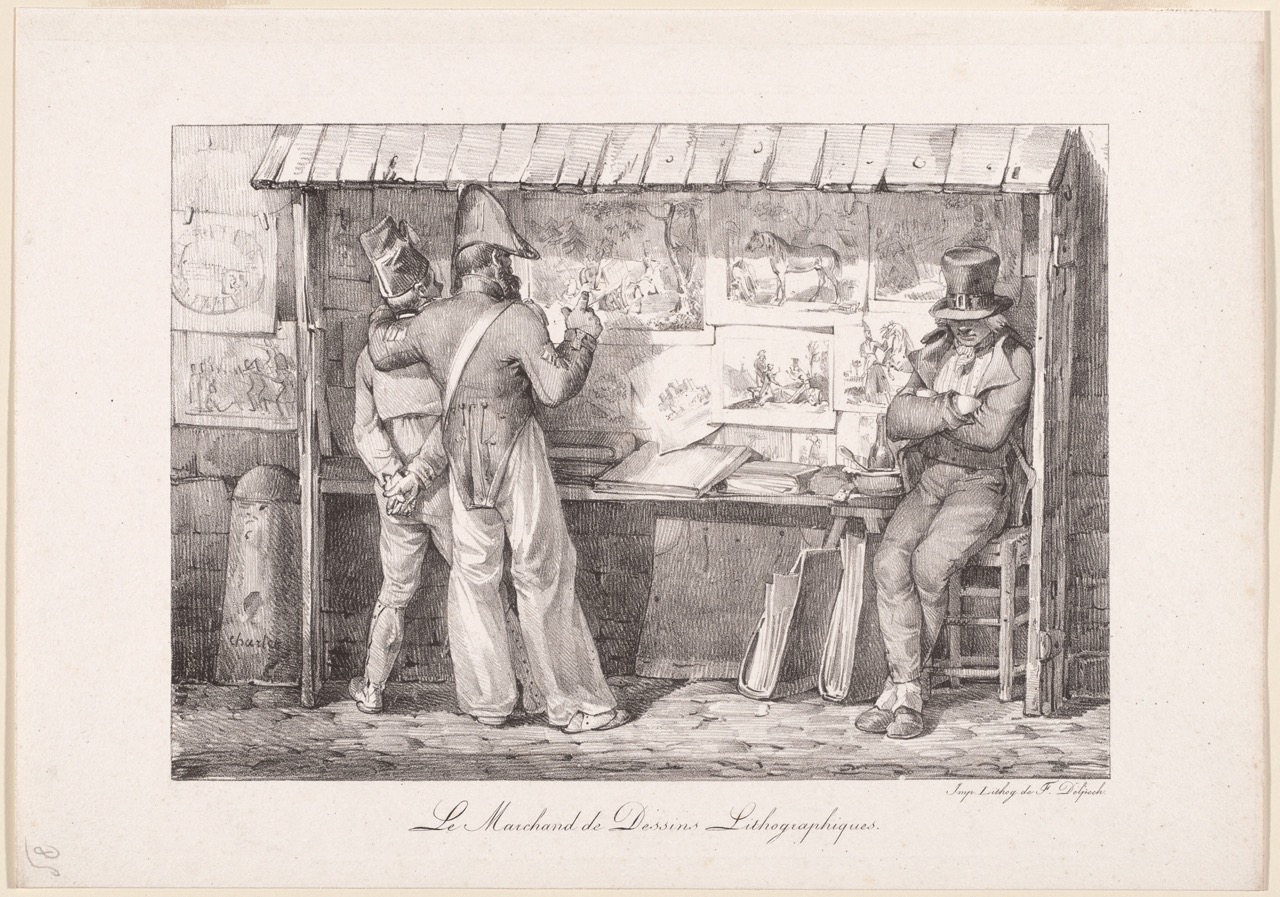
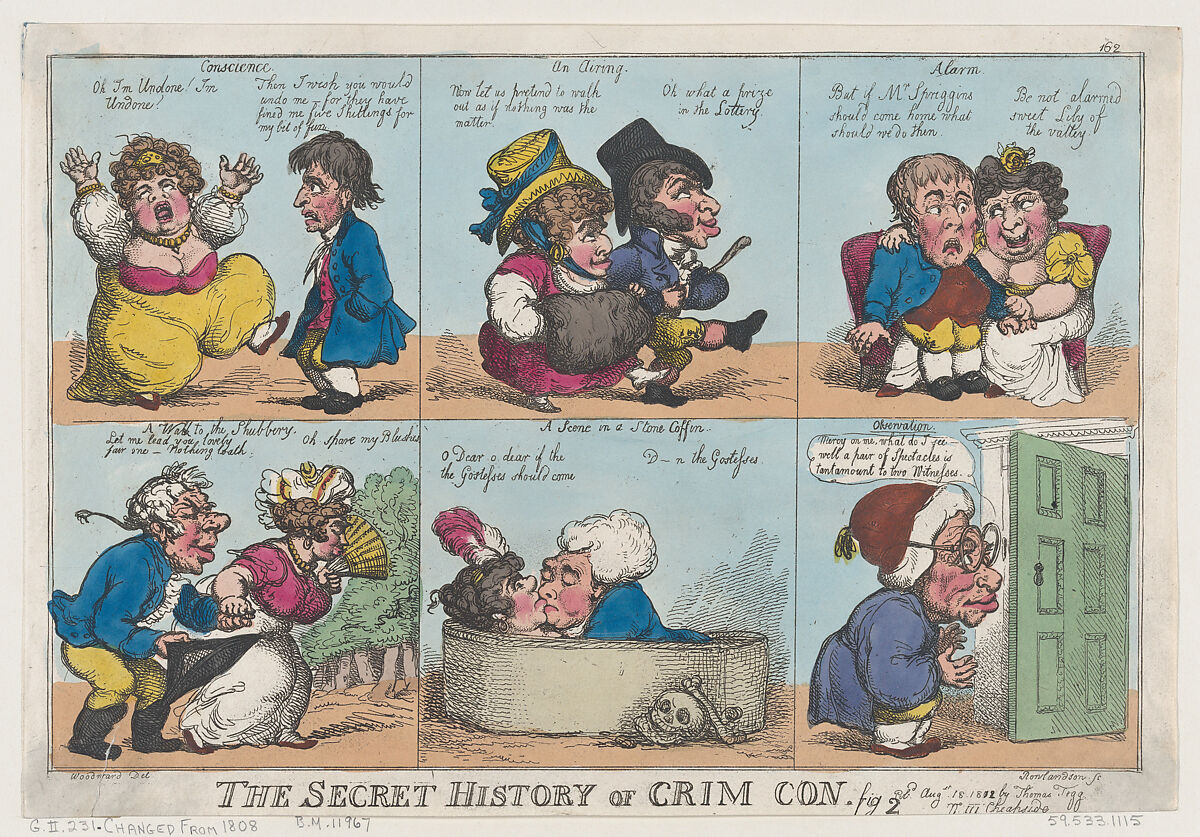
The popularity of newspapers and the illustrated press went hand in hand with the wider push for public literacy – ultimately giving rise to a genuinely ‘popular culture’. And while these new forms of mass media reached a much wider audience they tended to converge on similar themes and ideas. This trend was often driven by commercial considerations. Printing plates were routinely sold off to other publishers and newspaper editors were quick to recycle any stories or images that had proved profitable in the past. Terms like ‘stereotype’ and ‘cliché’ both originate in the jargon of the 19th century printing industry.
Mass produced artworks were also popular amongst members of Europe’s rapidly expanding middle class but, as they became cheaper and more accessible, the backlash against them grew. One French artist, Raoul de Croy, warned that the proliferation of wood-block prints represented the “assassination of the fine arts”. In an essay for one of France’s more prestigious art journals, De Croy urged his countrymen to reject the new printing technologies.
“Let our neighbors across the channel commercialize the productions of imagination and make art mechanically, with mechanical presses; but let us not imitate them.”
Germany’s educated elites also resisted the encroachment of popular culture on what they perceived to be ‘high culture’. The new mediums – which favored entertainment over edification – were often treated as a sort of pathogen which threatened to undermine the spiritual health of the population. More than a century before the idea of ‘brainrot’ was conceived the German language had specific terms for ‘reading frenzy’ (Lesewut) and ‘cinema addiction’ (Kinosucht).
Elite hostility to mass media also extended to art prints and other forms of household décor. By the late 19th century the more snobby members of German society had begun to refer to these objects as ‘kitsch’ – a term supposedly derived from the German verb ‘kitschen’ which meant to ‘smear’ or ‘throw together’.
Cultural critics across the Western world seized on ‘kitsch’ as a way to distinguish ‘fake’ artwork from the genuine article. And yet this distinction was often quite fuzzy and the exact definition of kitsch remained difficult to pin down. In a 1939 essay, art critic Clement Greenberg took an expansive view of what constituted kitsch. Alongside commercial art, magazines and pulp fiction he also considered tap dancing, pop music and Hollywood films to be forms of kitsch. According to Greenberg, these mediums were favored by those ‘insensible to the values of genuine culture’. Kitsch, he continued;
“…welcomes and cultivates this insensibility. It is the source of its profits. Kitsch is mechanical and operates by formulas. Kitsch is vicarious experience and faked sensations. Kitsch changes according to style, but remains always the same. Kitsch is the epitome of all that is spurious in the life of our times. Kitsch pretends to demand nothing of its customers except their money-not even their time.”
In retrospect it might have been a little premature to banish the entirety of popular culture to the 2-Dollar Shop but Greenberg’s critique was, in business jargon, ‘directionally correct’. In particular, he recognized that the mass-production of art had been a blight on local traditions and longstanding forms of artistic expression. In his essay he described kitsch as a sort of plague.
“Kitsch has not been confined to the cities in which it was born, but has flowed out over the countryside, wiping out folk culture. Nor has it shown any regard for geographical and national-cultural boundaries. Another mass product of Western industrialism, it has gone on a triumphal tour of the world, crowding out and defacing native cultures in one colonial country after another, so that it is now by way of becoming a universal culture, the first universal culture ever beheld.”
The current wave of AI-generated ‘hyperkitsch’ shares many similarities with the first wave and, thanks to the internet, its impact is being felt much faster. Indeed, the speed at which this imagery is spreading is only matched by the speed of the backlash against it. It took decades for the reaction against disposable art to coalesce around the term ‘kitsch’. By comparison it took only a few months of exposure to AI-generated imagery for the English-speaking world to start calling it ’slop’.
Much like the first wave, the second coming of kitsch has also been driven by both technological and social change. On the technological front you have widespread access to the internet, steady improvements in auto-translation tools and the sudden availability of generative image models like Sora and MidJourney. On the social side you have increasing literacy rates across the developing world – allowing more and more people to to prompt these tools and collect feedback on how their outputs are received (in the largely English-speaking world). Which is not to say that hyperkitsch is only being generated in poor countries or only being consumed in wealthy ones. It just means that the overlap between, say, Indian popular culture and American popular culture recently became much wider and both societies appear to be somewhat unprepared for the consequences of this exchange.
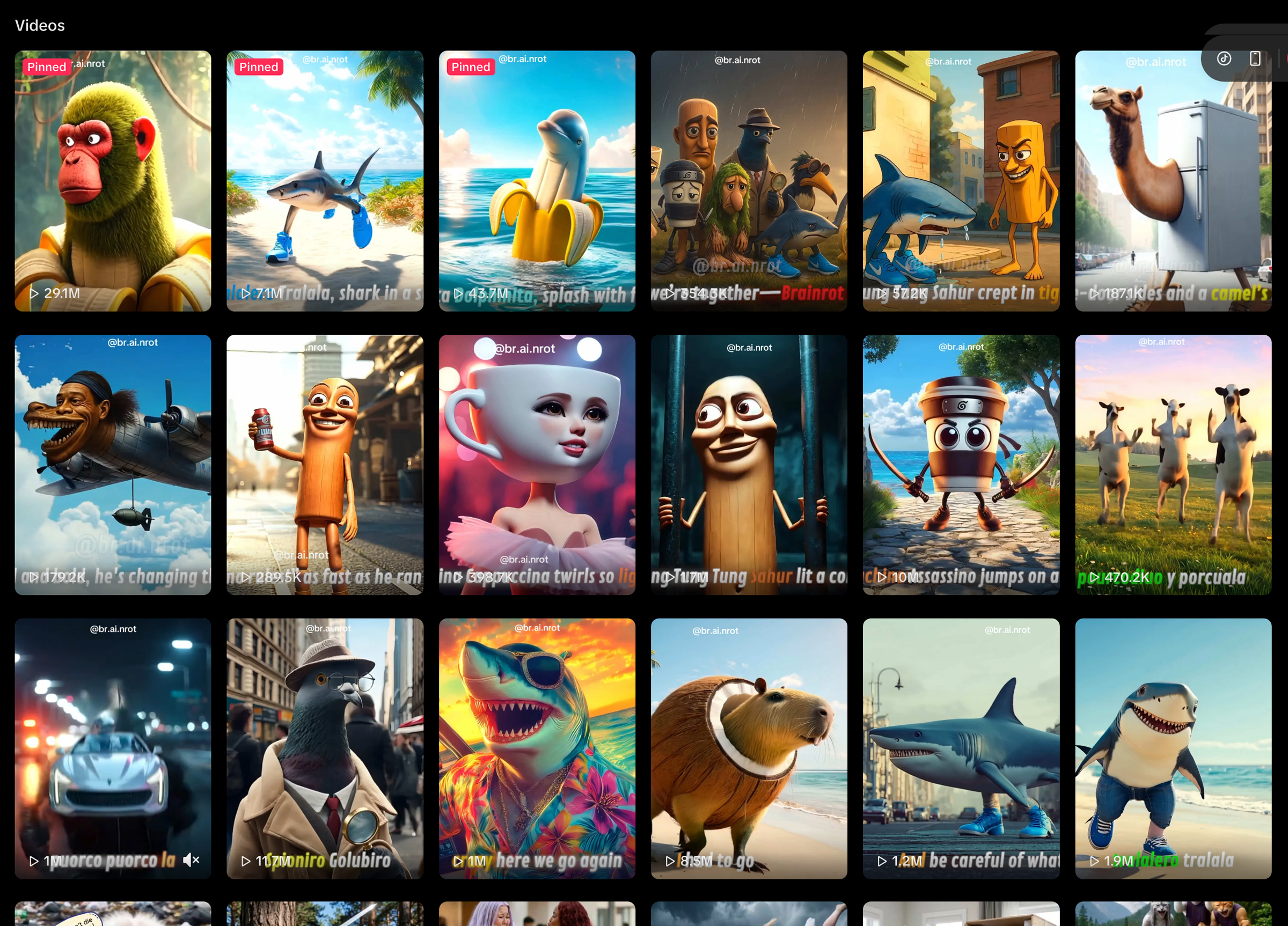
Before we get into the political economy of hyperkitsch I should take a moment to define what exactly hyperkitsch is. Unfortunately this is not a straightforward task. Much like the art critics who grappled with the implications of first wave of kitsch, we have to be a little loose with our definition in order to accommodate the wide variety of slop currently being generated.
At a minimum, this new genre of art would include all that bizarre imagery that has flooded Facebook and every other social media platform since late 2023. The dominant aesthetic of hyperkitsch – distilled from decades of high-key advertising imagery – is bright, vivid and surreal and, although the subject matter is very broad, there are recurring motifs. So you’ll come across a lot of images of ludicrously detailed sand sculptures, grotesque creatures, baby animals, sad children, disabled veterans, Buddy Christ and disturbing combinations of all of the above. Time lapse recordings of implausible home renovations and resin-based handicrafts are extremely popular. As are videos of heartwarming interactions between humans and animals.
Many of these images are designed to tug at the heartstrings but pretty much all of them carry the emotional weight of a sappy greeting card.
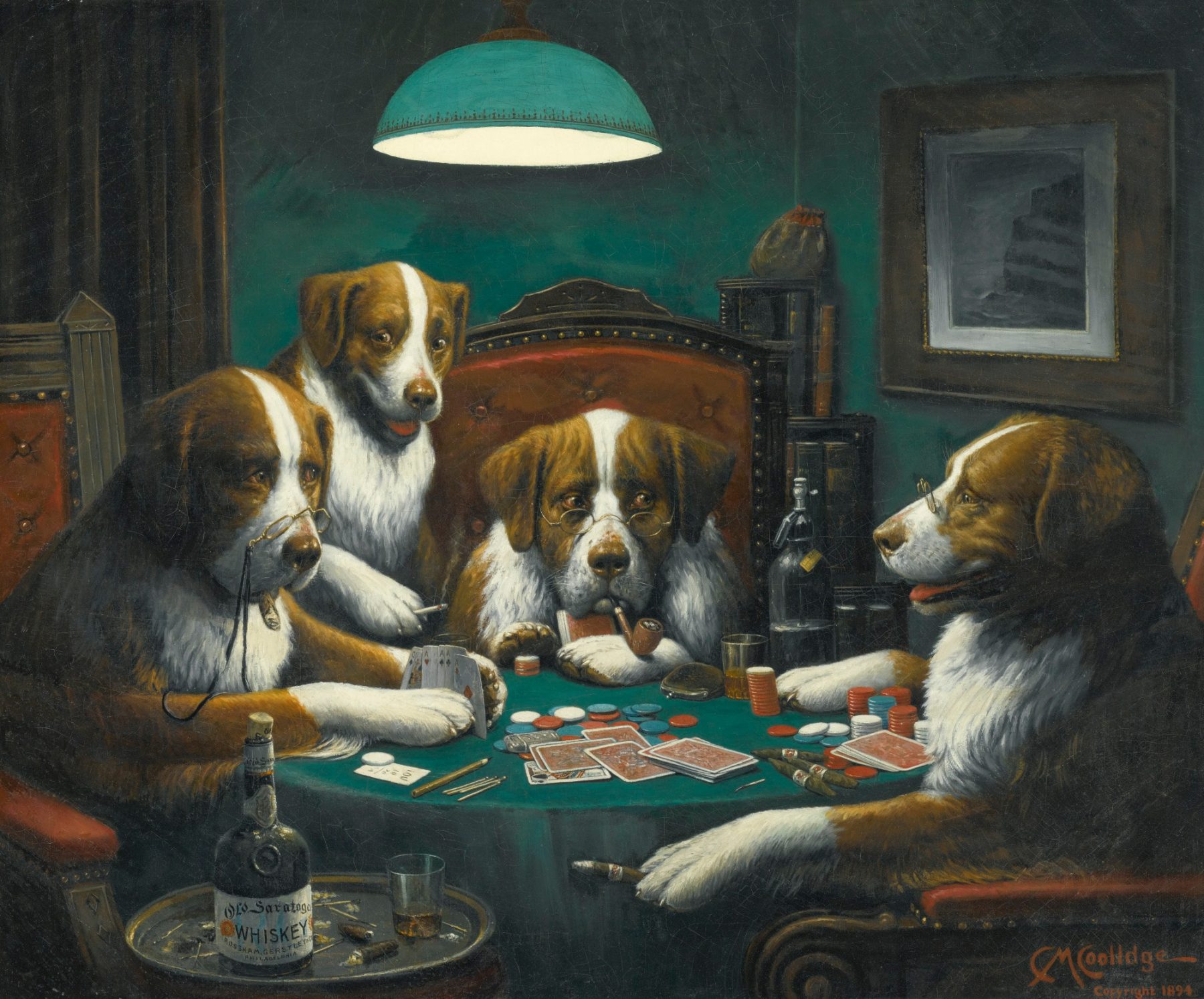
In terms of aesthetics and themes, the closest human parallels to this genre would be artists like Thomas Kincaid (famous for shopping mall art that resembles Disney matte paintings) and Cassius Marcellus Coolidge (famous for his ‘dogs playing poker’ series). At the height of their commercial success these artists were panned by critics as sentimental and derivative but, compared to today’s generative AI spammers, they seem like Leonardo Da Vinci.
This new wave of generative media – whether it be text, images, music or video – does provide a sort of funhouse-mirror reflection of popular culture. In the same way that a word cloud of the most frequently used terms in a book will tell you something about what that book is about, the recurring themes of hyperkitsch tell us what sort of hopes and anxieties we’re collectively harboring.
We are, for instance, fascinated by the idea that the cantilevered swimming pool on the roof of our expensive hotel will suddenly give way and send us plunging to the street below. Enjoyment of this premise appears to cross all class and national boundaries. Western tourists get a vivid confirmation of their anxieties about building standards in the developing world while those in the developing world get a lifelike depiction of their most vengeful fantasies towards western tourists.
Aside from the aesthetics, the standout feature of hyperkitsch is the sheer volume of the material being generated. One study estimated that 15 billion AI images were generated in the first year that Gen-AI tools were made available to the public. By comparison it took 150 years for as many photographs to be taken.
But why are there so many of these accounts? It turns out they’re a direct result of social media monetisation schemes. YouTube was the first platform to try to incentivise users by paying royalties for viral videos but Facebook wasn’t far behind and, over the last few years, every major social media platform has introduced some sort of ‘profit-sharing’ or monetisation program. These schemes reward users for posting material that receives high engagement (in the form of replies, likes, re-posts etc).
Using AI tools like Midjourney and Dall-E the authors of hyperkitsch generally produce hundreds, if not thousands, of variations on a given theme without ever having to review their output. Through trial and error they hope to produce something that goes viral on Facebook.
Prior to a recent crackdown1 almost 20% of the short-form content on YouTube was entirely AI generated. Despite (or perhaps because of) its mindlessness this material can prove incredibly lucrative. One popular channel in India – Bandar Apna Dost – managed to rack up almost two billion views across about 400 short videos – which would have netted the creators about $5.7 million AUD.
For the platforms, the deluge of Gen-AI images represent a valuable source of revenue (at least in the short term) because the more engagement these posts receive the more ads the platform can serve and the more impressions those ads will ultimately get. Neither does it matter that some large percentage of this engagement is artificial. Social media platforms are under no obligation to disclose the extent to which user activity on their platform consists of bots automatically responding to other bots. In many cases those advertising on the platform don’t really want to know the real reach of their ad buys because the bogus figures prop up their marketing budgets and brand strategies (see Banner Blindness for more on this phenomenon).
Currently Twitter’s threshold for ‘revenue sharing’ means that eligible users need to have racked up at least five million ‘impressions’ within the last three months and have at least 500 verified (read: paid) followers. The thresholds for Facebook’s ‘Creator Program’ and YouTube’s ‘Partner Program’ are a closely guarded secret but they’re clearly low enough to discourage most people in rich countries from churning out Gen-AI spam while still being high enough to mobilise a small army of desperate people in places like India and Bangladesh.
Right now the subcontinent appears to be the epicentre for AI spam but The Phillipines, Vietnam, Brazil, Nigeria and other countries with low per-capita incomes also contribute to the digital algae bloom that is slowly asphyxiating all genuine forms of human expression. Needless to say the real culprits are the Silicon Valley tech companies that released these tools onto the web, for free, as a loss-leader to inflate their latest tech bubble.
Despite the apparent success of these accounts there’s no reason to assume that spammers in India are particularly good at anticipating what sort of images will engage bored suburbanites on the other side of the world. Instead, their strategy seems to consist of throwing high volumes of low-quality imagery at social media recommendation algorithms to see what sticks. This process functions like its own Generative Adversarial Network with the intrepid sloperators in Mumbai and Manila serving as the generators and the Facebook-addicted boomers in Sydney and Los Angeles serving as the discriminators. Shrimp Jesus is the result.
As Cory Doctorow pointed out in an essay on the proliferation of Gen-AI content:
“For poor engagement farmers in the global south chasing the fractional pennies that Facebook shells out for successful clickbait, the actual content of the slop is beside the point. These spammers aren’t necessarily tuned into the psyche of the wealthy-world Facebook users who represent Meta’s top monetization subjects. They’re just trying everything and doubling down on anything that moves the needle, A/B splitting their way into weird, hyper-optimized, grotesque crap:”
So let’s look at some of that crap.
1. In January 2026, YouTube removed 16 channels with a combined 35 million subscribers and 4.7 billion views under its ‘inauthentic content’ policy.
HyperKitsch (exhibit A):
Cheating Husband Throws Wife From Airplane Wife Buries Him In Snow
Here’s where we’re at in July 2026. The spammers know from the advertising industry that sex sells but they also know that they can’t publish anything too explicit due to the guard rails put in place by the AI-companies and the content restrictions enforced by social media platforms. They know from soap operas and telenovellas that audiences crave melodramatic stories involving cheating spouses and jilted lovers. They know that humans are fascinated by scenes of people falling from great heights and that we’re all instinctively drawn to the sight and sound of crying children.
The people producing hyperkitsch have also learned, through trial and error, that generative video tools are much better at producing fake 3D animations than they are at producing photorealistic footage. Due to the randomised nature of generative models, maintaining consistency across multiple clips is a major challenge and, even if the description of a given character is copied word-for-word, the model will produce slightly different results with each attempt. Some of these continuity errors are easy to overlook but humans are very good at noticing if a human face changes from one moment to the next.
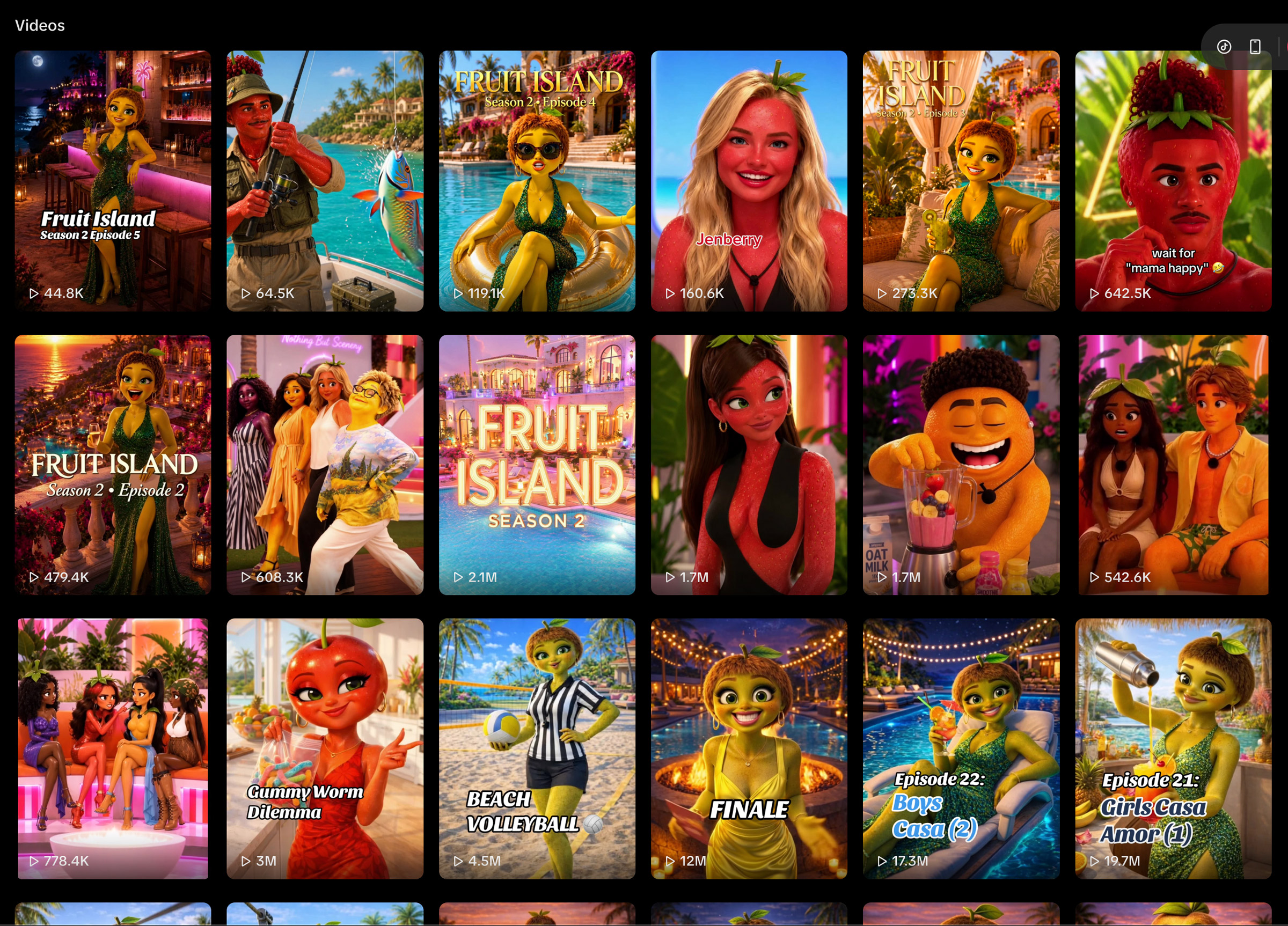
For a number of different reason these sort of errors are easier to manage if users specify that the characters be rendered as Pixar-style cartoon characters1. That’s how we’ve ended up with a whole sub-genre of AI-videos featuring heavily sexualised fruit-people. The specific application responsible for these videos appears to be a modified version of Chat GPT called ‘Object Talk’2 which allows people to quickly create ‘talking object’ videos featuring fruits and vegetables acting out all sorts of weirdly fetishistic morality plays.
Typical storylines involve infidelity, obesity, interracial (inter-botanical?) relationships, domestic violence, pregnancy, abandoned children and all sorts of bodily functions. The more violent and misogynistic these videos are the more views they tend to get.
The example I’ve chosen was first posted on a TikTok account called litle.tots under the title ‘Cheating Husband Throws Wife From Airplane Wife Buries Him In Snow’. It features almost all of the tropes associated with these fruit-themed micro-dramas. It opens onboard a commercial flight where an overweight apple-headed lady is sitting beside her muscular strawberry-headed husband with their toddler sitting between them on their laps. The husband spies an attractive lemon-haired stewardess and follows her into the bathroom. A moment later Apple Lady opens the bathroom door and discovers her husband in the arms of the citrus hussie but, before she can reckon with this betrayal, she’s thrown from the aircraft along with her crying child.
What follows is a lengthy sequence where Apple Lady and her daughter pull themselves out of a snowdrift and build a shelter inside the body of a dead whale while the background music does most of the emotional heavy lifting3. For some reason a number of other fruit people end up being thrown from planes in the vicinity of said whale – enabling Apple Lady to collect a tidy profit by charging the new arrivals for access to the whale.
In the final act of this two-minute video the husband gets his comeuppance when he stumbles across his new girlfriend making out with an even more muscular pickle. They laugh at his distress and throw him out of the plane – whereupon he finds himself stuck in the same snowdrift where his wife landed earlier. Apple Lady takes a break from counting her money to investigate the new arrival and, upon recognising her husband, promptly rolls a rock onto his head and gives her daughter a high five.
As much as I’d like to write off these sorts of videos as weird cultural aberrations, the numbers suggest that salacious fruit dramas are incredibly popular. On TikTok ‘Cheating Husband Throws Wife’ has 9.1 million views on an account with 4.3 million followers. On Instagram the same video has 5.3 million views. Some of these views can be attributed to bots but even high estimates of artificial engagement still leave us with millions of real viewers.
Responses to the video range from exasperation at the blight of Gen-AI (“What the fuck are we even doing anymore?”) to amazement at the weirdness of it all (“This is one of the most affecting pieces of outsider art in history”) to outright despair at humanity (“Kim Jong-un, don’t wait one more second, press that button”). It’s safe to say that Clement Greenberg – who considered Hitchcock to be kitsch) would not be very impressed by the state of popular culture in 2026. As Dan Brooks wrote in an article for The New York Times:
“…slop has invaded social media in ways that make it feel like an oppressive force: all vaguely familiar, all pitched to an audience dumber than anyone you know, entertainment that numbs the spirit instead of expanding it, imposed by economic forces no one can control.”
1. Pixar-style 3D animations are easy to simulate using generative-AI because the models have been ‘trained’ on an enormous volume of these sorts of 3D animated children’s shows. Tools like Midjourney allow users to create a set of Character Reference (CREF) images to promote consistency between individual ‘shots’.
2. The accompanying music, which has become a standard soundtrack to all sorts of different AI-slop videos, is a remix of a Russian pop ballad called “Камин” (Fireplace) by music producer Emin Agalarov.
3. Object Talk is one of dozens of custom Chat-GPT wrappers offered by a company called AI Century which claims on its website that it is on a “mission to equip the next generation of AI creators with AI tools, knowledge, and support”.
HyperKitsch (exhibit B):
World Top 8 Famous Australian Prime Ministers and their Favourite Foods
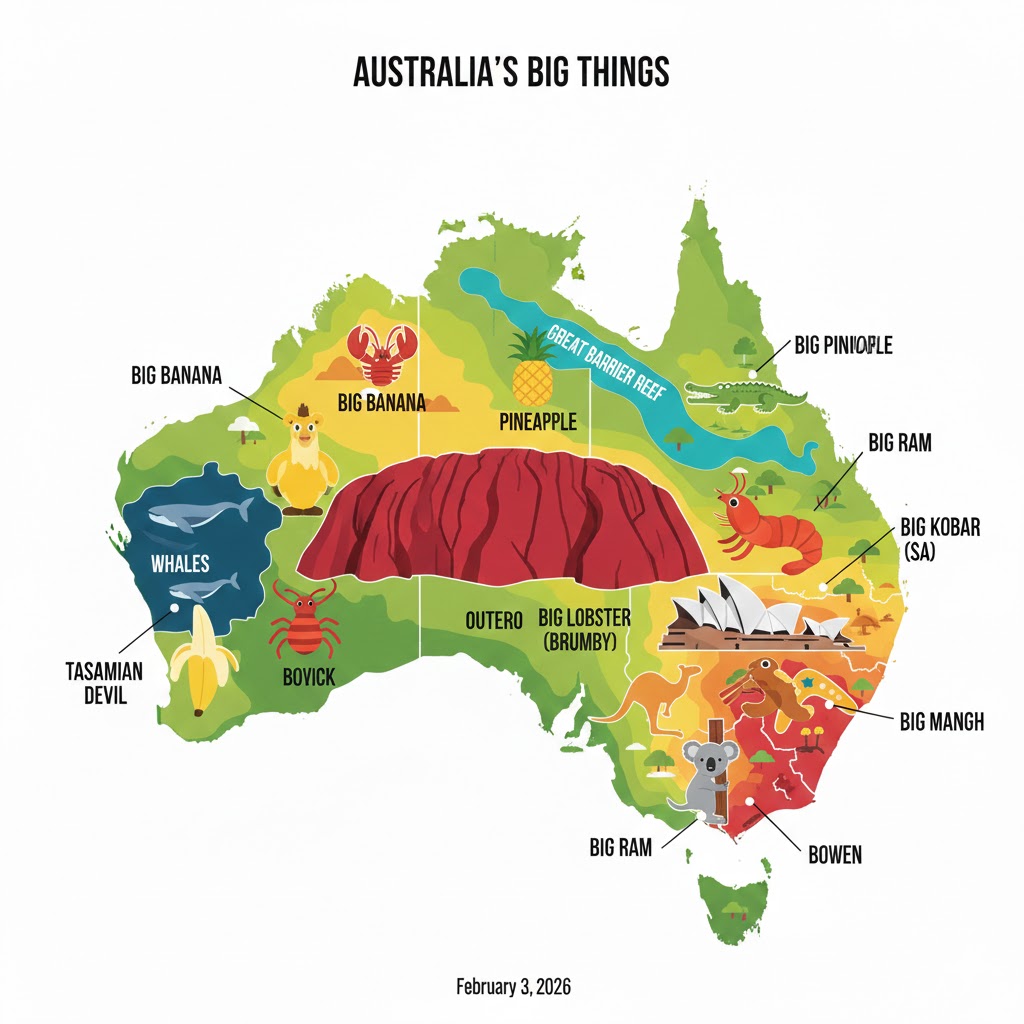
By far my favourite sub-genre of hyperkitsch are infographics dedicated to pop-culture or politics. These charts are entertaining because they reveal the limitations of the technology. At a very basic level, the task of designing an infographic requires artists to present information in a way that’s visually satisfying while still maintaining the integrity of the data that’s being presented. This turns out to be difficult for Gen-AI models to achieve. For example, when I asked Google’s Gemini to create a map of Australia showing all our oversized roadside tourist attractions the algorithm got the shape of the country roughly right and referenced some of the right landmarks but their placement on the map was more or less random. This failure is not for lack of reference material – there are literally thousands of human-created maps which lay out where to find the Big Banana and the Big Pineapple and the Big Merino. Gemini simply couldn’t reproduce one of these maps because it wasn’t built to understand what is being represented in those images.
The example I’ve chosen to focus on for this category is a somewhat whimsical chart created by Facebook user Irfan Khan which lists the ‘World Top 8 Famous Australian Prime Ministers and their Favourite Foods’. Now I don’t want to nitpick but it should be stated at the outset that there are actually 12 portraits on this chart (although there are only eight named Prime Ministers when you discount duplicates). Somehow Paul Keating has been labelled as Bob Hawke and Bob Hawke has been labelled ‘Meat Pies’. These are the obvious mistakes but other aspects of the chart seem harder to fact check. For instance Hawke’s favourite meal appears to be a pint of beer and several large chunks of mango. This could be true. I don’t know.
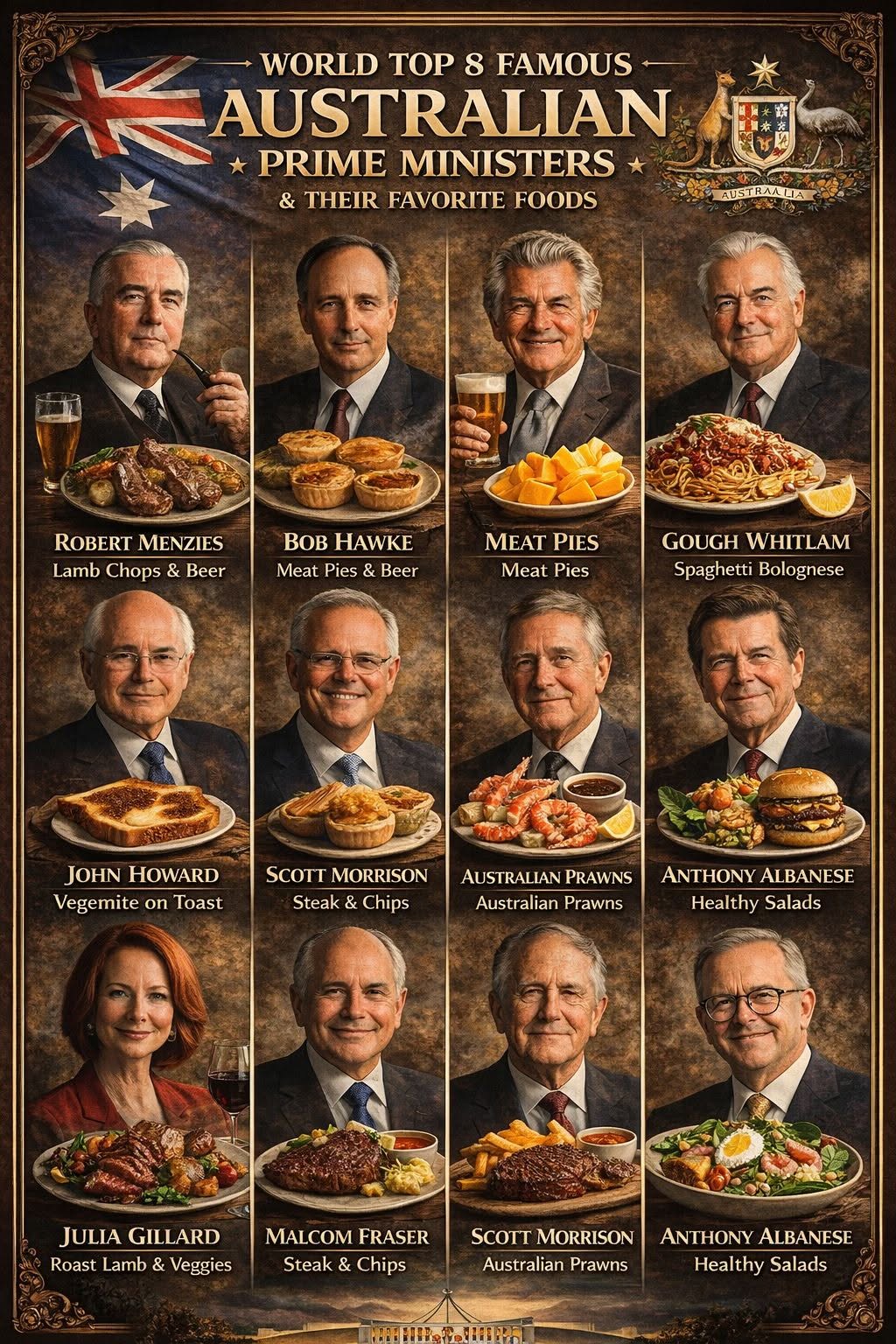
The main reason that this dumb image achieved a measure of viral success is because the model has added a new Prime Minister to the historic lineup known only as ‘Australian Prawns’ whose favourite food is, disturbingly, Australian Prawns. Most people probably wouldn’t give any of Khan’s charts a second glance if it weren’t for the ‘mistakes’ and if you look at Khan’s Facebook account you’ll notice that the only images that receive any sort of engagement are those that feature prominent errors or surreal additions like Mr Prawns1.
Web pioneer Ward Cunningham, the man who invented the ‘wiki’ format for organising information online, understood this aspect of online discourse very well. He observed that the best way to get the right answer on the internet is not to ask the right question but to post the wrong answer. The irresistible impulse to correct other people is what makes Khan’s niche so successful because mistakes are an intrinsic element of generative outputs. All Khan has to do is wait till the model spits out a funny error and he’s off to the races.
This explains the relatively high levels of engagement with particularly weird AI posts. The other factor that drives engagement is the shallow praise provided by bots in the comment section. Savvy users will write off replies along the lines of ‘thanks for sharing’ or just ‘❤️❤️❤️’ as automated responses but a small percentage of users feel compelled to point out that the image in question is obviously AI – which further boosts engagement.
In recent years the increasing volume of engagement-bait has made interacting with social media feel more like a chore. The decision to communicate with strangers on the web is based on an expectation of reciprocity. You respond to a question posted by a stranger on a DIY forum with the expectation that someone else will do the same for you when you have a question. Bot activity is corrosive to this delicate back-scratching arrangement because bots aren’t looking for help from humans and aren’t trying to provide it.
When there’s no incentive to participate it’s no wonder that actual humans are abandoning social media platforms. This exodus leaves a vacuum which is filled by more bots and more AI-generated content – a cycle that’s exacerbated by a lucrative secondary market for ‘aged’ social media accounts with connections to real people and a history of genuine interactions. These accounts are valuable to spammers because they are less likely to trigger automated spam filters.
1. This chart also exhibits a weird quirk of AI-models like Stable Diffusion in that previous outputs sometimes bleed into current outputs. So if you’re trying to generate an image of a coral reef and then decide you actually want an image of a wheat field you might end up with a somewhat blue-tinted farm. In this case Khan appears to have been batch-generating dozens of different variations of this same chart for various overseas markets. Some feature world leaders but many others feature historic U.S. Presidents. This may explain why the Australian Prime Ministers chart also features Ronald Reagan and what appears to be a grizzled George Bush Jnr. It might also explain why the version of John Howard without glasses (bottom line labelled ‘Malcolm Fraser’) looks vaguely like Mikhail Gorbachev.
(tentative) Conclusions
Can the first wave of kitsch tell us anything about how this latest wave might play out? If history is any guide we may eventually see Generative AI artworks achieve some level of legitimacy. So how long do we have to wait for a re-appraisal of Jesus Shrimp or Balenciaga Pope? How long until we look back fondly on Cheating Husband Throws Wife From Airplane?

If we look at the last 150 years we can see how the popular perception of kitsch changed over time. It was first given a distinct label in the 1870s, it was widely recognised by the 1930s and, by the 1960s, you had artists like Andy Warhol becoming world famous by intentionally re-producing kitschy themes. Nowadays the dictinction between high and low art is as blurry as its ever been and some of the more prominant early purvyors of kitsch have been quietly elevated to the status of legitimate artists. Cassius Marcellus Coolidge (the dogs-playing-poker guy) died in 1934 and his work now commands prices at auction in the low to mid six figures.
Gen-AI appears to be speed-running this timeline. The first publicly available generative-image model (DALL-E) was released in January 2021. Four years later the term ‘slop’ was selected as the Word of the Year by Merriam-Webster. On that basis we should expect the Gen-AI Warhol to emerge sometime in the near future.
For the time being the only beneficiaries of the second wave of kitsch are the spam-influencers, the spammers themselves and the tech companies that are extracting short term profits from a medium which is actively destroying the credibility of their platforms1.
There’s a line of reasoning that says that hostility towards AI slop is just the latest episode in a long series of moral panics over new media. The introduction of photography, film, radio, television, comic books, social media and computer games were all accompanied by bouts of public hysteria. Those with the pitchforks invariably argued that these new mediums would shorten attention spans, corrupt the youth and degrade society. Even literacy itself was greeted with a certain level of scepticism in the ancient world. Socrates warned that learning to read and the write risked ‘implanting forgetfulness’ into the soul.
It’s also true that, viewed as art, hyperkitsch is no worse than any other low-effort attempts to capture attention. As artist Francesco D’Isa wrote in an article for The Philosophical Salon.
“The majority of human production has always been slop. Mediocrity is not a bug of technology; it is the baseline of culture. The canon of art we revere today – those few thousands works in museums and textbooks – is the surviving tip of an immense iceberg of forgotten, derivative, or simply boring creations.”
The difference, in this case, is that hyperkitsch isn’t actually being produced by humans. As such, it isn’t constrained by human limits on time and effort. Midjourney can produce a million variations of the Balenciaga Pope before your copy of Photoshop has finished loading. And it’s the quantity, not the quality, of this material that threatens to drown out genuine forms of human expression. That fact remains true even if you’re wiling to concede that most humans attempts at artistic expression are somewhat uninspired. Instagram and TikTok may have flooded the internet with cliched photos and mindless imitations of viral videos but even the most derivative posts still require a certain amount of time and effort. Making bad art is how you become a better artist. It’s not clear, at this stage, that supervising a machine that generates bad art will have the same effect.
1. I assume anyone involved in the sale of epoxy resin is also getting a little bump in profits thanks to all the bogus DIY videos.
Notes:
Jason Koebler (2024) – Where Facebook’s AI Slop Comes From
Ana Maria Constantin (2026) – YouTube’s AI slop purge is punishing the human creators who never showed their faces
Irfan Khan (2026) – Facebook
Matt Growcoot (2023) – AI Has Taken One Year to Produce as Many Images as Photographers Did in 150 Years
Max Read (2024) – Drowning in Slop
Dan Brooks (2026) – The Internet’s Newest Hate Watch
Kat Tenbarge (2026) – There’s Something Very Dark About a Lot of Those Viral AI Fruit Videos
Patricia Mainardi (2017) – Another World: Nineteenth Century Illustrated Print Culture
Corey Ross (2008) – Media and the Making of Modern Germany
Horan Engraving (c. 1950s) – The Art and Technique of Photoengraving
Francesco D’Isa (2026) – The Idea of ‘AI Slop’ is Slop



Leave a Reply