ToS: Stölenhags
How Midjourney industrialised the business of art forgeries.
On May 29th 1945, just weeks after the end of the war in Europe, Allied authorities turned up on the doorstep of Dutch art dealer Han van Meegeren. After five years of Nazi occupation Dutch society was experiencing a groundswell of recriminations. Actual collaborators were being arrested and tried by military tribunals and anyone who had thrived under the occupation, or simply come away unscathed, was considered suspect. One of many betrayals that fuelled public outrage was the question of how a Dutch masterpiece by Johannes Vermeer had ended up in the personal collection of Hitler’s right hand man, Hermann Göring.
The painting, Christ with the Adulteress, had been sold to Göring for a staggering sum in 1943 only to be rediscovered in the last weeks of the war amongst a treasure trove of looted art. The man accused of facilitating the sale was Han van Meegeren.
Initially, von Meegeren refused to cooperate with the investigation. The case against him was strong and, if he was found guilty of collaboration, he faced either a long prison sentence or a brief appearance in front of a firing squad. However, as the trial date approached, van Meegeren settled on a surprising defence. He claimed that the sale of the painting should not be considered an act of treason because the work was a forgery of his own making.
Not only that, van Meegeren claimed that several other paintings attributed to Vermeer (and other Dutch masters) were also his forgeries. These sensational claims sent shockwaves through the Dutch art world and many of the same art historians and appraisers which van Meegeren had bamboozled to make his fortune1 testified against him in court – insisting that at least some of his claimed forgeries were, in fact, the genuine article.
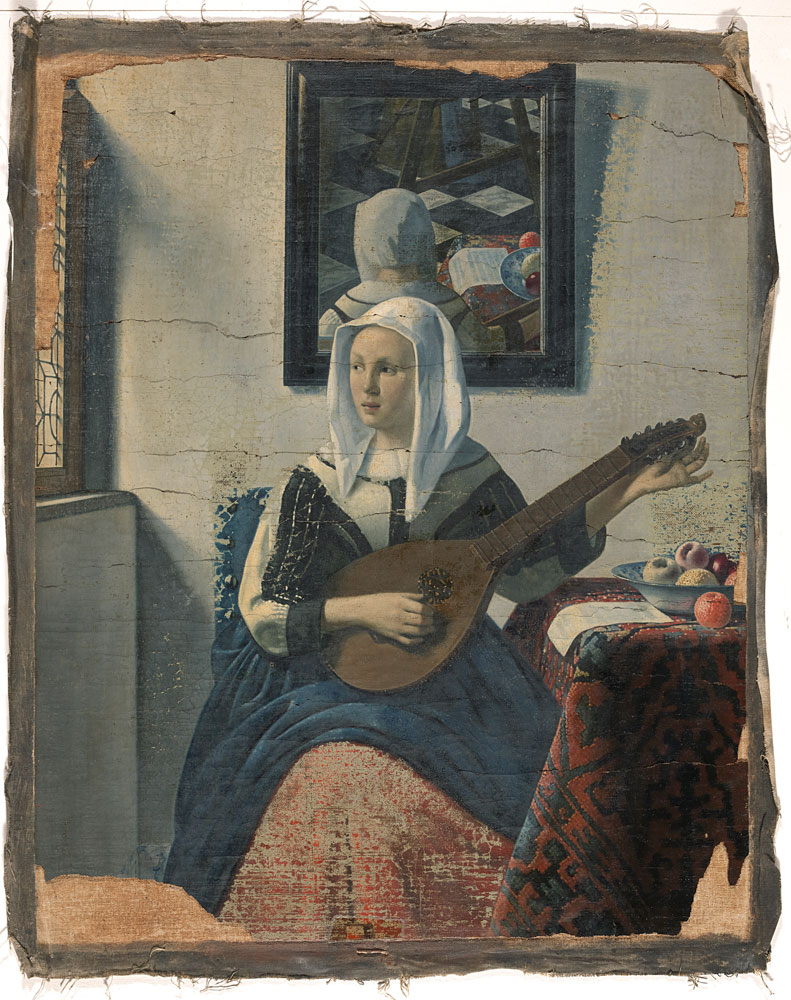
The trial of van Megeren became a media circus when the court allowed the artist to prove his claim by painting another work in the style of Vermeer. Under the eyes of prison authorities and the Dutch press, van Meegeren spent two months painting Young Christ in the Temple. It was then, and remains now, a fairly ugly painting but, fortunately for van Meegeren, it compared favorably to his earlier forgeries and the treason charges were quietly dropped. In the end, van Meegeren was sentenced to two years in prison for obtaining money by deception’ and ‘appending false names and signatures with the intent to deceive’.
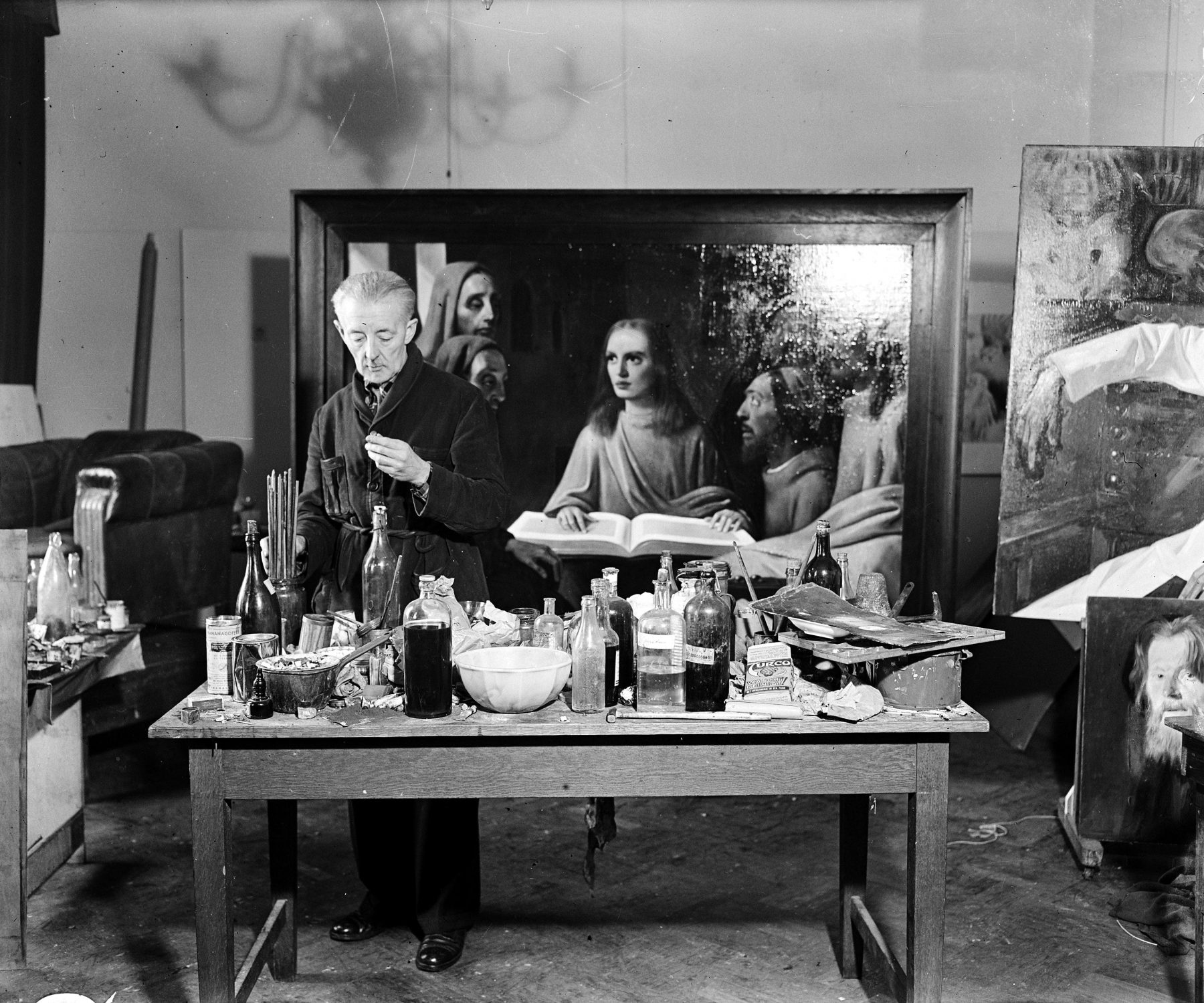
The revelation that an obscure artist and conman had managed to fool so many in the art world led to some genuine soul searching. The art critics wanted to know how van Meegeren’s forgeries had passed the forensic tests and withstood the scrutiny of so many experts. Meanwhile the public wanted to know what the point of art criticism actually was if the experts couldn’t tell the difference between a painting produced by one of the Dutch masters and one produced by a determined hack. And why was a work of art worth millions of dollars when attributed to Vermeer suddenly worthless when attributed to van Meegeren? Wasn’t it the same painting?
The first question was easy to answer because van Meegeren was more than happy to detail his artistic process. In order to produce his fakes van Meegeren had gone to enormous lengths. He combed through the collections of second hand art dealers to find suitable canvases from the 17th century. He travelled across Europe to source the right ingredients for his paint and find the right props to stage his scenes. Upon returning to his studio he painstakingly erased the original artworks and developed new methods to simulate the appearance and the structure of centuries-old paint. Nevertheless, all of that effort wouldn’t have counted for much if van Meegeren hadn’t also been an accomplished painter and art historian in his own right.
The other questions that the van Meegern affair raised – about the purpose of art criticism and the value of ‘authenticity’ – were much harder to answer. One school of thought – referred to as ‘formalism’ – holds that artworks should be evaluated purely on their aesthetic elements and that everything necessary to appreciate an artwork is right there on the canvas/screen/page etc. Playing devil’s advocate, philosopher Denis Dutton summed up this position in his paper on ‘artistic crimes’:
“If an aesthetic object has been widely admired and been discovered to be a forgery, a copy, or a misattribution, why reject it? A painting has hung for years on a museum wall, giving delight to generations of art lovers. One day it is revealed to be a forgery, and is immediately removed from view. But why? The discovery that a work of art is forged, as say, a van Meegeren Vermeer, does not alter the perceived qualities of the work. Hence it can make no aesthetic difference whether a work is forged or not”
Why does it matter? This is the question that we need to grapple with when it comes to evaluating the flood of AI-generated ‘artworks’ that have been created over the last few years.
To understand why authenticity matters we have to look at how generative forgeries are created in the first place. Van Meegeren spent the first half of his life studying the techniques of the masters and the second half of his life inventing a whole new scientific process for artificially aging his handiwork. Needless to say, those who want to create passable forgeries of their favourite artists in the 21st century have a much easier task ahead of them thanks to generative AI.
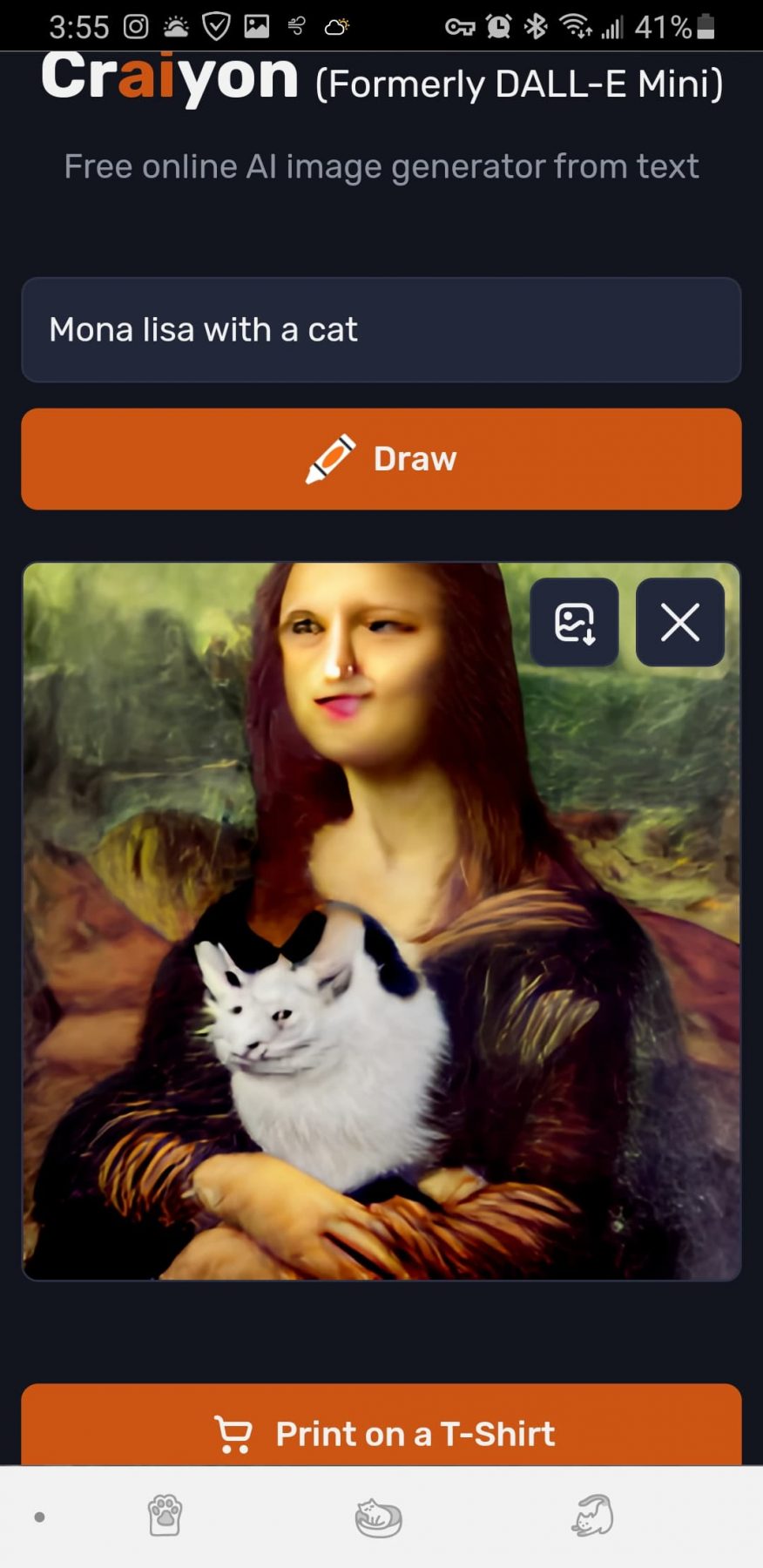
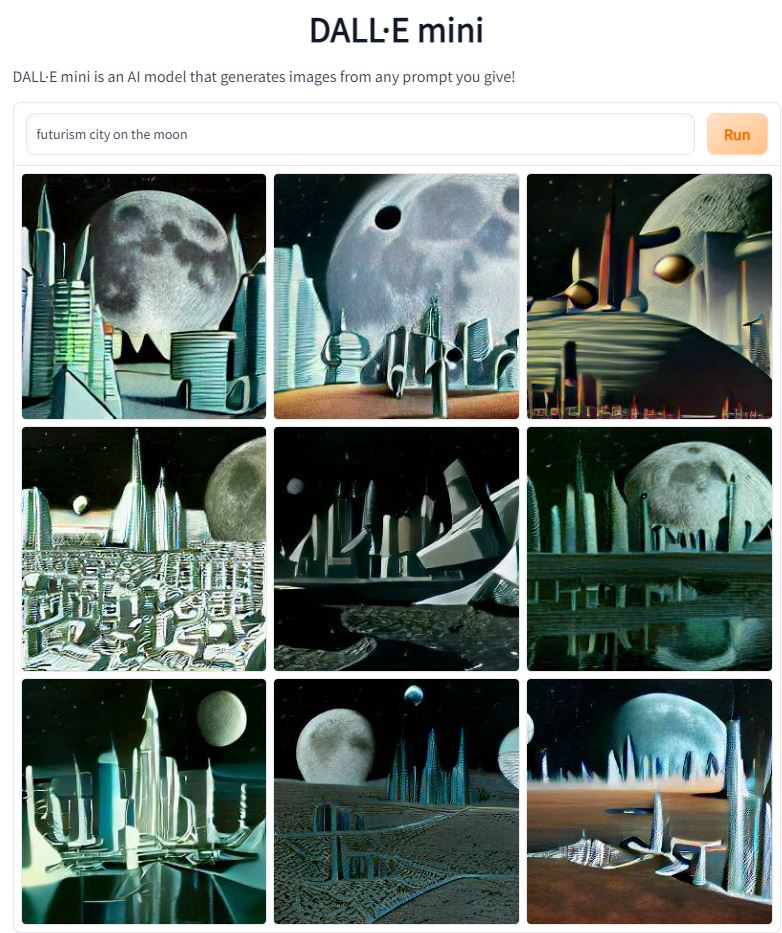
The first publicly accessible art-generating bot was OpenAI’s DALL-E which was released in 20222. As a proof of concept DALL-E was remarkable but it was severely limited by the size and quality of its training data. In the first year or so following its release DALL-E certainly lived up to its namesake – producing images that were rife with strange distortions and hallucinations. 2022 was the year of melted faces, recursive teeth and clumps of human fingers. You could ask DALL-E for a rendering of the Mona Lisa holding a cat but what you got back would be somewhat nightmarish.
The app that really jumpstarted the current wave generative art was an application known as Midjourney which was released through Discord that same year. Midjourney’s early images were just as weird and disturbing as those generated by DALL-E but, as more training data was fed into the model, the quality of its output improved dramatically. In the race for high quality outputs Midjourney managed to set itself apart by weighting its model towards ‘artistic’ compositions. While most Gen-AI labs were focused on strict visual fidelity – matching output with input – Midjourney was trying to produce images that its users would consider aesthetically pleasing. In an interview with The Register, Midjourney founder David Holz outlined his vision for the app.
“For us, when we were optimizing it, we wanted it to kind of look beautiful, and beautiful doesn’t necessarily mean realistic. … If anything, actually we do bias it a little bit away from photos. … I know this technology can be used as a deep fake super machine. And I don’t think the world needs more fake photos. I don’t really want to be a source of fake photos in the world.”
Not wanting to add to the flood of photographic misinformation is commendable but it’s telling that Holz didn’t seem bothered by the possibility that his app might become the primary source of fake artwork. We’ll return to the issue of forgeries in a moment but, before we do, it’s worth exploring how Midjourney went about injecting beauty into its slop.
With some exceptions the various generative AI tools all produce very similar outputs. The various AI labs use the same databases of images to train their models and the underlying algorithms differ only slightly. As a result OpenAI’s GPT Image 2, Adobe’s Firefly and Google’s Nano Banana Pro all tend to produce images with similar visual style.
The opportunity to customise the output of these models is somewhat limited. Generative-AI is a black box – you might know what goes into it and you can see what comes out of it but what happens in between is determined by very complicated forms of linear algebra that defy any sort of direct interference. As the AI training corpus widens, image generators tend to converge on the same style of outputs – just as text generators tend toward the same style of prose.
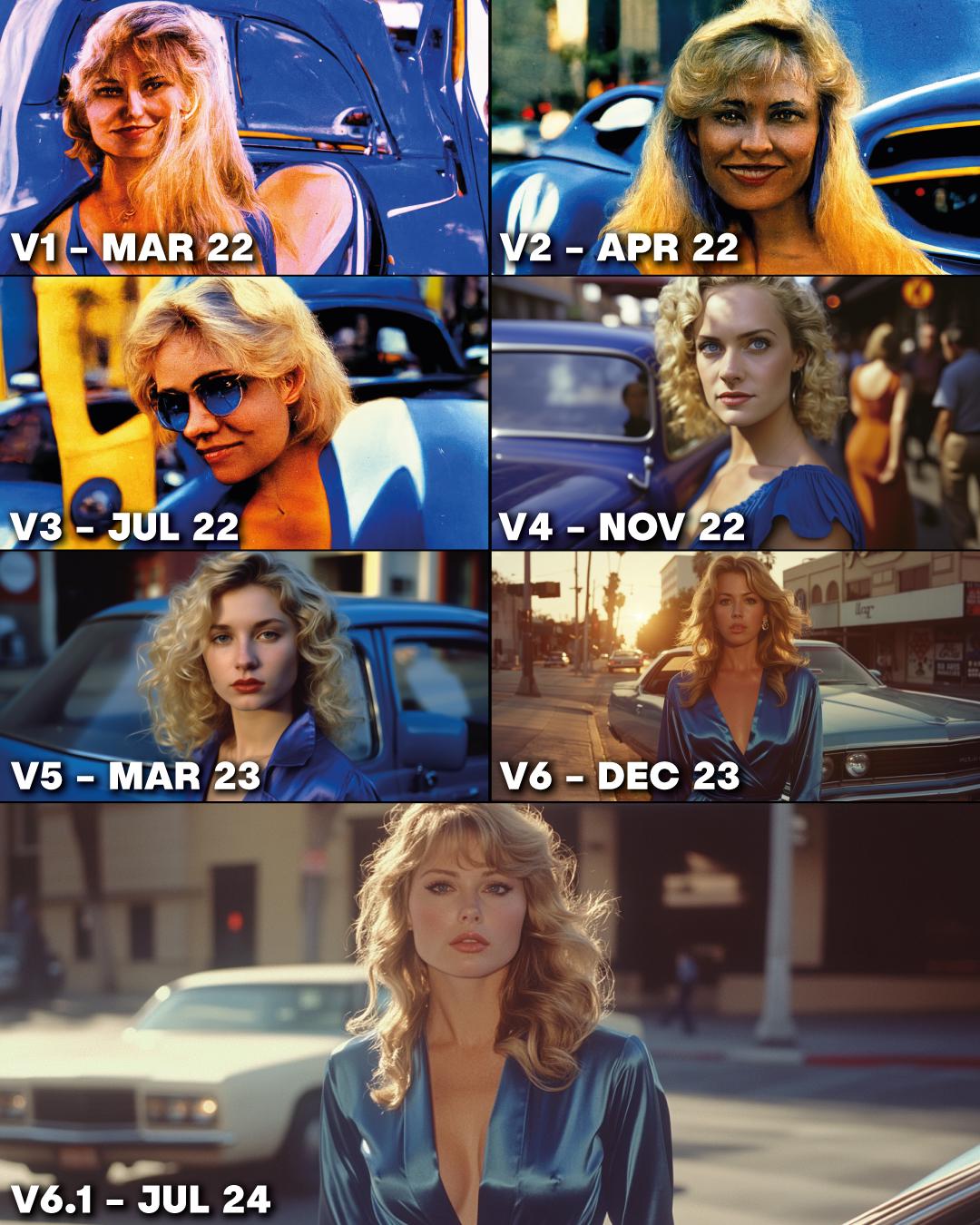
Midjourney is a bit of an exception. It produces images that are, on average, a little prettier and a little more stylised than its competitors. The compositions it generates are more artful, the lighting is warmer, the colours are richer and the images often feature the shallow depth-of-field effect you get from photos taken with expensive camera lenses at wide apertures.
So how did Midjourney’s developers manage to give their bot a fast prime and an eye for composition? Like all image generators the core of Midjourney’s training data comes from vast open-source databases of images that have been painstakingly labelled and tagged to make them machine-readable. LAION 5B, for example, contains 5 billion image-text pairs but, alongside hundreds of thousands of basic reference images, it also includes images that have been shortlisted for ‘high visual quality’. This subjective assessment is derived from two databases of user ratings – the first comes from a Discord server for AI art and the second comes from feedback on images submitted to an online photography forum (dpchallenge.com). As you might imagine, this system for determining ‘high visual quality’ is somewhat subjective. As researcher Roland Meyer pointed out in a paper on generative AI, these ratings are provided by a fairly narrow demographic – predominantly young, tech-savvy American males.
“Trained with the results of these online plebiscites, the neural network could then rate images seemingly autonomously. These algorithmically produced ratings, which are meant to predict how humans—or at least a very narrow and specific group of humans—would rate an image, were then used to filter training data scraped from the web in order to train and optimize image-synthesis models such as Stable Diffusion and Midjourney. The outcome is what one could call a recursive algorithmization of taste: machines predict the ratings of human users, which are then used to optimize other machines to please the aesthetic expectations of other human users. Significantly, the images that achieve the highest scores often appear representational but not photographic: watercolors of exotic streetscapes, tourist destinations in atmospheric lighting conditions, and portraits of conventionally attractive, mostly white young women are among those with the highest scores”
These preferences are further compounded by feedback from Midjourney’s own users. Unlike DALL-E, which works via a one-to-one chatbot, Midjourney runs on a public Discord server where users can view and comment on the images generated by one another. Each request generates a publicly visible test-sheet of four, low-resolution images that represent Midjourney’s best guess as to what the user was aiming for. Users are then invited to nominate one or more of these images to generate a high-resolution version. These selections are then used to further finetune the model’s future output.
Requests made to the bot are referred to as prompts and these instructions can be very simple or they can be very elaborate. For example, Pablo Xavier, who created the viral image of Pope Francis wearing a puffer jacket, used some variation of the following prompt:
“The Pope in Balenciaga puffy coat, Moncler, walking the streets of Rome”
But self-styled Gen-AI ‘artists’ often create lengthy prompts that attempt to knit together a number of different visual elements, art styles and post-production treatments. For instance, they might ask for an image that incorporates:
“Post-apocalyptic garden party, overgrown ruins, mutated plants, elegant attire. Frida Kahlo, Art Nouveau, dystopian concept art, blending surrealism, decorative style, and futuristic elements.”
Complex instructions like these give the impression that experienced users can produce exactly the sort of image they are picturing in their mind. But despite the appearance of fine-grain control, text-to-image chatbots don’t really allow users to carefully tailor their outputs. When it comes to generative AI, precise control is always an illusion because the process of generating images relies on randomisation.
Both GAN and diffusion models create images by converting visual noise into a recognizable image. This initial canvas of static is generated using a ’seed’ number which is calculated at random and each stage of the process involves generating random visual data in order to resolve recognisable shapes and patterns. This means that if you put the same prompt into a Gen-AI model three different times you’ll end up with three slightly different images. Thus, prompts are less like a recipe for a specific meal and more like a general list of ingredients that may or may not be incorporated into the final dish.
Effective prompts require a certain familiarity with artistic terminology because image generators are built on top of large language models so you need to use the right combination of words to get the desired result. This feature of Gen-AI art bots has led to a surge in interest in the language of art criticism. In 2022 cartoonist Kelly Turnbull observed that artists who published their work online were attracting a lot of comments that amounted to “what do you call this style?”.
“[I] was briefly confused until I realized it’s people trying to trawl for prompts to feed into AI generators to mimic that artist’s style”
Of course the easiest way to home in on a specific style is to specify the artist by name3. The more images by that artist on the web (and, by extension, in the training data) the more effective this technique is. Allowing users to specify artists in their prompts is an essential feature of Midjourney and other Gen-AI art applications as this functionality allows anyone to produce works in the style of their preferred artist even if they can’t describe the techniques or the themes they’re trying to reproduce.
When it comes to long-dead artists this feature seems fairly harmless. Few people appear to be outraged by the thought of someone generating a bad knockoff of Da Vinci or Van Gogh. The problem is that living artists are the subject of many of these requests – and the lack of guardrails has turned Midjourney from a glorified tech demo into a viable business which provides Copyright Infringement as a Service.
Unlike van Meegeren, most of the people producing digital forgeries with Midjourney aren’t trying to convince the public that they’ve discovered new works by some famous artist. Instead, they appear to be motivated by the thrill of claiming authorship over an artefact that is, somehow, both novel and recognisable.
As you might expect from the sort of people who know their way around a Discord server, the most popular artists on Midjourney are those working in the genre of ‘sexy anime women’ or ‘plausible Magic: The Gathering card’. As one commenter noted, the prevalence of male gamers and geeks is why most generative art consists of “pouty lipped pin-up girls in cyberpunk outfits” and why so much digital culture appears to have been ripped from the pages of Heavy Metal magazine.
Even people who are open to the idea that Gen-AI could be considered just another artistic tool sometimes struggle to endorse the current wave of Gen-AI practitioners. As Twitter user William B. Fuckley put it:
“There’s nothing that ontologically prevents AI art from being art imo, but 90% of ‘AI art’ is total dogshit because it turns out having to learn artistry was a good filter for having anything worthwhile to say”
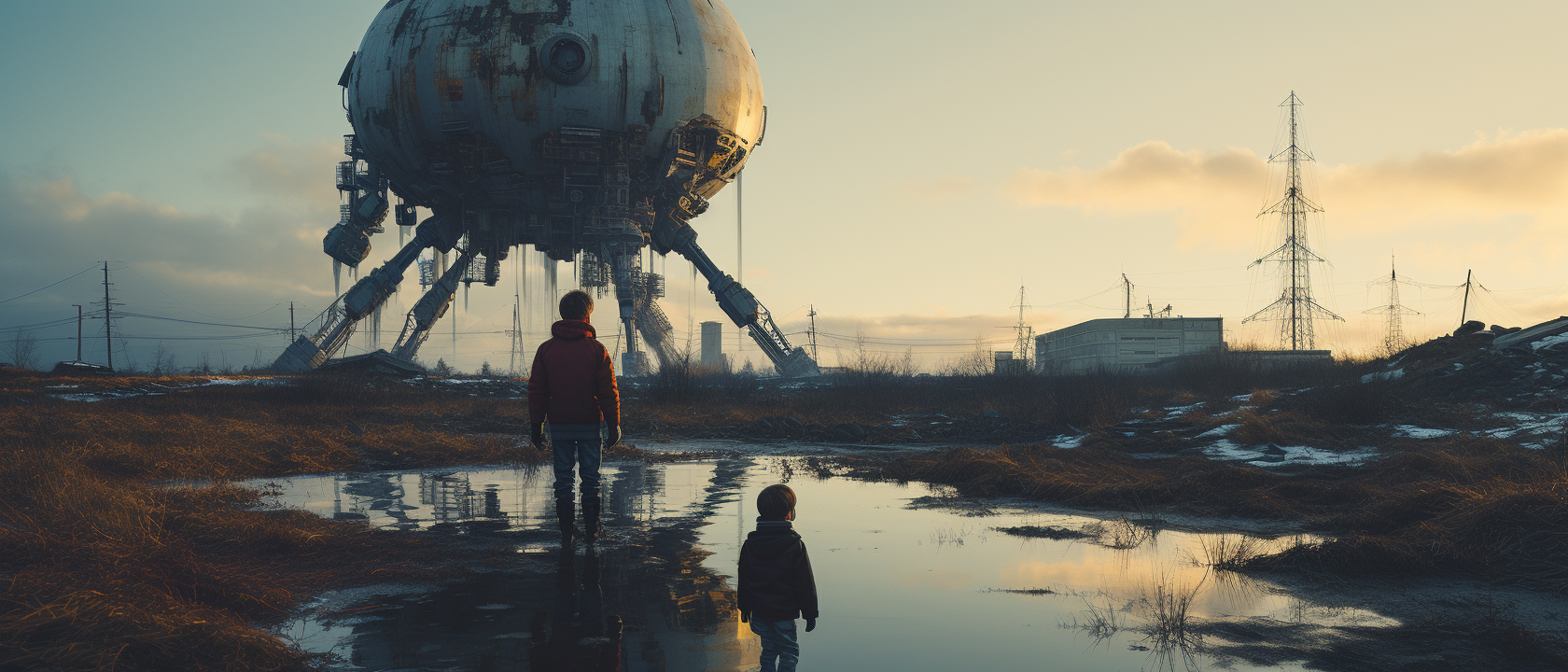
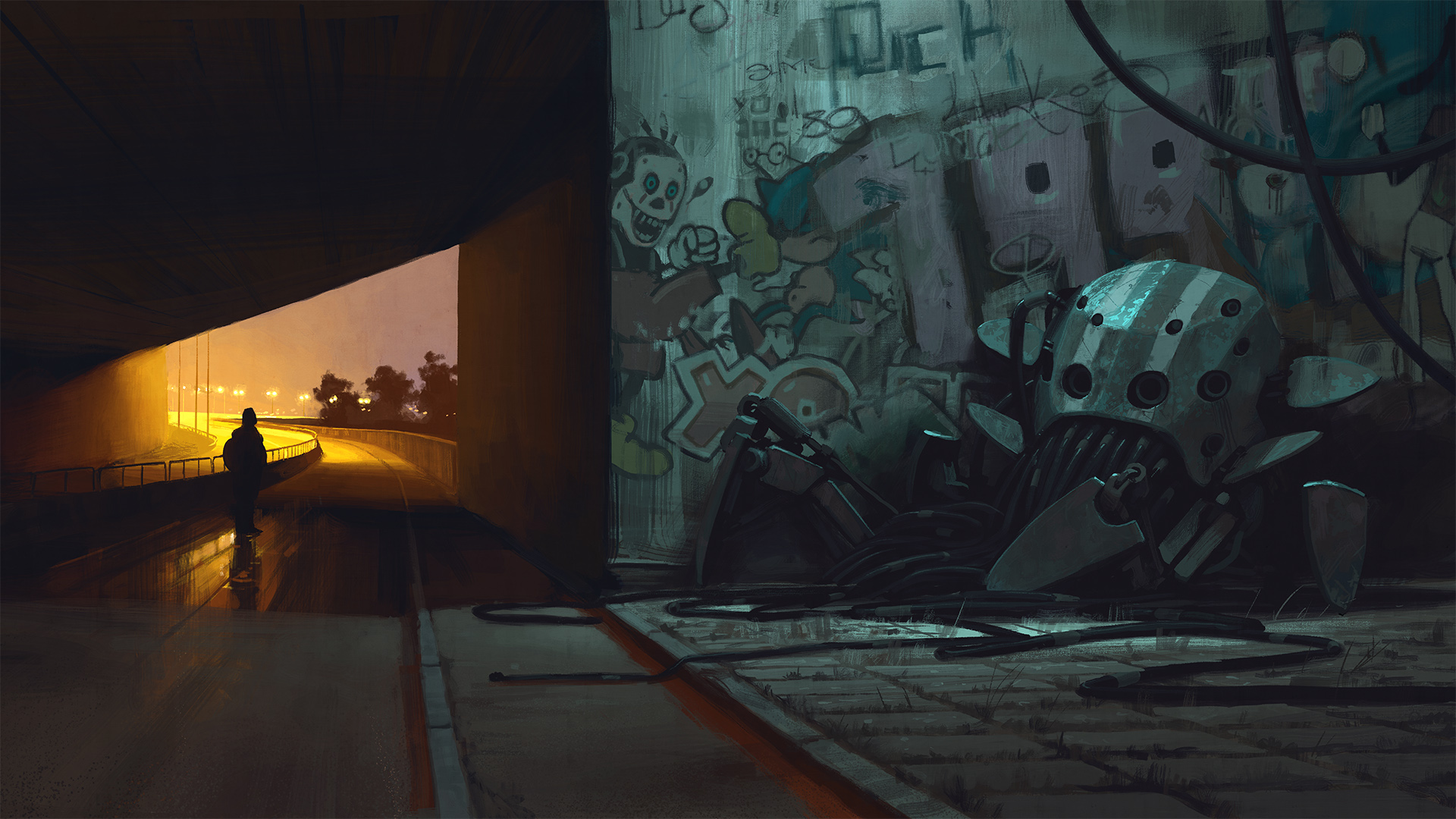
According to an article by Emily Weng on the Kapwing blog, the contemporary artists that are most frequently referenced on Midjourney include Chinese illustrator Wang Ling (who publishes his work under the handle WLOP) and Polish concept artist Greg Rutkowski. However the artist I recognised most often while scrolling through the Midjourney feed was Swedish illustrator Simon Stalenhag who uses a Wacom tablet to digitally paint retro-futuristic landscapes of 1980s suburbia juxtaposed with giant robots and machines.
Stalenhag came to prominence in 2013 when tech site The Verge published a feature on his artwork. Since then his work has been widely published – both online and in print – and one of his loosely narrated art books was recently adapted into a $320 million feature film for Netflix. It’s not hard to understand why Stalenhag’s brand of science fiction resonated with geeky internet users. His images managed to tap into millennial nostalgia while, at the same time, offering a western take on Japan’s ‘mecha’ fixation.
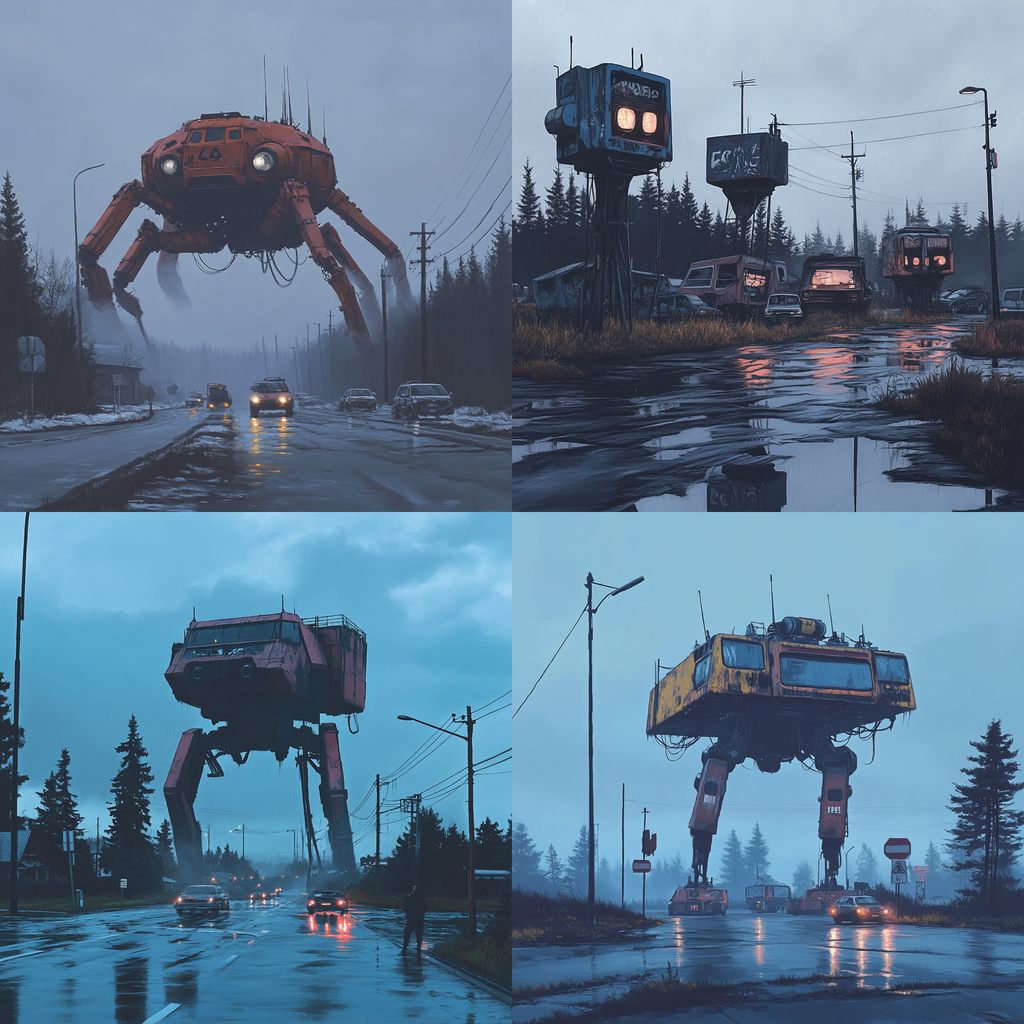
Among Stalenhag’s more popular paintings you have Incident on the edge of town which depicts a giant bipedal robot resembling Felix the Cat slumped against a highway overpass. Another painting, Closing The Loop, shows a boy standing in his driveway cradling an old CRT monitor as he watches a trio of giant aerial transport ships glide by in the distance.
For the last four years the Midjourney bot has been producing a steady stream of ‘Stolenhags’ – images that resemble Simon’s work but lack any real cohesion. These forgeries invariably feature some sort of giant robot or oversized vehicle but the machines themselves always look messy on close examination – a patchwork of panels and sensors and trusses and intake vents. The devil is in the details and, once again, the Stolenhags reveal that, while generative models can reproduce the individual elements from the source material, they struggle to arrange those elements in any sensible order.
Most of the people generating these sorts of forgeries have the good sense not to claim ownership of them but, in 2022, a student of Intellectual Property law by the name of Andres Guadamuz used Midjourney to create his own Stalenhag-‘inspired’ landscapes and posted the results on his blog. In doing so, Guadamuz was being intentionally provocative. His post was meant to highlight the fact that, under our current intellectual property framework, copyright only protects individual artworks – it can’t be applied to an artist’s distinctive ‘style’.
Needless to say, Stalenhag was not impressed by this stunt. While he acknowledged that using other artists’ work as inspiration is the “cornerstone of a living, artistic culture” he warned that the proliferation of AI art would dilute the already thin market for digital art and re-direct money to big tech companies. “That kind of derivative, generated goo” he tweeted “is what our new tech lords are hoping to feed us in their vision of the future.”
“AI is the latest and most vicious of these technologies. It basically takes lifetimes of work by artists, without consent, and uses that data as the core ingredient in a new type of pastry that it can sell at a profit with the sole aim of enriching a bunch of yacht owners.”
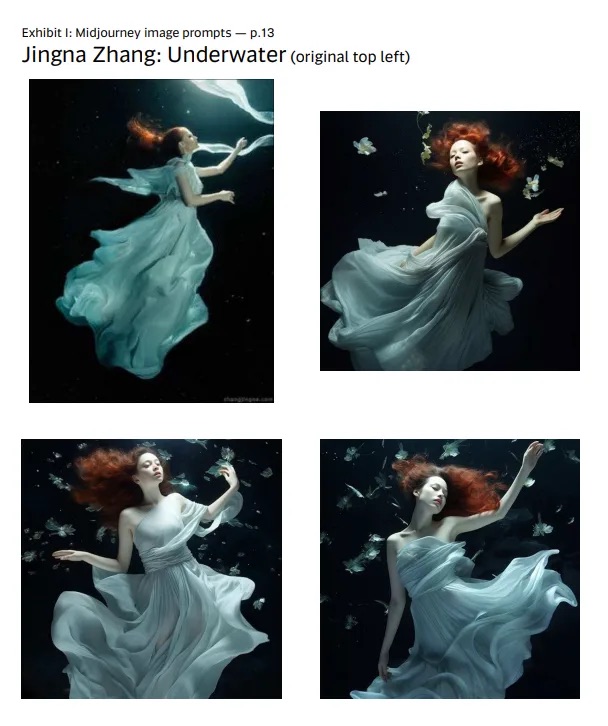
Fellow artist Jingna Zhang also took to twitter to rail against the mass forgery taking place via image generators. After name-searching herself on Midjourney’s discord server (where user prompts are publicly listed) she posted on twitter:
“Words can’t describe how dehumanizing it is to see my name used 20,000+ times in MidJourney. My life’s work and who I am—reduced to meaningless fodder for a commercial image slot machine.”
The most dedicated users of Midjourney get very defensive when faced with the accusation that they are just operating a machine that produces bad art forgeries. Indeed, many users appear to be thrilled by what Midjourney produces on their behalf and these users are often proud of ‘their’ creative output. Buoyed by the language of social justice these AI evangelists insist that apps like Midjourney have democratised involvement in the visual arts and levelled a playing field that has, up until now, been stacked against those without access to leisure time or expert instruction.
The best rebuttal to this stance comes from New York artist J. J. Ellis, who took to Instagram to respond to the claim that AI gives people who can’t paint ‘the ability to experience the joy of painting’.
Man, lazy people used to just be quiet about the stuff that they can’t do good. Now I feel like I gotta hear about it every day. Can’t paint? You kidding me? I seen an elephant paint. I seen a lady with no arms paint with her feet. You can’t do that? You don’t wanna do that is really what it is.
Are you afraid it’s gonna look bad?
Do you think I’m not afraid that it’s gonna look bad?”
The emerging consensus amongst those in forums like r/MidJourney and r/DefendingAIArt is that criticism of AI-generated images stems from jealousy on the part of artists who have, in the minds of the AI-boosters, ‘wasted their time’ by learning a practical artistic skill when they could be honing their ability to prompt the universal art-machine. It’s hard to know what percentage of Gen-AI users are engaged in this sort of self-deception but, anecdotally, there appears to be no shortage of people willing to claim the title of ‘AI artist’.
Due to the widespread perception of AI-generated images as disposable slop, some users have resorted to forging the process as well as the result. Using Gen-AI video applications would-be artists can upload their fake artwork to an application like Sora and have it produce a passable time-lapse video that appears to show the creation of said image – starting with a rough hand-sketch and progressing, in stages, to the final result. To the untrained eye these videos look pretty convincing but to those who’ve drawn things in photoshop they don’t make much sense.
This insistence on the legitimacy of generative art has forced some its proponents to perform some impressive mental gymnastics. On several occasions over the last two years self-professed AI artists have taken to social media to accuse other AI artists of stealing their prompts. As one twitter user complained in October last year:
“Never do this:
Passing someone else’s work as your own.
This Grok Imagine effect with the day-to-night transition was created by me — and I’m pretty sure that the person knows it.
To make things worse, their copy has more impressions than my original post.
Not cool 👎”
Thankfully the residents of r/DefendingAIArt appear to be the minority of Gen-AI users. Most people who experiment with bots like Midjourney or DALL-E seem to intuitively understand that they are engaged in a creative process that is less like painting and more like searching for something on Google Images. The skill required to be ‘good at ‘ Generative AI is essentially curatorial – you need to be able to distinguish between the more interesting outputs and those that are more mundane.
There’s no doubt that you can get good at curating images. When I worked as a graphic designer I’d have clients ask me to find stock images after they’d tried and failed to find something suitable on the various image libraries. I’d usually find a better candidate despite the fact that I was sorting through the same pool of images. This ability was partly the result of years spent evaluating photographs and partly the result of simply knowing how these sites organize and tag their content.
Some people can get exceptionally good at this skill. Case in point- sports fan and amateur art historian L. J. Rader runs a popular account on instagram called ‘ArtButMakeItSports’ where he matches editorial sports photographs with historical artworks. During the Australian Open in 2025, for example, he paired a photo of tennis champ Naomi Osaka flicking her ponytail with Katsushika Hokusai’s famous Wave off Kanagawa. During Purdue’s disastrous run in the NCAA in 2023 he put a close up of one dejected fan beside a gloomy portrait of Christ by the 15th century Flemish artist Dirk Bouts.
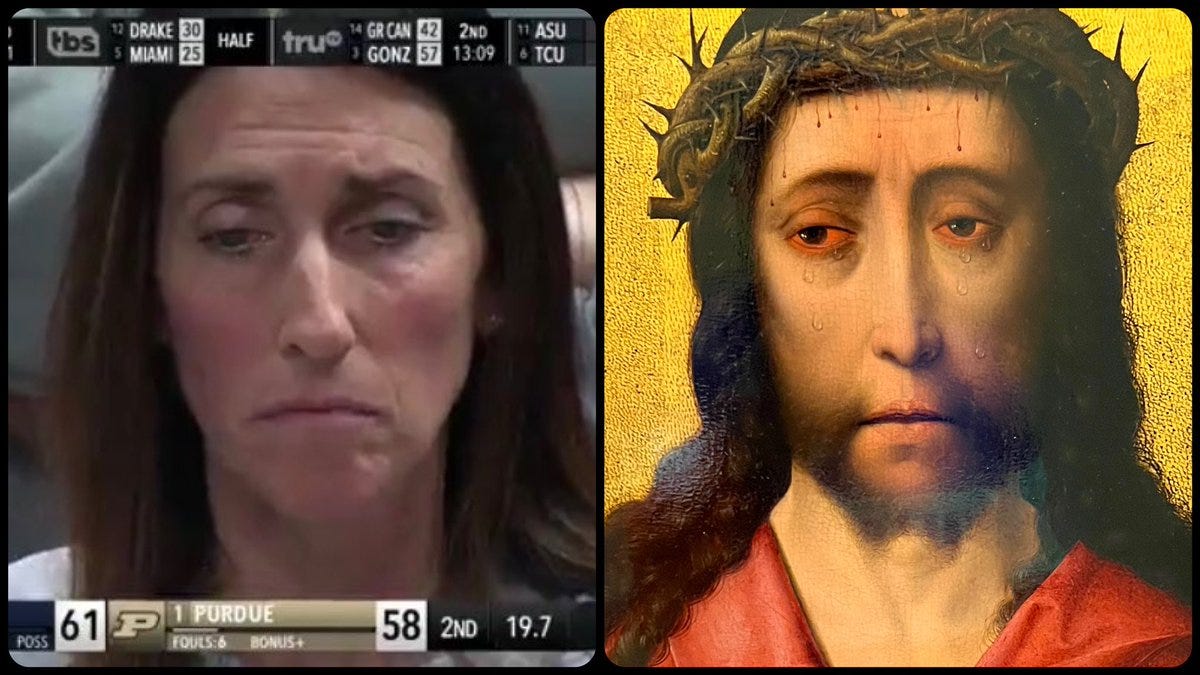
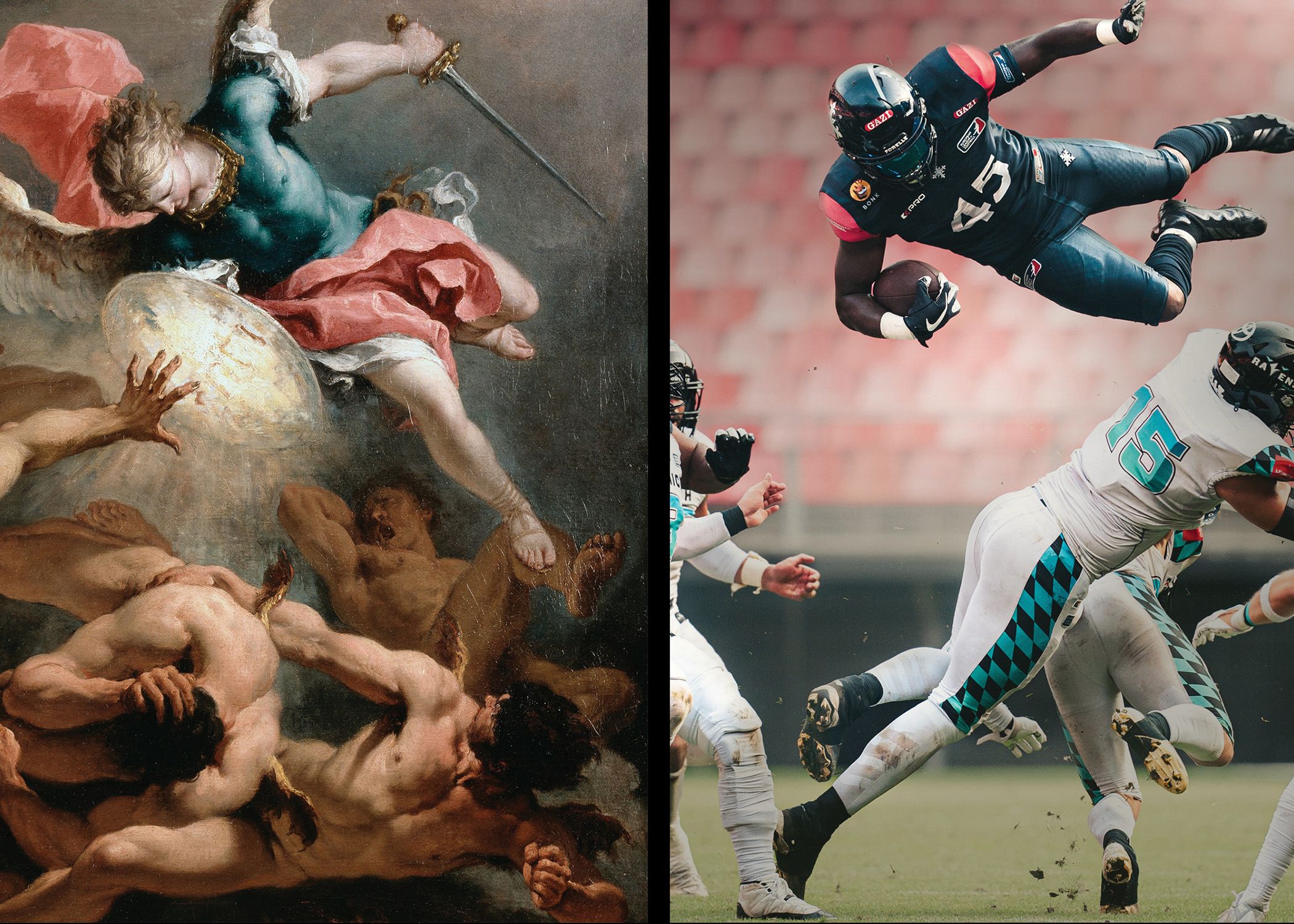
Rader’s knack for seeing the world through a museum catalogue comes from years of exposure to classical art, but this skill is so rare that some people have decided that he must be using some sort of computer program to make the matches. We should expect to encounter more of this sort of scepticism as the general public become more familiar with generative AI and less familiar with what it takes to acquire genuine expertise.
All this is to say that generating an interesting image does require a practiced eye and an awareness of existing artistic styles and terminology. What it doesn’t demand, however, is any real craftsmanship – and this is a large part of what we appreciate when we engage with artworks created by other humans.
Debates over what constitutes art and who should be considered an ‘artist’ probably extend back to the caverns of Lascaux. I can imagine a debate between the cavemen (and cave-women) who painted the bison and the horses on the walls of their cave and those who simply used their hand as a stencil while they blew pigment onto the rock. Of course we have no way of knowing whether our ancestors made that sort of distinction. What is certain, however, is that over the last two centuries an enormous amount of ink has been spilled debating the merits of new artistic mediums. In the late 19th century the debate was over photography and whether it should be considered a scientific or an artistic tool. In the early 20th century the debate was over the legitimacy of collage and mixed media.
Even traditionalist painters like Han van Meegeren could be relegated to the status ‘technician’ by a sufficiently catty reviewer. According to a biography of the forger by Frank Wynne, one of van Meegeren’s early solo exhibitions was panned by critics, one of whom gave the following verdict:
“A gifted technician who has made a sort of composite facsimile of the Renaissance school, he has every virtue except originality.”
For the most part, however, anyone who puts brush to canvas (or stylus to tablet) is generally recognised as an artist. In the last century or so the fiercest debates over artistic legitimacy have centered on the works of ‘conceptual’ artists who insist that ideas and intent matter more than craftsmanship. French artist Marcel Duchamp (who was an accomplished painter) is remembered for his ready-made artworks – mass-produced objects which he reframed as art by assigning titles and adding signatures. His Fountain (a signed urinal exhibited in 1917) is his most well-known work but he also put his name to a bicycle wheel (Roue de bicyclette, 1913), a snow shovel (En prévision du bras cassé, 1915) and a coat rack (Trébuchet, 1917).
Decades later, when Andy Warhol began pulling at this same thread, he asked his audience to consider the artistic merits of all sorts of mass-produced products and yet he still employed a high degree of actual craft. His Brillo Boxes (1963 – 1969) were precise wooden replicas of the cardboard cartons used to sell cleaning products and his series depicting Campbell’s soup cans (1961 – 1962) required Warhol to painstakingly reproduce the Campbell’s label on canvas with acrylic paints.
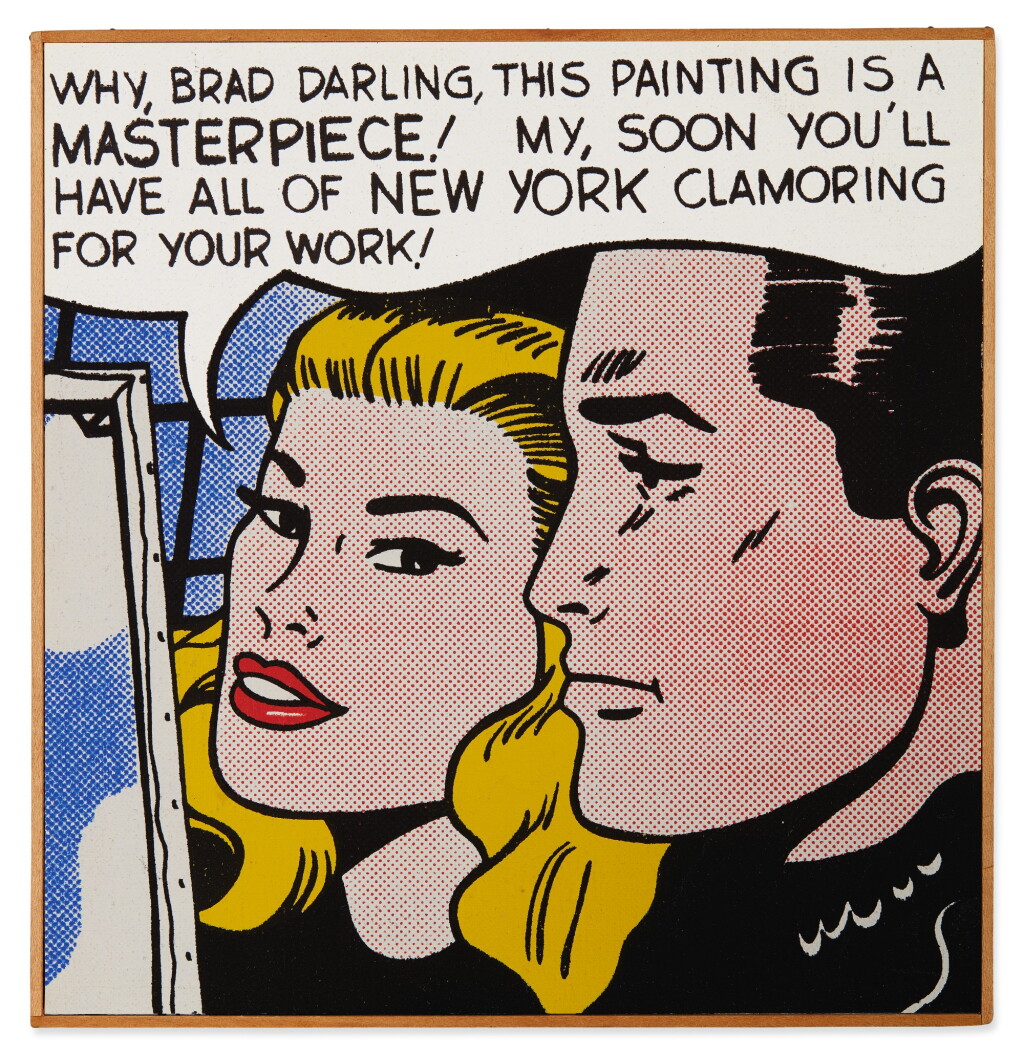
Even Roy Lichtenstein – who copied the work of comic book artists – had to invent new techniques to produce his enlargements. In order to make each picture look like it was printed by a machine, Lichtenstein used overhead projectors to transfer the original frame onto canvas and then spent weeks meticulously painting thousands of half-tone dots using stencils and screens.
The plagiarism of Warhol and Lichtenstein is different from that of the average Midjourney user. Not only because those artists were intentional about what they were doing but because they put effort into their provocations. Widespread public apathy towards generative AI art tells us that most people care about process. We want to know how much work the artist put into their artwork. We want to know the nature of the achievement as well as the outcome.
This apparently universal urge to understand the context for a given artwork was the foundation for the argument that Dutton made in his paper on Artistic Crimes. What Dutton recognised was that all art – even visual art – includes an element of performance and it’s not possible for us, as viewers, to separate our appreciation of the performance from our appreciation of what it produced. To fully enjoy a work of art we need to know what the artist was trying to achieve, what assistance they had, and what constraints they were under.
The residents of Montignac may have been impressed when they first stumbled across the cave paintings in the hills outside their town but they would have been doubly impressed had they known that those paintings were 20,000 years old. Because it’s one thing to master the art of illustration when you’re safe at home and well-fed. It’s another thing entirely to refine those skills while you’re still second or third on the food chain.
The thought-terminating cliche regarding art is that beauty is in the eye of the beholder. And while art may be subjective in many ways there’s a surprising degree of consensus when it comes to our appreciation for artistic feats. Melbournians may have mixed feelings about graffiti as a medium for artistic expression but we all recognise that it takes dedication to rappel down the side of a building in the middle of the night to put up another giant ‘Pam the Bird’ tag.
When it comes to high-rise graffiti, the obstacles faced by the artist are obvious. In most cases, however, we have to study an artist to learn how, or why, an artwork was made. What we learn inevitably changes our first impression of that artwork. For instance, we might gain a new appreciation for Joseph Conrad’s Heart of Darkness when we find out that Conrad was writing in his second language or we might reconsider Beethoven’s 9th Symphony when we find out that it was written after the maestro had gone completely deaf.
It’s easy to assume that concerns about how an artwork was created are confined to art critics and cultural elites but authenticity matters to everyone. Signed sports memorabilia always comes with a certificate of authenticity, Pokemon cards have anti-counterfeiting measures and the desperate souls who paid $30 dollars for GamerGirl bathwater back in 2019 did so with the expectation that they would receive actual bathwater from the bath of an actual gamer girl.
We crave authenticity so much that we’re willing to indulge wild conspiracies about the creation of the art we enjoy. For the last several years Twitter has hosted a constant stream of clickbait film trivia claiming that certain iconic movie scenes were improvised rather than scripted. A parallel genre of bullshit film commentary insists that many of Hollywood’s most spectacular action set pieces were created entirely using ‘practical’ special effects (think models and puppets as opposed to computer-generated imagery)4. Regardless of how far fetched these claims are, these posts always find a willing audience. Much like Agent Moulder, we want to believe.
This desire for authenticity explains the reaction to a recent art hoax on twitter. In May 2026 an anonymous conceptual artist, posting under the name SHL0MS, claimed to have generated an image of water lilies on a pond in the style of Monet. He challenged critics of Gen-AI to compare his pseudo-Monet to the real thing and a large number of people took the bait – insisting that the image felt lifeless and that the composition was uninspired. A typical response read:
“I’m disappointed I have to even point it out. There is no cohesion to the depth and color choices. The reflection of the tree bleeds into the lilypads with no regard for spatial depth or contrast. The background lilypad-algae amalgam is egregiously vague, like most AI art.”
As it turned out SHL0MS was trolling the naysayers. The image he posted wasn’t generated by the lifeless, 21st century robotic Claude, it was generated by the lively, 19th century human Claude. Specifically, the image in question was a detail of one of Monet’s lesser known water lilies*. SHL0MS’ experiment seemed to suggest that other claims of inferiority directed at Gen-AI images could also be written off as knee-jerk responses to any whiff of generative AI.
Meegeren pulled similar stunts when he was scamming the Dutch art scene. He’d turn up to exhibitions of his forged works and proclaim that he wasn’t convinced of the authenticity of these newly discovered paintings. In response, respectable art critics would point to features that supposedly proved the painting was an original Vermeer.
The van Meegeren affair and the Monet hoax prove that most people can’t tell the difference between a genuine work of art and a competent forgery. They also prove that humans care deeply about the authenticity of the art they admire.
This deeper appreciation for the artistic process is what traditional artists are trying to defend when they criticise Gen-AI outputs for being ‘soulless’. But when the target of their criticism is revealed to be man-made Gen-AI proponents treat this revelation as proof of some sort of double standard. As one poster on reddit wrote after performing a similar dramatic reveal ‘did it magically gain a soul when you found out it was man made?’. According to Dutton the answer is yes.
“Against those who insist that an object’s status as forged is irrelevant to its artistic merit, I would hold that when we learn that the kind of achievement an art object involves has been radically misrepresented to us, it is not as though we have learned a new fact about a familiar object of aesthetic attention. On the contrary, insofar as its position as a work of art is concerned, it is no longer the same object.”
1. Over the course of his forging career van Meegeren netted the equivalent of about $40 million USD.
2. Open-source models were available earlier but DALL-E was the first to provide a simple website with a chatbot interface The name chosen was a portmanteau of the renowned Spanish surrealist Salvador Dali and the titular robot in Pixar’s WALL-E (2008).
3. Most users are happy to spell out the name of the artist or the artistic style that they want to reproduce but thus is not essential. Midjourney uses numeric codes known as style reference numbers (’SREFs’) to represent all sorts of aesthetic variables. By adding one or more SREF codes users can instruct Midjourney to apply or combine different styles to produce a desired output. Conveniently, these codes also help to obscure the names of the artists whose work has been used to train the model.
4. A very patient Danish man who works in the VFX industry has been systematically debunking these claims on YouTube for the last couple of years.
Some actual paintings by Simon Stalenhag



Notes:
Denis Dutton (1979) – Artistic Crimes: the Problem of Forgery in the Arts
Frank Wynne (2006) – I was Vermeer : the rise and fall of the twentieth century’s greatest forger
Christo Buschek & Jer Thorp (2024) – Models All The Way Down
Knowing Machine (2026) – Critical Dataset Studies Reading List
Simon Stalenhag (2026) – The Steel Meadow
Will Knight (2022) – Algorithms Can Now Mimic Any Artist. Some Artists Hate It
Andres Guadamuz (2022) – Copyright infringement in artificial intelligence art
Tatiana Tsiguleva (2025) – Step-by-Step Guide: Prompt Creation in Midjourney
Zack McTavish (2024) – Comparing 8 prompts in Microsoft’s Image Creator and Midjourney
Thomas Claburn (2022) – David Holz, founder of AI art generator Midjourney, on the future of imaging
Emily Burack (2025) – How the Art But Make It Sports Creator Prepares for the Super Bowl
LJ Rader (2026) – ArtButMakeItSports
Leave a Reply