Withstanding the Blockbuster
How Hollywood and the U.S. military's Entertainment Liason Office distorts our understanding of war and conflict.

How do you create an anti-war museum?
On the one hand you could argue that all war museums are anti-war museums as long as you go into them with the right amount of disgust. If you’re sufficiently sceptical a war museum is only going to confirm your existing opinion. The guns on display will look sinister, the accounts of battles and destruction will elicit horror and the medals and banners will look like the artefacts of a depraved militarist culture. But if you go into that museum as a young man brought up on flag-waving Hollywood films about heroism and adventure then those same exhibitions will appear in an entirely different light. The guns will be fascinating, the accounts of battle will be thrilling and the medals and banners will simply represent the ‘highest ideals’ of the nation-state.
So how would you go about curating an anti-war museum?
One of the key tasks would be to trace the cultural origins of war. It’s one thing to disentangle the events that lead up to particular conflict. It’s another thing to disentangle the common causes behind organised violence more generally. Finding the social roots of war requires us to put many aspects of our day-to-day lives under the microscope. An anti-war museum would ask visitors to take a closer look at many things we take for granted; national pride, regional rivalries, party politics, religion, sporting clubs, schools and a thousand other forms of tribalism. It would ask us what it is about war that fascinates us and why so much popular entertainment involves reenacting the very worst human impulses.
Since its reopening in 2011 Germany’s Bundeswehr Military History Museum in Dresden has attempted to tackle some of these questions. For an official military museum it’s surprisingly reflective. According to the museum’s website ‘the focus of the exhibitions is on people and the…causes and consequences of war and violence.’ Given the country’s grim 20th century history it’s no surprise that German museum curators take a high-minded approach to military history but this is especially evident in Dresden – where the line between perpetrator and victim is somewhat blurry.
In the aftermath of WWII Dresden occupied a place in the popular imagination right next to Hiroshima and Nagasaki – a byword for mass death and destruction. That awareness has faded somewhat over the last 75 years so a brief recap of the city’s wartime experience is necessary in order to give context to its war museum.
Before WWII Dresden was considered the cultural and artistic capital of the German state. Thanks to a surplus of opera houses, cathedrals and galleries it was referred to as the ‘Florence of the Elbe’. During WWII the residents of Dresden were lulled into a false sense of security as the allied bombing campaigns focused on the big industrial cities to the west. Over time many of its citizens came to believe that they had been spared on account of the city’s cultural heritage and, as the end of the war approached, another rumour circulated that allied authorities had nominated Dresden to be the capital of the post-war occupation force.
In reality the city had been relegated simply due to distance and strategic insignificance. While there were some war-related industrial sites on the city’s outskirts there were no structures of military importance in the city proper. German planners had reached the same conclusion – resulting in a situation where the city and its 500,000 residents were left more or less undefended. Only three months before the end of the war in Europe, with the Red Army less than a hundred kilometres from Berlin, the Allied authorities nonetheless decided to destroy the city.
The raid proved to be devastatingly effective. What the residents of Dresden experienced in one hellish night represented the culmination of five years of tactical refinement in the practice of ‘area bombing’. Allied bomber command had improved its methods over the course of the war and was, by 1945, capable of incredibly complex night-time operations involving thousands of aircraft at a time. On the night of 13th of February 1945 more than two hundred Lancaster Bombers from the RAF’s 463 Squadron converged on Dresden’s historic centre carrying incendiary and high-explosive ordinance – including the 1.4 ton ‘block-buster’ bombs designed to demolish entire city blocks with a single explosion1. The first wave of aircraft caused widespread destruction – igniting fires that merged and spread across the city. Early the next morning, as firefighters and rescue workers fought to save those trapped in the rubble, more than three hundred B17s from the U.S. Eighth Air Force followed up with a second raid that dumped more incendiary bombs onto the shattered streets and rooftops.
The resulting firestorm took on a life of its own. Convection currents like those produced by extreme bushfires generated hurricane-force winds that fed the fire and tore apart surrounding streets. Over the course of a single night 25,000 people were killed. Fortunate victims were torn apart by high explosives or buried under rubble at the outset, those less fortunate burned to death in the conflagration or suffocated slowly as the fire drew oxygen out of basement shelters. Those that took refuge in the city’s emergency water tank were boiled alive while those that tried to flee found themselves mired in melting asphalt. Owing to the demographics of wartime Germany most of the victims were women, children, and the elderly – a mix of local residents and refugees fleeing the Soviet advance to the east.
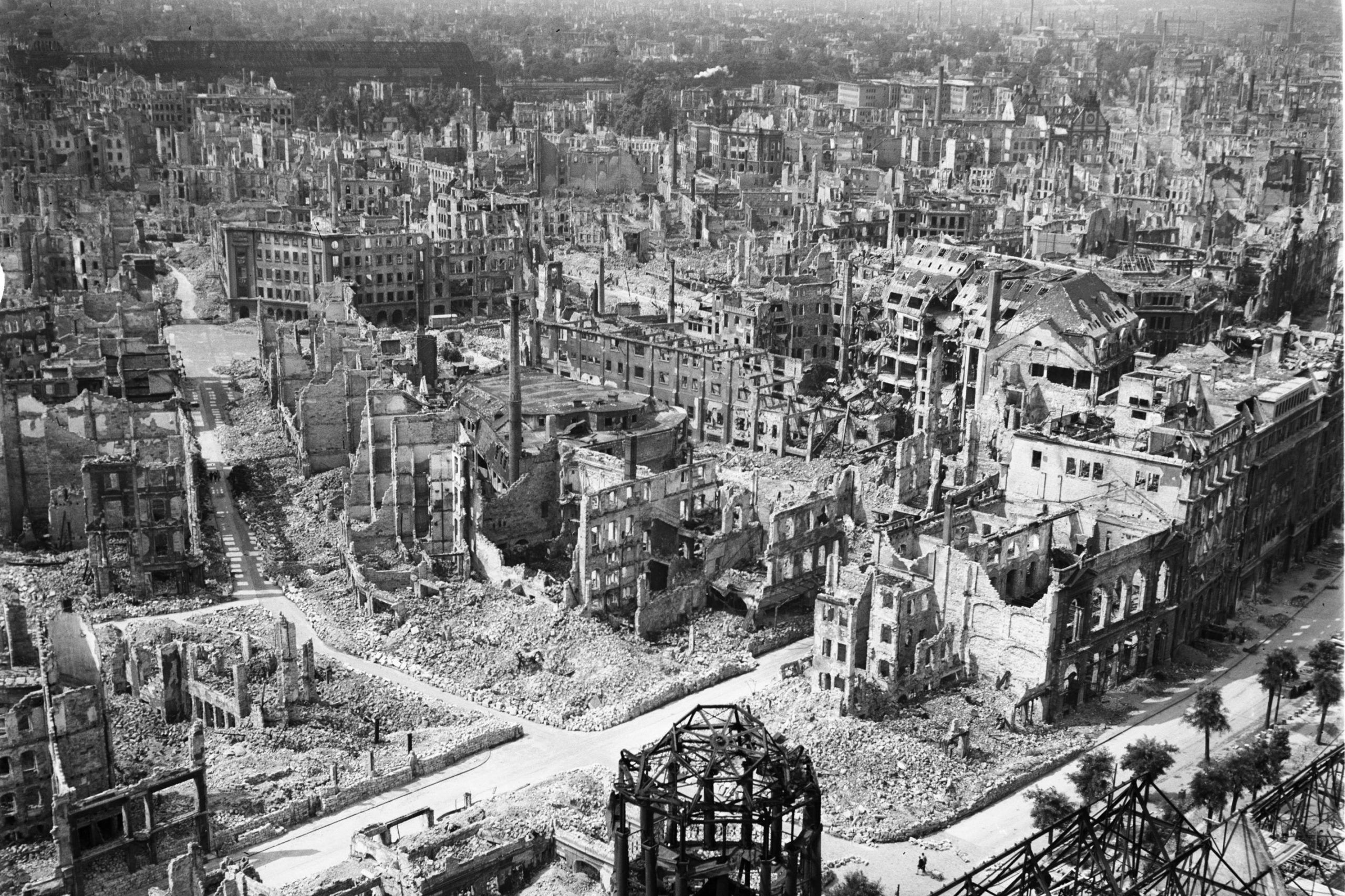
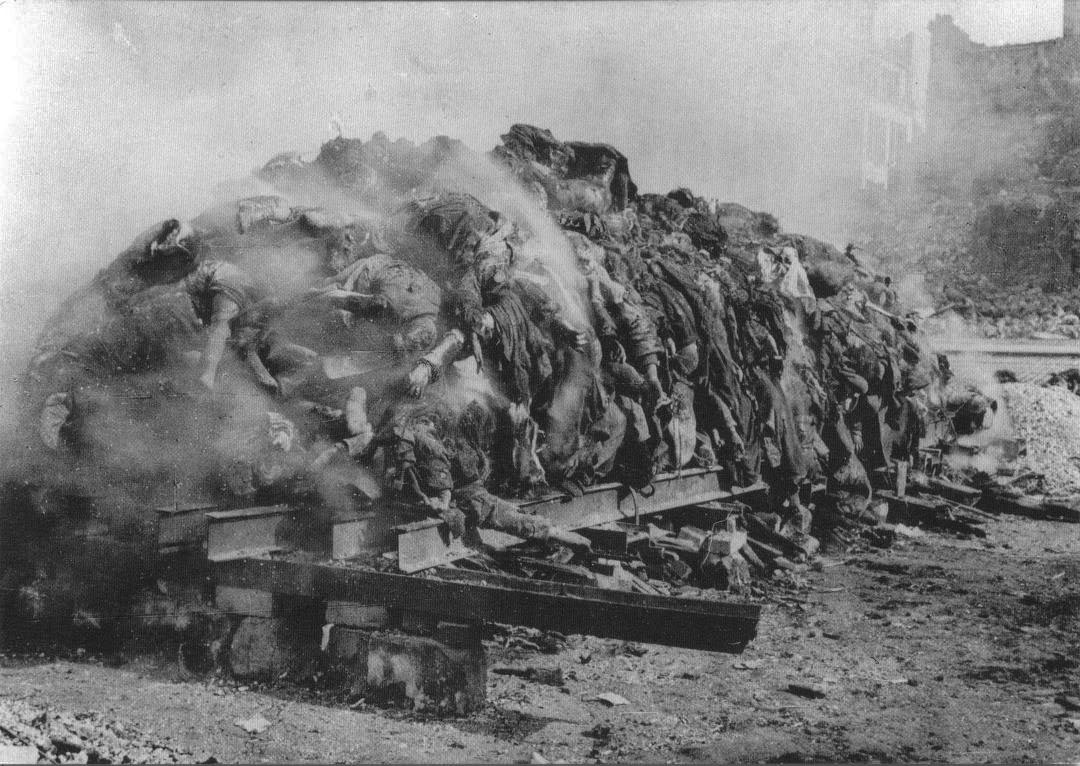
In the aftermath of the raid, Nazi authorities publicised the destruction for propaganda purposes and inflated an already staggering death toll in an effort to highlight the cruelty of the Allied bombing campaign and galvanise German resistance. In the allied press the public backlash against the raid was so fierce that it prompted British authorities to reconsider their ‘area bombing’ strategy but, by that stage, the damage had already been done and Germany was in ruins. Thousands of tons of debris were piled up on the outskirts of German cities and these these dumping grounds are still visible today in the form of small forested hills known as schuttberg (literally ‘rubble hills’). Amid a dozen or more similar cataclysms Dresden is remembered partially because a young American soldier named Kurt Vonnegut – who was being held as a prisoner of war – survived the firestorm and went on to give a dreamlike account of what he witnessed in his bestselling novel Slaughterhouse 5.
“It wasn’t safe to come out of the shelter until noon the next day. When the Americans and their guards did come out, the sky was black with smoke. The sun was an angry little pinhead. Dresden was like the moon now, nothing but minerals. The stones were hot. Everybody else in the neighborhood was dead.”
Nowadays Dresden has been rebuilt and some of its landmarks – including the ornate Frauenkirche – have been painstakingly restored but it still takes a leap of imagination to conjure up its former glory. The Bundeswehr Military History Museum is situated a few kilometers north of the city centre in a grand neo-classical building that once housed the arsenal of the Saxon army.
When the museum was renovated in the early 2000s Polish architect Daniel Libeskind (the son of Polish Jews who survived the Holocaust) added a giant shard of steel and glass that juts out from the facade like a piece of shrapnel. The sharp edge points toward the centre of Dresden’s Altstadt where the bombers dropped their first payload.
A tour of the museum starts inside the shard. Visitors take a lift to the top floor and work their way down to ground level. The first artefacts you encounter are a bed of scorched and cracked paving stones recovered from the Altstadt following the Dresden raid. These stones are flanked by two competing accounts of the firestorm. One recounts the grief of a boy who lost his entire family in the raid and the other records the relief felt by one of the last Jewish residents remaining in the city – Henny Brenner – who was scheduled to be deported to a concentration camp but was saved at the 11th hour by the destruction of the city. Descending from the top floor, the exhibition space is divided into various galleries designed to show how martial values in pre-war Germany were promoted and perpetuated.
The first section, War and Memory, looks at how history is recorded and how collective memory is shaped. Here the traditional portraits of Kaisers and Kings are presented not as objects of reverence but as artefacts of propaganda. The next section, Politics and Violence, examines Prussian martial traditions and the centrality of violence to the formation of the modern nation-state. Other sections showcase more typical themes – The Military and Technology, The Suffering of War, etc. The last part of the exhibition – Challenges of the 21st Century – features, among other things, ladders used by asylum seekers to get over the border fences in the Spanish enclaves of Cueta and Melilla in North Africa.
But the most compelling exhibits are presented under the heading of ‘Military and Society’. This section is designed to showcase the parallels and overlap between military and civil institutions. Visitors are invited to compare military routine to the regimented shifts of factory workers, the discipline of school systems and the training sessions of organised sports. One sub-section looks at the way popular music has drawn inspiration from signalling instruments and marching songs. Another looks at the way in which military fashion trends have seeped out into the wider world with bomber jackets, trench coats, wristwatches and sunglasses all starting out as items of uniform2. Uniformity itself is presented as a byproduct of military logistics – offering the standardised sizing system later used as the basis for mass-produced commercial clothing.
The final subsection of Military and Society is labelled ‘War and Play’. Here, a long display case traces the evolution of military toys from the lead figurines of the Napoleonic era to the mass-produced Star Wars figurines available today. Above a catwalk between galleries, toy guns and vehicles are suspended alongside the real machinery of war. One display case shows a doll’s house made for a child in London in 1944 complete with a miniature Anderson Shelter in the backyard.

War and Play attempts to show how military symbolism pervades western culture but it falls short of revealing the extent of the problem as it applies to Australia. This might be due to the fact that the museum is aimed, for the most part, at a domestic audience that is understandably wary of national chauvinism. The German government makes very little effort to publicise its modern military capabilities and German popular culture tends to avoid glorifications of war. In order to speak to an Australian audience an anti-war museum would have to compensate for how saturated we are with films and TV shows about warfare and violence. This is no small challenge. When it comes to entertainment, war is, to paraphrase David Foster Wallace, ‘the water we swim in’ – pervasive but invisible and rarely worth considering.
War Films and Pop culture
So how should our theoretical anti-war museum approach the issue of war films and Hollywood ‘blockbusters’? To borrow a military metaphor it would make sense to tackle the issue on two fronts: the first would ask the obvious question – is it possible to make an anti-war film? The second would look at who decides which version of history should be brought to the screen.
Directors and writers often claim that they are paying tribute to victims and veterans of war (generally assumed to be the same people) by attempting to convey the horror of the battlefield. But the popularity of these films belies this lofty ambition. After all – films that attempt to recreate the truly horrific run the risk of commercial failure and, when they are released, they tend to languish in obscurity. Just as the Australian War Memorial excludes the experience of civilians in war zones, American war films overwhelmingly focus on men in uniform – relating their experience on the battlefield and, more recently, how they cope with that experience afterwards. This perspective distorts our understanding of war itself and insults the memory of the majority of victims. To quote comedian Frankie Boyle:
“American foreign policy is horrendous ’cause not only will America come to your country and kill all your people, but what’s worse, I think, is that they’ll come back twenty years later and make a movie about how killing your people made their soldiers feel sad. Americans making a movie about what Vietnam did to their soldiers is like a serial killer telling you what stopping suddenly for hitchhikers did to his clutch.”
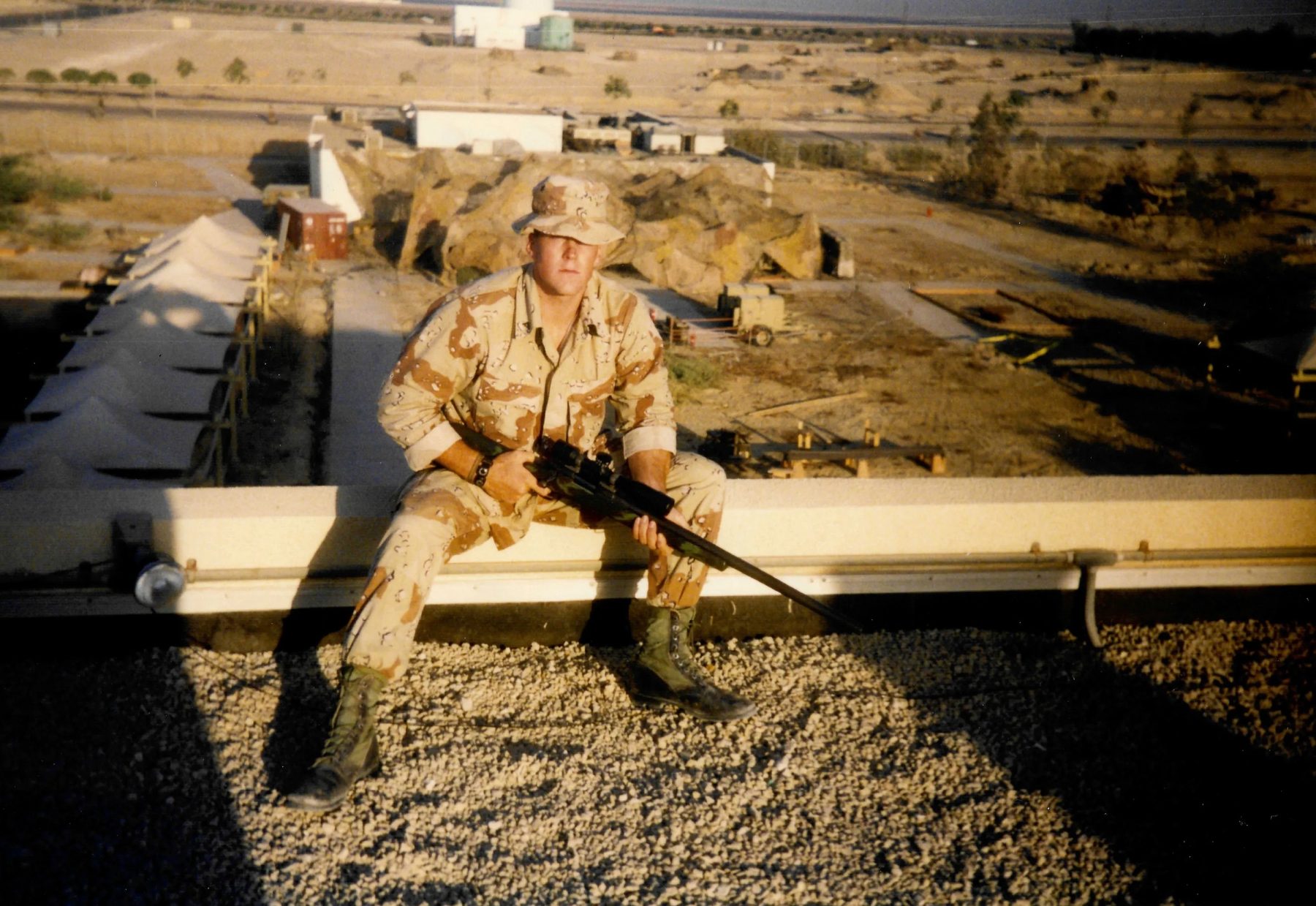
Using a medium primarily used for entertainment to discourage war is a delicate task. Filmmakers need to account for the fact that audiences bring their own values and attitudes to any artwork. Go in expecting to be outraged and a war film is likely to elicit outrage. Go in expecting to be thrilled and the same war film will prove thrilling. This eye-of-the-beholder effect is best summed up by former U.S. Marine Anthony Swofford when he described the two-day war movie marathon that members of his unit organised before their deployment to Kuwait at the outset of the Persian Gulf War. Recalling the episode in his memoir Jarhead Swofford observed that:
“There is talk that many Vietnam films are antiwar, that the message is war is inhumane and look what happens when you train young American men to fight and kill, they turn their fighting and killing everywhere, they ignore their targets and desecrate the entire country, shooting fully automatic, forgetting they were trained to aim. But actually, Vietnam war films are all pro-war, no matter what the supposed message, what Kubrick or Coppola or Stone intended. Mr. and Mrs. Johnson in Omaha or San Francisco or Manhattan will watch the films and weep and decide once and for all that war is inhumane and terrible, and they will tell their friends at church and their family this, but Corporal Johnson at Camp Pendleton and Sergeant Johnson at Travis Air Force Base and Seaman Johnson at Coronado Naval Station and Spec 4 Johnson at Fort Bragg and Lance Corporal Swofford at Twentynine Palms Marine Corps Base watch the same films and are excited by them, because the magic brutality of the films celebrates the terrible and despicable beauty of their fighting skills. Fight, rape, war, pillage, burn. Filmic images of death and carnage are pornography for the military man; with film you are stroking his cock, tickling his balls with the pink feather of history, getting him ready for his real First Fuck. It doesn’t matter how many Mr. and Mrs. Johnsons are antiwar—the actual killers who know how to use the weapons are not.”
But perhaps the problem lies not so much with the medium but with the artists – Hollywood directors of war films are overwhelmingly English or American men in their fifties and sixties (Kathryn Bigelow, who directed K19, The Hurt Locker and Zero Dark Thirty, stands out as the exception). While often belonging to the same demographic, their European counterparts seem to come much closer to capturing the mix of despair and wastage that inevitably results when nations go to war.
For the post-war generation of German, French, Italian and Russian filmmakers, proximity to war and those who experienced it first-hand seems to have engendered a more sceptical stance. There appears to be a sort of nihilism required to do justice to organised violence and it seems to be an attitude that American directors are incapable of adopting – partly, one would assume, because there hasn’t been a war on U.S. soil since 1860s, but also because so many Hollywood screenplays are subject to Pentagon censorship in order to obtain cooperation from the U.S. military.
Swofford’s indictment of anti-war cinema echoes the famous quote by French director Francois Truffaut who declared during an interview with a U.S. film critic that ‘…violence is very ambiguous in movies. For example, some films claim to be antiwar, but I don’t think I’ve really seen an antiwar film. Every film about war ends up being pro-war.’
For his part Truffaut’s national loyalties arguably prevented him from appreciating what could be achieved with the medium. Truffaut was one of many high-profile French artists to demand a boycott of Italian director Gillo Pontecorvo’s docu-drama La Battaglia di Algeri at the Venice film festival in 1967. Under the headline “Un Verdict de Salauds” (a bastards’ verdict) one film journal at the time characterised the protest as a national panic and heaped scorn on filmmakers like Truffaut and Robert Bresson who protested the film without having seen it.
By many accounts Pontecorvo’s film comes the closest to illustrating how guerrilla conflicts escalate as terror and counter-terror compound. Depicting the failed uprising against French colonial rule in the Algerian capital by the Front de Libération Nationale (FLN) in 1954 Pontecorvo’s film featured two men who had participated in the uprising and played versions of themselves in the film. La Battaglia di Algeri was banned in France upon release but achieved a sort of international cult status – popular with audiences regardless of their political leanings. No major French television network screened La Battaglia di Algeri until 2004.
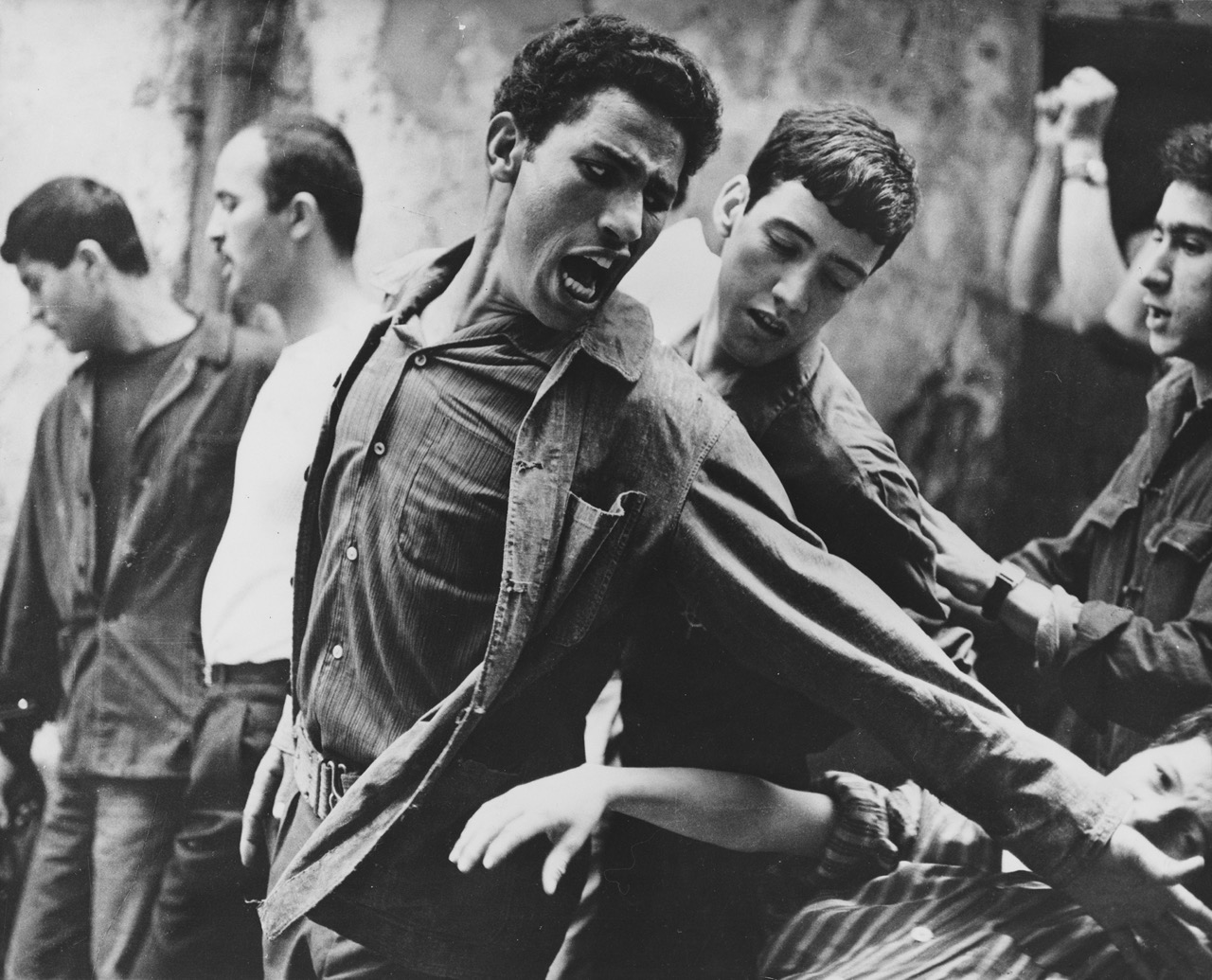
Pontecorvo’s quest for ‘verite’ also made the film sought-after for its apparent instructional value and it was reported to have been screened by members of the IRA, the Black Panthers and the Tamil Tigers as well as being required viewing for a generation of officers in Israel’s Defence Force. In 2004 the film was screened at the Pentagon by the Directorate for Special Operations as part of an effort to understand the growing insurgency in Iraq.
Whatever the merits of certain films we should nevertheless be cautious about praising them for their ‘authenticity’. All attempts to depict a historical event with ‘accuracy’ and ‘realism’ are still nothing more than the sum total of countless creative decisions taken by writers, performers, directors and editors. Pointing to some films as authentic and others as distortions means separating the contrivances one finds acceptable (Christopher Nolan’s parallel timelines in Dunkirk) from those one does not (Harrison Ford’s Russian accent in K-19). Well-intentioned filmmakers can have their actors disclaim the necessity of violence or they can tug at the heartstrings by killing off beloved characters and dwelling on the anguish of survivors but they can’t wring out the underlying fascination that audiences have for war and its effects. To use the medium as a form of protest is to risk having it turned back against you.
There are clearly films that communicate something essential about how wars are conducted and how they are experienced by those in harm’s way. Wolfgang Peterson’s 1981 film Das Boot (The Boat) largely takes place within the confines of a German ‘U-boat’ on a single voyage. For merchant seaman ferrying supplies across the Atlantic submarine attacks were a constant source of dread but the crews of the German submarines that preyed upon them were also subject to a unique terror of their own as the technology required to locate and destroy their vessels improved over the course of the conflict – eventually resulting in a staggering 75% casualty rate. To be a member of a German U-Boat crew in the closing years of WWII was to have one of the most statistically dangerous jobs on either side and in any branch of the armed forces. Peterson’s film presents audiences with a mix of military archetypes with differing attitudes towards their role in the conflict. Some of Peterson’s characters – like the young 1st officer – are still committed to playing their part in the war effort but it’s the fatalism of the U-Boat veterans that offers the best contrast to Hollywood’s triumphant stories of courage and sacrifice.
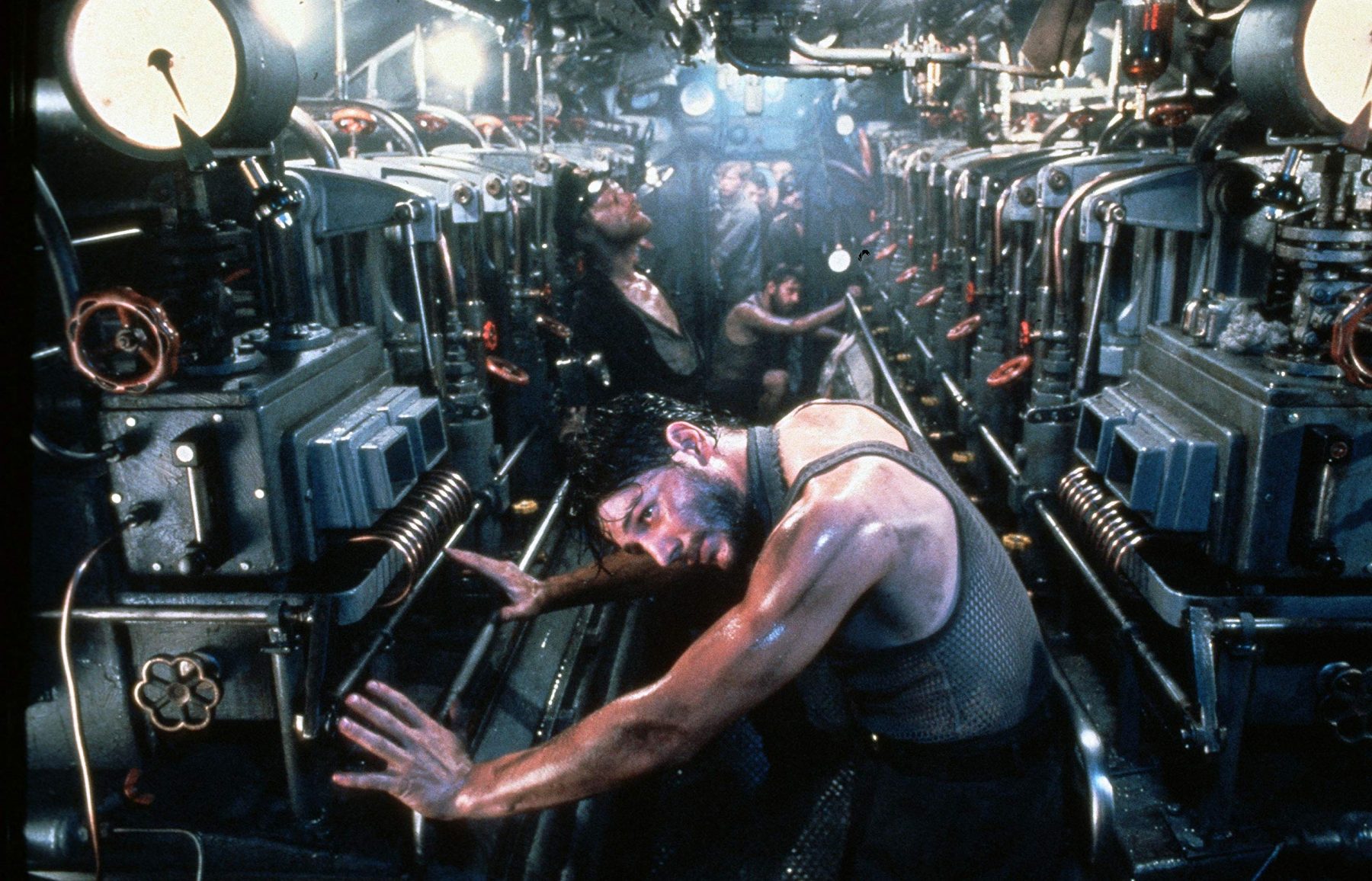
Likewise Elem Klimov’s nightmarish depiction of the Wermacht’s scorched earth policy on the Eastern Front is widely cited as a sincere anti-war film for its depiction of the Nazi occupation of Belorussia. The film’s title – Come and See – is a reference to the Biblical Book of Revelation and the film’s visuals are suitably apocalyptic. Rather than treating soldiers as both victim and perpetrator like many Hollywood war movies Come and See takes the civilian point of view – showing us the war from the perspective of a Belarusian child reeling from one atrocity to the next as war overtakes the countryside. Whether you consider its lurid scenes of murder, rape and destruction gratuitous depends on whether you think such shock tactics help or hinder the pacifist cause. In writing the screenplay for Come and See Klimov drew from his own childhood experience in the besieged city of Stalingrad but, as confronting as the film turned out to be, even Klimov admitted to a certain level of self censorship.
“As a young boy, I had been in hell, the city was ablaze up to the top of the sky. The river was also burning. It was night, bombs were exploding, and mothers were covering their children with whatever bedding they had, and then they would lie on top of them. Had I included everything I knew and shown the whole truth, even I could not have watched it.”
Over the years Hollywood has asked several former soldiers to reenact their war experiences for the benefit of moviegoing audiences. Ten years after the end of WWII America’s most decorated military veteran, Audie Murphy, starred in To Hell and Back – a sanitised biographical account of Murphy’s war service. Given that he was already a minor film star and was still suffering from what would today be recognised as symptoms of post-traumatic stress it took some convincing to get Murphy to agree to the role. At one point during negotiations Universal’s studio head suggested that Murphy might find it cathartic to reenact the desperate, last-ditch holding action atop a burning tank that won him the Medal of Honor. This strange dynamic of having heroic veterans relive their most traumatic moments for propaganda purposes is skewered in Quentin Tarantino’s Inglorious Basterds which includes a sub-plot involving a Nazi war-hero obliged to attend the premiere of his fictional biopic ‘Stolz der Nation’ (Nation’s Pride). Whatever the ethics of casting Murphy in To Hell and Back the film proved to be a major commercial success for Universal Pictures – remaining their highest-grossing film until Jaws was released in 1975.
More recently soldiers from America’s long war in the Middle East have aged out of their military service while the war continued – only to be coaxed back into uniform in order to bring their experience to the screen. Nick Broomfield’s Battle For Haditha (2007) tells the story of a now infamous massacre committed by U.S. troops in the Iraqi city of Haditha in 2005. Broomfield’s film draws on witness testimony and footage shot by a local teenager to try to recreate the sequence of events leading up to the massacre. Shot mainly in Jordan the film also cast several former U.S. soldiers and a similar number of Iraqi refugees – trading the slightly stilted performances of non-professional actors for the authenticity of first-hand experience. The film gives roughly equal screen time to the soldiers, the insurgents and the civilian victims and never flinches from the difficult task of conveying individual motivations. In the last 20 years Battle For Haditha is perhaps the only Anglo-American film about the U.S. invasion that has attempted to depict the personal lives of Iraqis.
Looking back on Hollywood war movies of the 50s and 60s you can’t help but notice the stylistic differences between modern war films and their early predecessors. In addition to their documentary style camerawork the most striking difference is the violence of contemporary action films when compared to the sanitised battle scenes of Murphy’s era. To Hell and Back (1955) depicts combat involving machine-guns, tanks and artillery as a strangely bloodless affair and most of the stunt-work is of the ‘clutch and fall’ variety.
Contrast that with Mel Gibson’s Hacksaw Ridge (2016) which provides a gory depiction of the battle for Okinawa’s infamous Maeda Escarpment during WWII. Based on the real-life story of U.S. soldier Desmond Doss, a conscientious objector who nonetheless enlisted and served as a frontline medic in the Pacific, Gibson’s film is a prime example of how an ostensibly anti-war film can end up defeating its own purpose. Hacksaw Ridge was shot in New South Wales with a predominantly Australian cast including a minor role by ADF veteran and double-amputee Damien Thomlinson who plays one of many soldiers maimed during the bloody contest for the ridge and subsequently rescued by Doss. Throughout the film men are blown apart, impaled or set ablaze. Amid the simulated carnage Thomlinson’s real war injuries are employed to give authority to Gibson’s melodrama but they also distract from the supposedly anti-war message of the film. More than anything Hacksaw Ridge reveals that the ‘shock factor’ of on-screen violence somewhat adheres to the law of diminishing returns.
Over the last half century western filmgoers have been subject to a ratcheting effect when it comes to simulated violence. Ever since Sam Pekinpah popularised the pyrotechnic ‘squib’ and ushered in a new era of exit wounds and viscera directors have tried to outdo one another in their attempts to portray violence. In the process Hollywood has virtually saturated filmgoers with red corn-syrup. But filmmakers still conduct censorship on behalf of their viewers – even when they claim to be striving for ‘realism’. For better or worse most of us don’t know what modern weapons do to the human body.
Even if it was possible to show the reality of battlefield violence, it’s not at all clear that this would discourage individuals from joining the military or stifle public enthusiasm for foreign interventions. Violence retains its ambiguity regardless of its extremity. Much like Steven Spielberg’s harrowing depiction of the Omaha beach landings in the opening act of Saving Private Ryan (which also made extensive use of gruesome prosthetic makeup and costumed amputees) Hacksaw Ridge still offers an essentially heroic view of war. Like most Hollywood war films it was advertised and marketed as spectacle – packing its trailer with slow-motion fireballs, shuddering machine guns and bodies tumbling through the air. Neither do we have to wonder whether someone with Doss’ principled aversion to war would have approved of a film that revels so much in its violence. When the real Desmond Doss was still alive various film studios petitioned him for the rights to his life story – including an early attempt by Universal Pictures who sent Audie Murphy to Doss’ home in an effort to sway him. Doss – presumably understanding what Hollywood would do with such creative licence – politely refused.
Hollywood and the Pentagon
Making and re-making history
To understand how we’ve ended up with such a distorted popular conception of war we need to examine the close ties between the U.S. Department of Defence and Hollywood – a relationship that has become known as the ‘military-entertainment complex’. Like many other countries Australia’s media diet is predominantly imported from the U.S. Ever since local content quotas were introduced in the 1960s Australia’s TV networks and media conglomerates have lobbied vigorously to remove any obligation to fund the domestic film industry and produce local TV shows. So far the the broadcasters have met their minimum 55% Australian content quota by classifying reality TV as ‘Australian documentaries’ but the advent of online streaming services and video-on-demand websites has rendered time-based quotas largely meaningless and a deluge of bargain-bin American war and action films have found their way onto platforms like Netflix and Stan. To provide financial relief to broadcasters during the COVID pandemic the Australian government completely suspended these minimal local content obligations and it seems unlikely that we’ll ever return to a situation where most of the films and TV shows we watch are domestically produced.
When it comes to reinforcing existing habits and spreading misinformation online platforms are particularly insidious. For all the breathless commentary on ‘sophisticated’ recommendation algorithms the suggestions provided by most streaming services remain crude and recursive. Watch something like Breaker Morant and the Netflix algorithm will cheerfully suggest a range of deeply disturbing B-grade sniper-themed action movies. Researching an essay like this has converted my Netflix recommendations into a wall of thumbnails depicting well-dressed Nazis, filthy GIs and various agitated portraits of Gerard Butler. It’s going to take a lot of selections from the ‘feel good movies’ section before my Netflix account stops consisting solely of glowering men pointing guns in one direction or another.
Amid the growing dominance of streaming services, discarded local content rules represent the final victory of the U.S. film and TV industry. U.S. – produced entertainment now comprise the majority of what Australians see onscreen. Among all this American media is a steady stream of films and TV shows that glorify and celebrate war. While Australia has produced the occasional war-related feature film or TV miniseries we now overwhelmingly view conflict through America’s cultural lens. This reliance on U.S. film and TV programming has profoundly distorted our understanding of world history. Thanks to self-censorship on the part of directors, direct intervention by the U.S. Department of Defence and a pervasive culture of reverence towards the military, Australian audiences now find themselves collateral victims of one of the most concerted and well-resourced propaganda programs in human history.
No doubt some people would consider such a claim to be hyperbolic. We like to assume that we can separate fiction from reality but that distinction is not always clear cut – especially when filmmakers front-load films with messages like ‘based on true events’ or market their films on the basis of authenticity or realism.
There’s an old Cold War joke that goes like this:
An American businessman is seated next to a Russian student on a flight to Los Angeles. The American asks the young man “What brings you to the U.S.?”. The Russian replies “I’m studying the American approach to propaganda.” The American asks “What propaganda?”. The Russian says, “That’s what I mean.”
In our personal lives we can sometimes recognise that certain friends or family members appear to be living in a media bubble of their own making but it’s much harder for us to identify the larger media bubble we inhabit as a culture.
Westerners tend to recognise propaganda only in its crudest forms (for example Vitaly Mansky’s Under The Sun reveals the staggering micromanagement of North Korean propagandists) while more subtle approaches to influencing public opinion are given the benefit of plausible deniability. Accordingly, we tend to use terms like ‘state-sponsored media’ in reference to authoritarian countries while we lack an equivalent term for the civil/military collaboration typical of the U.S. film and television industry.
While it has never been completely secret, the relationship between the entertainment industry and the military has come under renewed scrutiny in recent years thanks to researchers like Matthew Alford and Tom Secker. Documentaries like Hollywood and the Pentagon: A Dangerous Liaison and books like David Robb’s Operation Hollywood have revealed a pattern of consultation, assistance, censorship and interference dating all the way back to 1927 with William Wellman’s WWI epic Wings (1927). Secker has identified 814 films and 1,133 TV shows which have received military support over the last century – a list that includes some of the highest-grossing films ever produced. Some of the DoD-backed titles are obvious like the 1968 propaganda piece The Green Berets which deployed an ageing John Wayne (as director and star) to whitewash the war in Vietnam or Ridley Scott’s dramatic recreation of the disastrous raid to capture Somali warlord Mohamed Farrah Aidid in Black Hawk Down (2001).
Some DoD-backed films wouldn’t generally be considered ‘war films’ at all – Michael Bay’s Transformers franchise and a slew of superhero films set in the Marvel Cinematic Universe all received support and input from the DoD. Other titles on Secker’s list are somewhat baffling. To what extent, for example, has the Pentagon’s liaison office influenced TV talk shows like Oprah or reality TV programs like Masterchef and Cupcake Wars? We may never know. But while awareness of the chimeric DoD/Hollywood beast has grown during the Global War on Terror so too has the relationship itself – which now resembles the cosy hand-in-glove arrangement that operated during WWII. Philip Strub was head of the Department of Defence’s Film Liaison Unit from 1989 until his retirement in 2018. As Strub laid bare in a 2011 interview:
“The relationship between Hollywood and the Pentagon has been described as a mutual exploitation. We’re after military portrayal, and they’re after our equipment.”
The rationale given by the liaison office for changes and edits to screenplay varies from film to film and has shifted over the decades. In most cases changes are demanded in order to give a ‘favourable impression’ of men and women in uniform. When it comes to sanitising the military no issue is too petty with some scripts rejected for associating soldiers with profanity, marital infidelity or alcoholism (perish the thought).
While blood and gore never seems to be an issue, too much flesh can occasionally prove problematic. Roland Emmerich’s jingoistic Independence Day was nixed by the Pentagon partly because Will Smith’s character is shown to be dating a stripper. Likewise internal memos revealed that senior officers within the DoD were scandalised by the ‘vulgar black leather thong-type of outfit’ that Cher wore in the video clip for ‘Turn Back Time’ which was shot on the deck of the USS Missouri. Such cultural puritanism prompted Starship Troopers director Paul Verhoeven to complain that ‘a bare breast is more difficult to get through the censors than a body riddled with bullets’.
This fixation on traditional social mores recalls a line from Francis Ford Coppola’s Apocalypse Now in which the deranged Colonel Kurtz played by Marlon Brando experiences a moment of clarity. Speaking into a dictaphone he reminds himself and the audience that “we train young men to drop fire on people, but their commanders won’t allow them to write “fuck” on their airplanes because it’s obscene!”. Apocalypse Now was one of several 1970s films centred on the Vietnam war that were refused military assistance for their bleak depiction of the conflict.
Perhaps realising that they were losing the domestic battle for hearts and minds the Pentagon went on the front foot in the 1980s – enthusiastically backing and bankrolling more schlocky action/war films. The success of Red Dawn (1984) – a sort of midwestern version of Tomorrow, When the War Began – paved the way for Tony Scott’s spectacularly successful Top Gun (1986). The public response to Top Gun was so positive that the military set up recruitment booths outside theatres – temporarily boosting enlistment numbers though, ironically, for the Air Force rather than the Navy. In an interview with Playboy a few years later Tom Cruise responded to criticism that Top Gun made war look like a video game and that the film was a ‘paean to blind patriotism’:
“…some people felt that Top Gun was a right-wing film to promote the Navy. And a lot of kids loved it. But I want the kids to know that that’s not the way war is—that Top Gun was just an amusement park ride, a fun film with a PG-13 rating that was not supposed to be reality. That’s why I didn’t go on and make Top Gun II and III and IV and V. That would have been irresponsible.”
In reality planning for Top Gun 2 was already underway but pre-production was halted in 1991 following revelations that Naval officers had sexually assaulted dozens of men and women while attending their annual ‘Tailhook’ convention at the Las Vegas Hilton. Amid ongoing inquiries and investigation the Navy withdrew support for Top Gun 2 so as not to draw attention to the scandal.
The Film Liaison Unit renewed their efforts in the 90s with films like Armageddon (1998), Saving Private Ryan (1998) and The Siege (1998). Even family-friendly independent films occasionally received the flag-waving treatment. Carroll Ballard’s heartwarming Fly Away Home stars a young Anna Paquin who plays a girl attempting to lead a flock of orphaned geese south for the winter in a modified ultralight. The film includes a jarring scene in which U.S. Air Force officers form an honour guard to see off the girl and her geese.
Beyond curating the depiction of soldiers themselves the Liaison Unit also attempts to protect or repair the reputation of the military as an institution (this is also true of the CIA which has its own entertainment liaison office). Secker’s accounts reveal that one of the more common changes demanded of Hollywood scripts is the removal of military characters altogether. Bellicose generals are re-cast as political aides, bloodthirsty soldiers are converted into rogue military contractors and covert weapons labs become the domain of self-employed mad scientists. This tendency manifests itself in a number of now-familiar tropes including plot lines where a ‘bad apple’ (corrupt officer/spy/bureaucrat) is responsible for the conflict of the story rather than the wider organisation they belong to.
These same changes are often demanded of historically-grounded war films. In the late 90s Strub refused assistance to the producers of Thirteen Days (2000) – a docudrama about the Cuban Missile Crisis. Strub took exception to the belligerent characterisation of Generals Curtis LeMay and Maxwell Taylor who had, at the time, pushed for an invasion of Cuba that might have triggered a nuclear war. Strub also demanded the removal of a scene in which a U2 spy plane is shot down over Cuba. The producers responded by pointing out that their script was based on actual recordings made by John F. Kennedy during the crisis and that Kennedy himself had written a letter of condolence to the wife of the pilot who had been killed3. Strub remained unmoved and production was delayed so that the filmmakers could shoot their own jet footage in the Philippines and recreate a U2 using digital effects.
Rather than applying specific rules the Pentagon’s Film Liaison Unit usually considers the ‘optics’ of individual screenplays – that is to say the way the military is presented to the public. After detecting some latent disapproval from audiences who watched U.S. fighter jets kill Roland Emmerich’s Godzilla (1998) the DoD demanded that producers remove a similar scene from Jurassic Park II in which the hapless visitors to the park are saved from a flock of pterodactyls by the U.S. Air Force. The original script called for the timely intervention of an A-10 ‘Warthog’ – a plane which is essentially two jet engines and a pair of wings stuck to a giant gatling gun. Explaining his misgivings about the scene Strub explained that the A-10 was designed to destroy tanks, telling producers that “…a flying dinosaur is no match for an A-10. It would only cause the audience to feel pity for the dinosaur.”
It’s somewhat telling that the Pentagon’s liaison office seems to have had few misgivings about a slew of modern war films set in Iraq and Afghanistan including Client Eastwood’s American Sniper (2014) which depicted Iraqis as sadistic religious fanatics. Clearly, in the minds of Pentagon officials, concern that the American public might empathise with the victims of U.S. imperialism extends as far as dinosaurs but not as far as Muslims.
In many ways the leverage that the DoD exerts is directly proportional to the filmmakers’ reliance on its military equipment and support. By that metric Ridley Scott’s Black Hawk Down (2001) must be considered one of the most ethically compromised war films ever brought to the screen. To achieve the action sequences that make up most of the film’s two and half hour runtime eight helicopters and 135 personnel from the U.S. Army’s elite 160th Special Operations Aviation Regiment were transported to Morocco to reenact the battle – with several of the pilots involved in the production having also participated in the battle itself. At one stage there were so many troops in Morocco that the U.S. State Department demanded a ‘status of forces’ agreement be drawn up to reassure the Moroccan government that Scott’s production wasn’t cover for some actual military intervention.
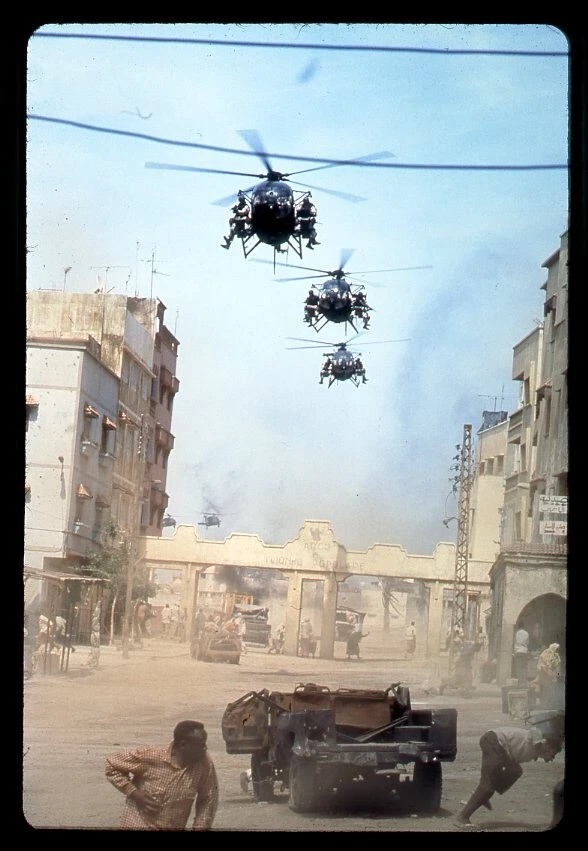
One of the key requests made by the Pentagon’s liaison office was to remove all references to U.S. Army Ranger John Stebbins (renamed Grimes for the film and played by Ewan McGregor) who was awarded the Silver Star for bravery during the battle but later went on to be convicted of sexually assaulting his daughter. The Film Liaison Unit also quashed a scene – attested to by the soldiers involved – in which U.S. Army Rangers inadvertently opened fire on their Special Forces comrades. Scott later insisted that the scene was removed for ‘creative reasons’.
Whitewashing the military is one of the Film Liaison Unit’s key purposes but arguably more consequential is the manipulation of historical facts. As Secker notes in the preface to his 2017 book National Security Cinema – DoD-backed war films ‘promote violent, self-regarding, American-centric solutions to international problems based on twisted readings of history.’ Again Black Hawk Down provides a good case in point. Those old enough to remember news reports of the UN intervention in 1993 are most likely to remember the grainy video footage taken in the aftermath of the October 3rd raid showing the bodies of U.S. helicopter crews being dragged through the streets by an angry mob.
This public display of grief and rage is left out of Scott’s film for obvious reasons but the film makes no attempt to explain why the raid on Mogadishu’s Olympic Hotel provoked what amounted to a city-wide uprising against the U.S. force. A report compiled by Human Rights Watch provides some explanation for this apparently spontaneous hostility. As it turns out Somalis living in the capital had already endured several disastrous raids prior to the one in which the U.S. helicopters were brought down. One earlier foray by U.S. Special Forces had mistakenly resulted in the arrest of nine UN employees and dozens of public figures unaffiliated with Aidid. Another disastrous raid, on the 12th of July, targeting Aidid’s leadership ended up killing at least 50 Somali community leaders from across the political spectrum. If that wasn’t bad enough on September 19 – two weeks before the events depicted in Black Hawk Down – helicopters from the U.S. Army’s 10th Mountain Division, and armoured vehicles belonging to Pakistan’s UN contingent, fired into a crowd killing approximately 100 unarmed Somalis.
These atrocities were accompanied by routine acts of harassment and intimidation. According to journalist Scott Peterson a ‘favourite practise’ of SOAR helicopter pilots was to hover low over the streets of Mogadishu and use the Black Hawk’s powerful downdraft to tear apart the flimsy timber and sheet metal market stalls. This stunt – which pilots referred to as ‘rotor washing’ – added insult to injury by tearing the clothes from people’s bodies.
Summarising yet another inadvertent massacre in the lead up to the October 3rd debacle, former Special Forces officer Stan Goff illustrated the dismissive attitude of U.S. commanders – not only to local Somalis but also to the soldiers under their command who frequently received friendly fire from one another during chaotic night-time raids in the cramped streets of Mogadishu. In a brief vignette in his book Full Spectrum Disorder, Goff relates a gun battle near Mogadishu’s soccer stadium between his own squad and members of Aidid’s militia (the Somali National Alliance) who had learned how the taskforce conducted its raids and staged an ambush on his unit from two directions. The U.S. troops responded with a hail of machine gun and automatic grenade fire.
“As it turned out, our fire into the stadium, which was filled with homeless people in raggedy cloth huts, killed dozens of civilians in addition to the two or three SNA fighters who fired on us, and our fire at the hill arced across Mogadishu and rained down on a chagrined U.S. Sword Base. We were an elephant inside a gift store…When we got back to the airport we found a .50-calibre bullet hole in the door of one of our vehicles.
We had the only .50-calibre machine guns out there.
This raid was called a success because we pulled a couple of Aidid’s lieutenants out of the primary target. The impact of the dead civilians was never factored in. The danger we subjected Sword Base to was never factored in, nor was the failure of coordination. No commander stopped and said, hey, it looks like they have figured out this plan, let’s change it. No, we had the firepower, and we killed the most people, so we fucking won.”
Given all these incidents (and many others besides) the otherwise baffling scenes in Black Hawk Down of Somali women charging through gunfire for the chance to take a shot at American troops begin to make more sense.
Many recent films sponsored by the DoD are transparently propaganda pieces – Peter Berg’s deliriously stupid alien invasion film Battleship served as both a recruitment advert for the U.S. Navy and a tribute to the country’s WWII veterans. Marvel’s superhero films and Michael Bay’s Transformers series have similarly attempted to combine children’s toys with war stories in which the U.S. military thwarts an alien invasion. Even in the 2005 adaptation of H.G. Wells’ War of the Worlds the DoD insisted on including a scene designed to prop up the reputation of America’s military. In Well’s original telling the alien invaders effortlessly wipe out humanity’s most sophisticated weapons of war only to succumb to some novel terrestrial virus. Published in 1897 the story was very consciously presented as an allegory for Britain’s genocidal colonial expeditions and the occasional limits imposed by tropical disease. In the prologue to the invasion story Wells writes that:
“And before we judge them [the Martians] too harshly, we must remember what ruthless and utter destruction our own species has wrought, not only upon animals, such as the vanished Bison and the Dodo, but upon its own inferior races. The Tasmanians, in spite of their human likeness, were entirely swept out of existence in a war of extermination waged by European immigrants, in the space of fifty years. Are we such apostles of mercy as to complain if the Martians warred in the same spirit?”
Spielberg’s adaptation muddies this comparison by evoking the attack on New York’s World Trade Centre and then uses CGI to imagine what a shock-and-awe campaign might look like if it were inflicted on U.S. citizens. In keeping with its source material, the military response is shown to be enthusiastic if not effective. One or two brief scenes feature convoys of Humvees and tanks – for these Spielberg was given troops from the U.S. Army’s 10th Mountain Division – which are wiped out in a futile counter-attack that occurs just offscreen. To salvage some pride the DoD insisted on the inclusion of a third-act scene in which a surprisingly well-organised squad of GIs use rocket launchers to administer the coup de grâce to a teetering alien Tripod. It’s a jarring display of gung-ho exhilaration in an otherwise bleak story of trauma and survival.
Still kicking themselves for having rejected the first Independence Day film the DoD were quick to piggyback their own promotional material onto the film’s sequel, Independence Day: Resurgence (2016). In parallel with the film’s pre-release marketing campaign the U.S. Army spent $2 million USD producing and advertising a series of mock recruitment ads for the fictional Earth Space Defence Force. The website advertised in the videos offered space-themed games linked to real Army recruitment pages. In order to unlock material related to the film visitors had to allow U.S. Army recruiters access to their Facebook page.
It’s easy to assume that alien adversaries are chosen by Hollywood simply for diplomatic reasons. By replacing foreign ‘aliens’ with actual aliens filmmakers can depict war without offending potential trading partners or stirring up resentment amongst old rivals. But perhaps that explanation gives the propagandists too much credit. Perhaps the idea of an alien invasion simply represents the next logical threat for an empire that spends more on its military than the next nine countries combined. In a globalised economy with aggressive expansion held in check by the threat of nuclear war the only way to justify these staggering military budgets is to suggest some menace lurking beyond Star Trek’s ‘final frontier’. If this strategy seems far-fetched consider that the DoD has recently released footage of what they claim are actual UFOs and allowed personnel to give interviews in which they claim to have encountered aircraft with unearthly capabilities.
While cinema influences the public it also creates weird feedback loops within the military itself. One film franchise that the CIA Public Affairs Office refused to assist was Doug Liman’s adaptation of the 1980s spy thriller The Bourne Identity. Using a premise destined to become a sub-genre in its own right, the story centres on CIA assassin David Webb who sustains a head injury in a botched mission and loses his memory. The film follows Webb as he attempts to piece together clues from both his real and his double life while being hunted by his former employers. The CIA’s Entertainment Liaison at the time, Chase Brandon, rejected overtures from the film’s producers saying that the screenplay represented an ‘egregious misrepresentation’ of what the CIA does. However the filmmakers did get Brandon to say nice things about the film on the DVD and they also managed to drum up stock footage of the CIA’s headquarters in Virginia in order to set the scene for the sinister covert assassination program codenamed ‘Blackbriar’.
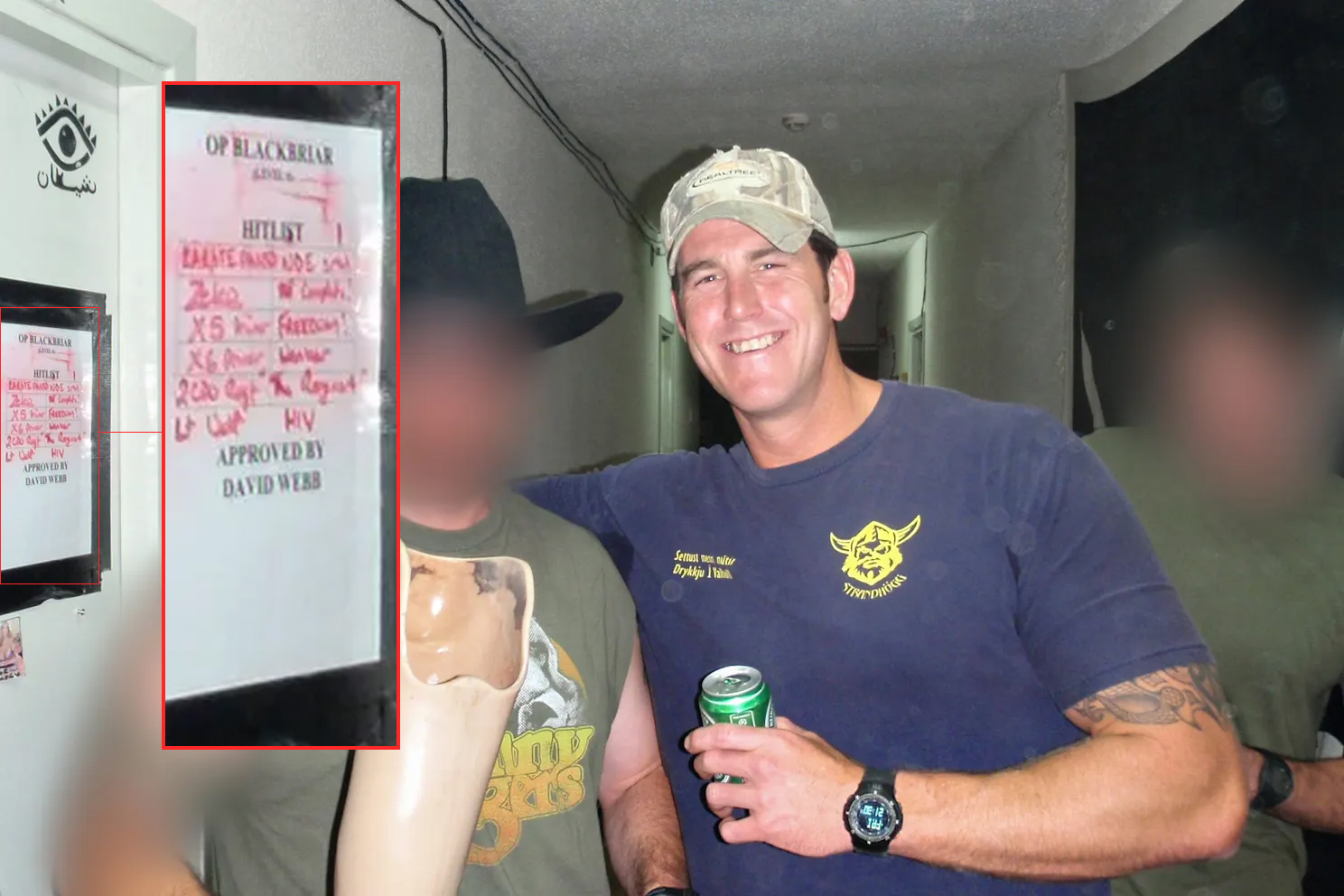
Four sequels followed over the years and, as well as capturing the imagination of the public, the franchise also appears to have found fans amongst the small number of Australian soldiers tasked with carrying out assassinations on behalf of the CIA. Amongst reports of war crimes committed by Australia’s SAS Regiment in Afghanistan were photos showing SAS troopers drinking from a prosthetic leg souvenired from an Afghan they had killed. In the one particular image taken at Australia’s special forces base at Tarin Kowt in Afghanistan you can see a whiteboard ‘hit-list’ in the background with the heading ‘Blackbriar’ and the message ‘approved by David Webb’ – a reference to the character played by Matt Damon in the series.
It should come as no surprise that pop-culture warriors end up being made into real-world military mascots. The ADF has spent the last decade or so trying half-heartedly to prevent Australian soldiers from decorating uniforms and vehicles with, among other things, the symbol of Marvel’s nihilistic anti-hero The Punisher. The distinctive long-toothed skull logo – a modern-day version of the Prussian Totenkopf – was spray-painted onto body armour, barricades and barracks walls all over Iraq and Afghanistan (in yet another feedback loop the skull also turns up in the background of Clint Eastwood’s biopic of U.S. Navy SEAL Chris Kyle who named his squad ‘The Punishers’).
The use of this comic-book icon is not confined to offhand and impromptu decals. One of the Royal Australian Air Force’s 500 million dollar surveillance aircraft used the Punisher logo as nose art. That skull was eventually scrubbed off after former Chief of the Defence Force Angus Campbell issued an order banning the display of ‘death symbology/iconography’. Nevertheless the presence of that logo on a plane designed purely to collect signals intelligence reveals that even radar technicians secretly want to feel like vigilante gunmen. Just like the artist who created the Pepe frog character now adored by internet trolls and neo-nazis, the creator of the original Punisher superhero, Gerry Conway, appears to be legitimately dismayed by how his character has been co-opted by the more fashie members of police and military forces. Unfortunately for Conway it’s almost impossible to wrest back control of a symbol once its new meanings and associations have achieved a certain critical mass. In an interview with SyFy Wire Conway gave his reaction to those in uniform adopting the symbol of a vigilante.
“To me, it’s disturbing whenever I see authority figures embracing Punisher iconography because the Punisher represents a failure of the Justice system. He’s supposed to indict the collapse of social moral authority and the reality that some people can’t depend on institutions like the police or the military to act in a just and capable way.”
Following in the footsteps of Black Hawk Down, many recent films have attempted to dramatise military operations that have taken place during the Global War on Terror. Peter Berg’s Lone Survivor (2013), based on the memoir of U.S. Navy SEAL Marcus Luttrell, raked in $158 million USD at the box office. Clint Eastwood’s grotesque biopic of another former SEAL in American Sniper (2014) netted an astonishing $590 million worldwide while Michael Bay’s 2016 election agitprop 13 Hours: The Secret Soldiers of Benghazi barely made back its $50 million USD budget.

All these films simultaneously sanitise and glorify the events they supposedly depict but perhaps the most egregious example of this tendency is Nicolai Fuglsig’s 12 Strong – a highly dramatised account of the first U.S. Special Forces operation conducted in Afghanistan following the September 11 attacks. Despite pre-production assistance from some of the soldiers involved as well as a detailed account of the mission by journalist Doug Stanton, 12 Strong ended up being a textbook example of how ‘creative licence’ is employed to sensationalise historic events.
The true story is compelling without any embellishment. In October 2001 a dozen men from the U.S. Army’s Operational Detachment Alpha4 – led by Captain Mark Nutsch – were dropped off in a secluded part of Afghanistan’s Samangan Province to provide air-support to the U.S.-backed Northern Alliance. For several weeks Nutsch’s team accompanied a militia force led by Uzbek warlord Abdul Rashid Dostum in order to coordinate U.S. airstrikes on several Taliban strongholds. The special forces unit relied heavily on horses for transportation during the operation and the ‘horse soldiers’, as they came to be known, covered hundreds of kilometres over high mountain passes in the Hindu Kush.
The film, however, would have benefited from the disclaimer that any resemblance to actual persons or events is purely coincidental. Aside from the names of two main characters, and the broad premise of the film, the events shown are pure fiction. The screenplay is padded with typical Hollywood tropes – there are at least two scenes in which ominous turban-clad gunmen are revealed, at the last moment, as allies and not enemies. Likewise a misunderstanding between the Operators and their newfound comrades results in a brief Mexican standoff. The first encounter with the enemy consists of a prolonged gunfight at more or less point-blank range and, afterwards, the grizzled Dostum provides some fortune-cookie wisdom on the warrior ethos. The film culminates in a ludicrous action sequence in which the Special Forces team charge through a hail of gunfire on horseback – scattering Taliban troops and inexplicably seeing off a tank.
In 2018, researchers for the website History vs Hollywood took it upon themselves to gauge the accuracy of 12 Strong but, in doing so, they revealed a certain reluctance to contradict pro-war propaganda. The point-by-point summary reads as if the writers were hoping that, if they just threw out enough trivia, visitors might forget what what they came there to find out. All the most irrelevant details of the film are fact-checked: Was Mark Nutsch’s wife pregnant when he left for the mission? Answer: who cares. Did most of the twelve men have families? Answer: No, Green Berets reproduce asexually like yeast. Why were they called the Horse Soldiers? Answer: Who knows? Maybe they all had laryngitis.
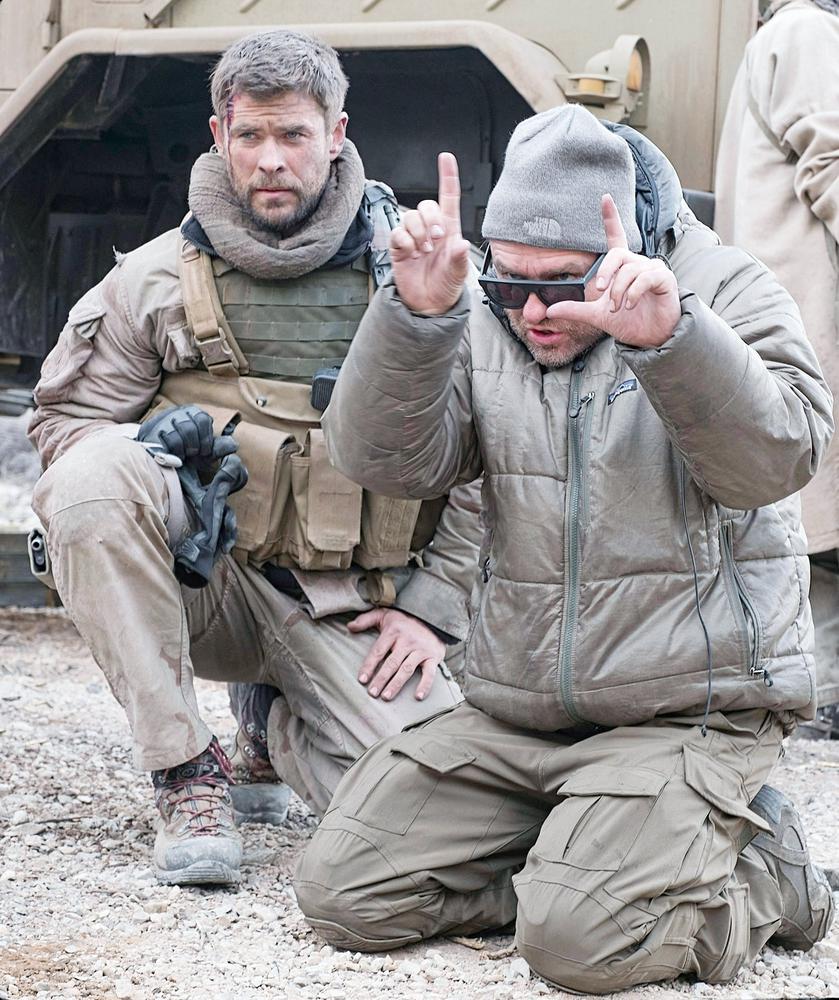
One of the most dramatic scenes in the movie takes place following the decimation of a Taliban force by a U.S. air strike. As the smoke clears, a crowd of surviving Taliban fighters shuffle towards the Special Operations team with their hands in the air. The team’s second in command (inspired by Chief Warrant Officer Bob Pennington) cautiously approaches the group to accept their surrender only to be badly wounded when one man detonates a suicide vest at the last moment. The other members of the team call for a medical evacuation – reporting that their commander has sustained a ‘sucking chest wound’. The following scene – in which Pennington’s barely-conscious body is bundled into a helicopter – achieves its emotional impact mainly by reminding you of similar scenes from better films. Unsurprisingly History vs Hollywood reveals that this event was entirely fabricated. Pennington’s real injury was a slipped disk that he sustained from too many hours in the saddle.
The Northern Alliance took thousands of prisoners during the U.S. invasion of Afghanistan but, in the first few weeks of the conflict, many of these men were victims of treachery rather than perpetrators. While in the custody of Dostum’s militia somewhere between 250 and 2,000 Taliban fighters were either shot or suffocated to death in metal shipping containers en route to Sheberghan prison in northern Afghanistan. Neither Stanton’s book or Fuglsig’s film make any mention of this massacre.
Finally we get to the real question: is the final battle in the movie depicted accurately? The answer is a resounding no. The team’s mission was to direct air-strikes on Taliban positions using laser targeting devices. As Stanton related in his book, Horse Soldiers, the operators spent most of their time well out of small-arms range transmitting GPS coordinates so that B-52 bombers flying at 50,000ft had something to aim at.
As it turns out however there was a charge by soldiers on horseback during the battle for the village of Bishqab but it was undertaken by the Afghan militia and led by Dostum’s second in command, Lal ‘Red’ Mohammad. As one reviewer noted, the scene of Nutsch (played by Chris Hemsworth) personally gunning down dozens of Taliban soldiers from the saddle of his Afghan steed represented a sort of cinematic ‘stolen valour’. Responding to a question put by The Intercept about his reaction to this scene Stanton equivocated, saying that it appeared to be “an amalgamation of the horse charges that the [Afghan] Northern Alliance made against the Taliban, and which the [American] horse soldiers themselves observed and assisted in.”
Given the wholehearted pro-military stance taken by the writers of 12 Strong you might imagine that their screenplay passed inspection by the Pentagon’s Film Liaison Unit with flying colours. But an email exchange uncovered through a Freedom of Information Act request revealed that the DoD officials went through the script with a fine tooth comb to remove any unsightly details. They threatened to withdraw support for the film if the production insisted on depicting the soldiers as unkempt and unshaven at the outset of their mission – quoting chapter and verse of the military’s regulation on grooming standards. They also demanded the removal of a throwaway line alluding to the fact that one of the soldiers in question enlisted to avoid criminal charges for assault. The reply from the production company reveals the tone of these ‘negotiations’.
“Here is a revised draft of Horse Soldiers. We changed [REDACTED]’s backstory per your suggestion. Please let me know if this works for you. … would you send this draft to the appropriate Air Force personnel and let me know whom to follow up with?”
Like many ‘based on a true story’ war films 12 Strong ends with a photo of the actual men of Operational Detachment Alpha – inadvertently revealing both the unit’s lax grooming standards and the creative licence that went into the film’s casting process. In the film actors Michael Peña and Trevante Rhodes bring some noticeable racial diversity to a unit that was, in reality, made up of a dozen white guys. This attempt at representation obscures an uncomfortable truth about Western Special Forces – that, throughout their long history, these units have been overwhelmingly white. As Stan Goff pointed out in his book Full Spectrum Disorder ‘black-ops’ are invariably conducted by white operators, ‘No one is going to teach large numbers of African Americans these clandestine skills’.
Subverting the Military-Entertainment Complex
How do you combat a fetish for war?
For those worried by the diffusion of American militarism into Australian culture there’s a real temptation to advocate for some form of censorship. But censorship, by its very nature, means forfeiting control of cultural expression to some higher authority. Even if it were possible to enforce some sort of Hays Code that applied to depictions of war the result would be a diminishment of understanding – pushing war even further from public discussion and scrutiny. Even if such a scheme had public support it’s clear that our current crop of politicians have no interest in challenging the way war is presented in media and entertainment. As it stands, the exhibitions within the Australian War Memorial – with their drums and trumpets view of history – are largely the result of a longstanding political consensus that Australia’s ANZAC heritage should be celebrated, soldiers should be venerated and war history should be understood in terms of courage and heroism.
What mechanisms, then, can we use to blunt the impact of America’s military-entertainment complex? One way to inject a little more honesty into our war stories would be to penalise film makers for the decision to relinquish creative control for the convenience of cheap props and locations. Under such a scheme studios who made films using military assistance would have to pay an extra fee to secure distribution rights in Australia. We could call it a propaganda tax and use the proceeds to fund our own film and TV industry. If, as a side effect, the law spurred debate over what does and does not constitute ‘military assistance’ and what is and isn’t ‘propaganda’ then so much the better, as public understanding and awareness would improve over time.
Unfortunately countries like Australia don’t have much financial pull when it comes to decisions made by Hollywood studios and TV production companies. Our leverage is proportional to our share of the global box office – which is minimal. It’s also unlikely that Australia would want to join any international bloc against American ‘soft power’ if it meant aligning ourselves more closely with China or Iran. On the global stage countries like Australia are like Michael Ginsburg taking pity on Don Draper in Mad Men – ‘I feel bad for you’ we say to our American neighbours ‘I don’t think about you at all’ they reply.
So what can we do on our own? One option is to do what the Australian nanny state does best and put warning labels on war films. Just as cigarette packets come with nauseating reminders of the medical consequences of smoking, streaming services operating in Australia could be mandated to warn viewers of the brain-deadening effect of a Michael Bay production. If the film in question was ‘based on true events’ then we might front-load it with a short documentary about what actually happened. But if a large part of the appeal of war films is the illicit thrill of witnessing horror and carnage it’s doubtful that prefacing fictional brutality with actual brutality would have the desired effect. Adding images taken by photojournalists might even lend credibility to what follows.
Nevertheless, context is key, so instead of shock tactics, we could pair war films up with the documentary evidence required to offset whatever misinformation or narrow perspective that Hollywood filmmakers have settled on. In addition we might consider implementing a rating system for assessing just how politically or factually compromised certain films are. A number of Hollywood war films deserve recognition for pushing ahead with production despite Pentagon refusals for assistance. Owing to its fraught production in the Philippines, Francis Ford Coppola’s Apocalypse Now is perhaps the most famous ‘go it alone’ war film but other filmmakers have also succeeded in bringing large-scale action set pieces to the big screen without official assistance. Oliver Stone’s Platoon, Robert Altman’s MASH, Mike Nichols’ adaptation of Catch-22, Stanley Kubrick’s Paths of Glory, Full Metal Jacket and Dr. Strangelove and David O. Russell’s Gulf-War drama Three Kings all managed to make do by using stock footage, special effects and surplus U.S. equipment.
In order to receive a tick of approval a film would have to meet certain criteria – foremost of which would be some empathy for the civilians inevitably caught up in the conflict in question. Although sometimes criticised for being too crude a metric, the Bechdel Test does a decent job of highlighting the pervasive sexism of mainstream filmmaking that might otherwise have been dismissed as subjective opinion. Moreover the test is effective because it reveals how low the bar has been set when it comes to female representation in film – demanding only that the story have at least two named female characters who talk to each other about something other than a man. This reclassification of media doesn’t even need to be mandated from above. With the backing of the Swedish Film Institute, some Swedish movie theatres began voluntarily implementing a rating system based on the Bechdel Test back in 2013 with the result that Swedish-made films are now 2.5 times more likely to meet Bechdel’s criteria for female representation.
The war-film equivalent would serve to highlight the absence of those most directly impacted by modern conflict – civilians. It would ask ‘does this film show us anyone who actually lives where the violence takes place?’ with the caveat that these characters can’t only be shown being gunned down or directly victimised by soldiers. They needn’t even be civilians in the strictest sense. Come and See centres on a young boy named Florya who is caught up in the midst of the Nazi invasion but Florya himself is a would-be guerilla and the film opens with him digging through the wreckage of a recent battlefield hoping to find a weapon so that he can join the Belorussian partisans.
Even if a film centres on combatants this ‘caught in the crossfire’ perspective needn’t interrupt the flow of the story. For all its moral evasiveness Denis Villeneuve’s Sicario engenders at least some empathy for the residents of Juárez caught between trigger-happy U.S. paramilitaries and narco-gang members. A subplot briefly follows the daily routine of Silvio – a police officer in the Mexican border city. Although he’s later revealed to be involved in the war the audience is at least given some sense of what it’s like to be an unwilling participant in the conflict. Crucially Silvio’s inclusion forces us, as an audience, to spare a thought for the plight of the conscript – providing a sincere version of the ‘henchman’s wife’ gag from Austin Powers.
As one review noted Silvio’s “briefly-glimpsed home life is mostly characterised by eating eggs for breakfast with his adoring young son, while his blank-faced wife watches with worried detachment. Admirably economical storytelling or overly simplistic broad strokes? It’s not always easy to decide”. For what it’s worth, the actor who played Silvio – Maximiliano Hernandez – considered the character’s inclusion subtle rather than tokenistic. In an interview he explained that “to me, without Silvio, this would just be a war movie because he is the heart of the people who have to live in the violence.”
When it comes to morality-plays about war and violence subtlety can be a double-edged sword. While Sicario seems to exhibit a certain level of ambivalence towards the U.S. war on drugs the same cannot be said for its sequel. Sicario: Day of the Soldado was penned by the same writer but directed by Stefano Sollima. Freed from the judgemental perspective of Emily Blunt’s police liaison character the second film conflates asylum seekers, drug traffickers and terrorists and provides an unequivocal endorsement of the extrajudicial killings carried out by the CIA. Centre-stage in the sequel, and presented in a heroic light, is the mercenary who is seen in the final act of Sicario coldly murdering the family of a cartel leader.
Likewise Sam Mendes’ adaptation of Anthony Swofford’s memoir Jarhead – a meditation on the alienation and dehumanisation of military training – has been followed by several direct-to-video sequels that are unapologetic pro-war action movies. Clearly we would need to apply the anti-war seal of approval on a case-by-case basis.
The task of classifying and assessing war films would be aided by the creation of a slightly different set of genre categories than the ones we use today. At heart, most of what are considered ‘war films’ should probably be classified as ‘warrior films’ – stories told from the perspectives of soldiers and combatants. It makes no sense to file Life Is Beautiful alongside American Sniper just because both films happen to involve war and this distinction is important if we want to help streaming services like Netflix distinguish between films about war and films about warriors and steer audiences accordingly. One of the key dangers of recommendation algorithms, in their current form, is that they make no distinction between honest and dishonest subject matter – often turning people who, at one point, expressed a curiosity about opposing viewpoints into people that hold those same viewpoints. Neo-nazi ideologies, vaccine scepticism and a vast array of conspiracy theories have amassed followers thanks largely to YouTube and Facebook’s recommendation algorithms and their tendency to prioritise controversy over accuracy of information. Warrior films should likewise be treated as a somewhat dangerous commodity and should not trigger recommendations for more of the same lest viewers disappear down a never-ending spiral of Pentagon propaganda and dire Gerard Butler performances.
As Truffaut pointed out – violence on film is ambiguous in a way that violence in real life is not. Thus, the challenge for filmmakers is to depict war without making warfare itself look like fun. This basic dilemma is not confined to war films either – a similar distinction could easily be made between crime dramas and what we might refer to as ‘dramas about criminals’. Martin Scorsese has spent most his life producing films about gangsters and although they all contain moralising elements of tragedy each film has also added to the mythology of the mob. This is, at heart, a creative choice. In 2008 Italian director Matteo Garrone proved that you could make a film about the mafia without glamourising it in the process. Gomorrah follows several characters caught in the orbit of the Camorra drug cartel but Garrone’s film concentrates on the damage wrought by extortion and corruption rather than the palace intrigues of the organisation responsible.
In order to ensure that the critical lens applied to modern filmmaking was not confined to a specific exhibition we need to embrace the modern era of online activism and media criticism. Just as the Australian War Memorial includes a well-funded research department, an anti-war museum would employ people to analyse and fact-check films about war and trace the civil/military connections for tent-pole features like Transformers and Marvel superhero films. For those films claimed to be ‘based on a true story’ the anti-war museum would sponsor its own commentary and ‘reaction’ videos featuring historians, human rights campaigners, political scientists and eyewitnesses in order to give those marginalised by Hollywood some right of reply.
In many ways this expansion of film criticism is already underway. Whether you think YouTube has ushered in a Golden Age of film criticism or if you think the discipline has simply been inundated by snarky continuity supervisors it’s clear that there is an enormous audience for analysis and commentary on films and TV shows. There are already YouTube channels that apply a critical lens to films that purport to depict historical events. Nick Hodges’ History Buffs YouTube channel dissects a number of war films and period pieces but his commentary necessarily concentrates on what the films show rather than what they omit. Like the curators of the Australian War Memorial, Hodges and other critics are often focused on the period accuracy of the uniforms and equipment featured rather than trying to understand the wider context of the conflict and the political agenda of the film makers. But when it comes to pop-culture depictions of war it’s the lies of omission that do the most damage. Analysis from witnesses, journalists and historians would provide a much-needed antidote to Hollywood propaganda and military disinformation.
Trying to counteract U.S. militarism might feel like a lost cause. Hollywood is far and away the most powerful and the most sophisticated system of propaganda ever devised and we have placed our society directly downstream of its floodgates. But even though the task might seem daunting we owe it to future generations to tell honest stories about war and conflict – especially while our overlords in Washington continue on the path towards fascism. The task for Australians is to call out militarism whenever it appears on our screens, in our museums or in our textbooks. To paraphrase Churchill – we must ‘ride out the storm of war, and to outlive the menace of tyranny, if necessary for years, if necessary alone’. We can start by emulating Dresden’s Military History Museum.
Footnotes:
1. Officially designated the ‘4000 lb High Capacity Mark I bomb’, roughly 90 thousand block-busters were dropped on German and Italian cities during the last three years of the war. In recent years unexploded block-busters have been discovered in several major cities – requiring the temporary evacuation of tens of thousands of people.
2. From British military history we get ‘balaclavas’ and ‘cardigans’ – articles of clothing improvised by British troops during the Crimean War. The former was named for the port city besieged by the allies and the latter was named in honor of James Thomas Brudenell – the 7th Earl of Cardigan – who led the famous Charge of the Light Brigade.
3. Wreckage from the U2 is on display at the Museum of the Revolution in Havana.
4. This naming convention, which began during the American invasion of Vietnam, was where the 80s TV series The A-Team derived its name.
Sources:
Roger Stahl (2022) – Theatres of War (documentary)
Matthew Alford, Tom Secker (2017) – National Security Cinema
Frankie Boyle (2016) – Frankie Boyle: Hurt Like You’ve Never Been Loved
Stephen J. Whitfield (2012) – Cine Qua Non: The Political Import and Impact of The Battle of Algiers
Scott Peterson (2000) – Me Against My Brother
Anthony Swofford (2003) – Jarhead: A Marine’s Chronicle of the Gulf War and Other Battles
Stan Goff (2002) – Full Spectrum Entropy
Nancy Ramsey (2001) – FILM; They Prized Social, Not Socialist, Reality
Human rights Watch (1995) – Somalia Faces the Future: Human Rights in a Fragmented Society
Brian Glyn Williams (2018) – “12 Strong”: The Inside Story of the Making of a (Refreshingly Accurate) Hollywood War Epic
Kevin Lang (2018) – 12 Strong: History vs Hollywood
Peter Maslowski (1993) – Armed with Cameras
Wolfgang Muchitsch (2013) – Does war belong in museums? : the representation of violence in exhibitions.
George Mason University Television (2015) – Interview with Phil Strub
Doug Stanton (2009) – Horse Soldiers
Lucia Suarez Sang (2015) – Interview with Maximiliano Hernandez
Mark Bowden (1999) – Black Hawk Down: A Story of Modern War
Nicole Drum (2019) – The Punisher Creator Gerry Conway Says It’s Disturbing to See Police and Military Using Punisher Symbol
Chicago Tribune (1973) – Interview with François Truffaut
Tricia Jenkins (2012) – The CIA in Hollywood


Leave a Reply